
Immigration Ban NZ Rules: Understanding Exclusion Periods and Consequences
by | July 28, 2026 | Info Article
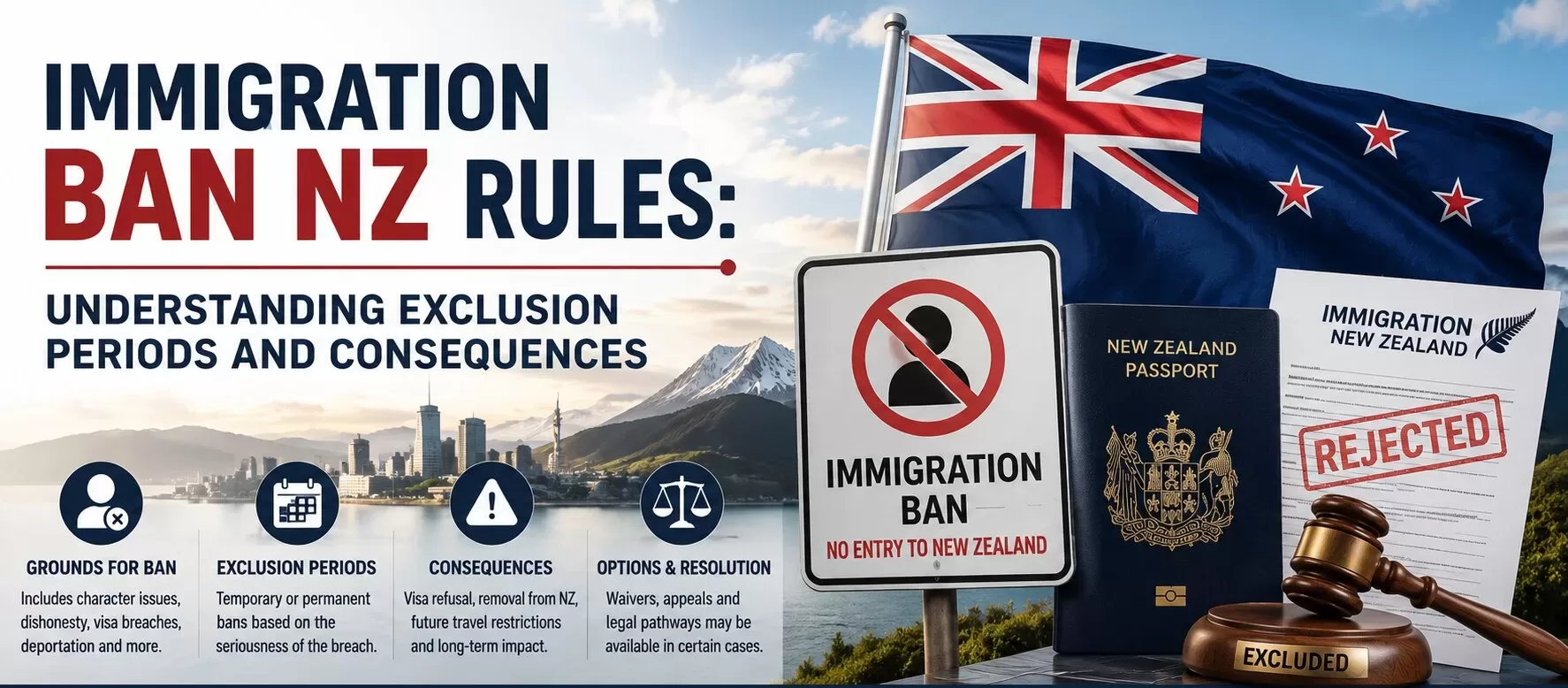
Immigration Ban NZ Rules are a critical aspect of New Zealand’s immigration policy, designed to protect the integrity of its borders and legal framework. These rules determine when an individual may be prevented from entering or residing in New Zealand, either temporarily or permanently. Understanding the grounds for an Immigration Ban NZ, the relevant exclusion periods, and the possible pathways for resolution is essential for anyone dealing with New Zealand Immigration.
The Immigration Ban NZ Rules may affect applications for a New Zealand Visitor Visa, New Zealand Work Visa, or New Zealand Student Visa, especially where there are concerns about character, visa breaches, false information, deportation history, or overstaying. This article explains the key Immigration Ban NZ Rules, including how bans are imposed, how long they may last, and what options may be available to address them, while also covering the serious Overstaying Visa NZ Consequences.
1. Grounds for Immigration Bans in New Zealand
New Zealand’s immigration legislation, primarily the Immigration Act 2009, outlines several circumstances under which an individual may face an Immigration Ban NZ. These grounds are broadly categorized into issues related to character, compliance with previous visa conditions, and the provision of accurate information. Consulting experienced Immigration Advisers Auckland can help applicants understand these restrictions, assess their eligibility, and prepare the appropriate documentation for their immigration case.
Character Requirements and Criminal History
One of the most significant factors leading to an Immigration Ban NZ is an individual’s character. Immigration New Zealand (INZ) has stringent Character Requirements that all visa applicants must meet. These requirements are designed to protect New Zealand’s security, public order, and public interest . An individual may be refused entry or a visa if they:
- Have a criminal history, particularly if they have been sentenced to jail for 12 months or more within the last 10 years, or for 5 years or more at any time
- Are believed to be a risk to New Zealand’s security, public order, or public interest, for example, due to associations with gangs or registered sex offenders .
- Are thought to be likely to commit an offense in New Zealand that would result in imprisonment .
- These character concerns can lead to temporary or even permanent bans, depending on the severity and nature of the offense.
Breaches of Visa Conditions and Unlawful Status
Compliance with Visa Conditions is paramount. Any breach of these conditions can lead to severe penalties, including an Immigration Ban NZ. This includes:
- Overstaying a Visa: As detailed in the discussion on Overstaying Visa NZ Consequences, remaining in New Zealand unlawfully for 42 days or more can result in a ban from returning, typically ranging from one to five years . This is a direct consequence of failing to Leave New Zealand before Visa expiry.
- Deportation: If an individual is deported from New Zealand for being unlawfully present, for breaching visa conditions, or for other wrongdoing, they will face an exclusion period. This can range from two years (if unlawful for less than a year) to five years (if unlawful for a year or more, or if it’s a repeat offense) Deportation for more serious reasons, such as fraud or security risks, can lead to a permanent ban
Misrepresentation and Fraudulent Information
Providing false or misleading information in a Visa Application is a serious offense with significant repercussions. INZ emphasizes the importance of submitting Accurate Information and Complete Information. If an applicant:
- Provides false or misleading information in their visa application or to an immigration officer .
- Possesses a forged, fraudulent, or altered identity document or any other official document .
- Uses immigration fraud to obtain a visa or refugee status
Such actions can result in a 7-year ban from New Zealand and/or fines of up to NZD $100,000 . This underscores the critical need for honesty and integrity throughout the Visa Application Process.
2. Exclusion Periods: Temporary vs. Permanent Bans
The duration of an Immigration Ban NZ varies significantly depending on the specific grounds for the ban. It is crucial for individuals to understand whether their ban is temporary, with a defined Exclusion Period, or permanent.
Temporary Bans
Most bans related to overstaying or certain breaches of visa conditions are temporary. These bans typically range from two to five years, after which an individual may be eligible to apply for a New Zealand visa again For example, if an individual is deported for being unlawfully in New Zealand for less than a year, they face a two-year ban. If they were unlawful for a year or more, or if it was a repeat offense, the ban extends to five years Similarly, deportation for breaching Resident Visa Requirements or Temporary Visa conditions generally results in a five-year ban
Permanent Bans
Certain serious offenses trigger a permanent Immigration Ban NZ, meaning the individual is barred from being granted any type of visa or entry permission to New Zealand indefinitely. These include:
Having been sentenced to a jail term of five years or more at any time
- Deportation from New Zealand due to fraud, forgery, false identity, committing a crime while on a Residence Class Visa, or posing a risk to New Zealand’s security
- Having been removed, excluded, or deported from another country due to wrongdoing or unlawful presence This is a particularly stringent rule, as it means a ban from another country can lead to a permanent ban in New Zealand, regardless of how long ago it occurred .
The Definition of “Excluded”
The term “excluded” in the context of an Immigration Ban NZ can be complex. As highlighted by legal precedents, to be truly “excluded” from another country means a complete prohibition on re-entry, even if temporary . Mere restrictions on applying for certain types of visas during a period, such as Australia’s Public Interest Criteria (PIC 4014) ban, may not meet New Zealand’s legal definition of exclusion if other visa pathways remain available . This distinction is crucial, as a misinterpretation can lead to an incorrect assessment of an individual’s eligibility for a New Zealand visa.
3. Impact on Various Visa Categories
An Immigration Ban NZ has far-reaching implications across all Visa Options, affecting individuals seeking to Visit New Zealand, Work in New Zealand, Study in New Zealand, or Live in New Zealand permanently.
Visitor Visas and NZeTA
For those planning to Visit New Zealand, a ban can prevent entry even for short stays. Individuals from Visa Waiver Country nations, who typically only require an NZeTA, will find their applications declined if they are subject to an Immigration Ban NZ. Similarly, those requiring a New Zealand Visitor Visa will face refusal. The system is designed to prevent individuals with a history of non-compliance or character concerns from even reaching the border .
Work and Student Visas
An Immigration Ban NZ significantly impacts the ability to obtain a New Zealand Work Visa or a New Zealand Student Visa. Whether an applicant is seeking an Accredited Employer Work Visa, a Working Holiday Visa, or a visa for Full-Time Study, any existing ban will likely lead to a Visa Application refusal. This is particularly challenging for individuals who have secured a Job Offer from a New Zealand Employer or an Offer of Place from a New Zealand Education Provider, as the ban overrides these opportunities .
Resident and Permanent Resident Visas
The most profound impact of an Immigration Ban NZ is on aspirations for Permanent Residence in New Zealand. Applications for a New Zealand Resident Visa or Permanent Resident Visa, including those based on skills as a Skilled Migrant, will be refused if an applicant is subject to a ban The stringent Resident Visa Requirements include meeting character standards, which are directly compromised by any grounds for an immigration ban. This can shatter dreams of Living Permanently in New Zealand and bringing family members through Family Visa Options.
4. How to Check for an Immigration Ban and Seek Advice
Given the severe consequences, it is vital for individuals with any past immigration issues to proactively determine if they are subject to an Immigration Ban NZ before making travel plans or submitting a Visa Application.
Identifying a Potential Ban
While there isn’t a single public database to check for an Immigration Ban NZ, individuals can often infer their status based on past interactions with immigration authorities. In many cases, understanding the reason for a previous immigration issue is also the first step toward Visa Recovery and determining whether a new application may be possible.
Key indicators include:
- Previous Visa Refusal or Visa Denial letters that explicitly state an exclusion period or grounds for a ban.
- A history of Deportation from New Zealand or any other country.
- Having provided false or misleading information in a previous Visa Application.
- Having Overstayed a Visa in New Zealand for more than 42 days.
If any of these circumstances apply, the individual may be subject to an immigration restriction or ban. Professional assessment can help clarify the situation and identify possible Visa Recovery options before submitting a new application.
Seeking Professional Immigration Advice
Navigating the complexities of Immigration Ban NZ Rules requires expert guidance. Engaging a reputable Immigration Adviser or Immigration Lawyer is strongly recommended. These professionals can:
- Assess an individual’s immigration history and determine the exact nature and duration of any ban.
- Advise on the feasibility of applying for a Special Direction from the Minister of Immigration, which is the only pathway to overcome certain permanent bans
- Guide individuals through the process of making a new Visa Application if the ban is temporary and has expired.
- Provide representation in cases involving appeals or complex immigration matters.
- Early and accurate Immigration Advice can prevent further complications and potentially save significant time and resources.
5. Overcoming an Immigration Ban: Special Directions and Waivers
While an Immigration Ban NZ can seem insurmountable, there are limited pathways to overcome them, particularly through ministerial discretion.
Special Directions from the Minister of Immigration
For certain permanent bans, the only recourse is to seek a Special Direction from the Minister of Immigration This is an exceptional measure, where the Minister exercises their discretionary power to grant a visa despite the applicant being otherwise ineligible. The Minister has absolute discretion in these matters and is not obligated to consider the request or provide reasons for a refusal Successful Special Directions typically require compelling humanitarian grounds or significant public interest arguments.
Character and Medical Waivers
In cases where a ban is due to character or health issues that are not severe enough to warrant a permanent ban, it may be possible to apply for a Character Waiver or Medical Waiver. These waivers are discretionary and require a strong case demonstrating that the applicant does not pose a significant risk to New Zealand. The process involves providing extensive supporting documentation and often requires the assistance of an Immigration Adviser to present the case effectively.
6. Preventing Future Bans: Compliance and Diligence
The most effective strategy for dealing with Immigration Ban NZ Rules is to avoid them altogether. Proactive compliance and careful management of one’s immigration status are essential.
Adhering to Visa Conditions
Strict adherence to all Visa Conditions is fundamental. This includes respecting the Visa Validity period, not engaging in unauthorized work or study, and providing accurate information at all times. Regular checks of one’s Visa Application Status and expiry dates are crucial to prevent inadvertent overstays.
Seeking Timely Advice
If circumstances change or there is any uncertainty about Visa Requirements or conditions, seeking Immigration Advice promptly is vital. An Immigration Adviser can help interpret complex rules, assist with visa extensions or changes to conditions, and ensure that every action complies with New Zealand Immigration laws. Applicants may also benefit from resources such as sponsorship letter nz visa the ultimate guide when preparing supporting documentation for certain visa applications.
This proactive approach can help individuals maintain lawful immigration status and avoid the serious Overstaying Visa NZ Consequences and other penalties associated with an Immigration Ban NZ.