
Fixing a Rejected Visa NZ: Navigating the Pathways to Reconsideration, Appeal, and Reapplication
by | July 31, 2026 | Info Article
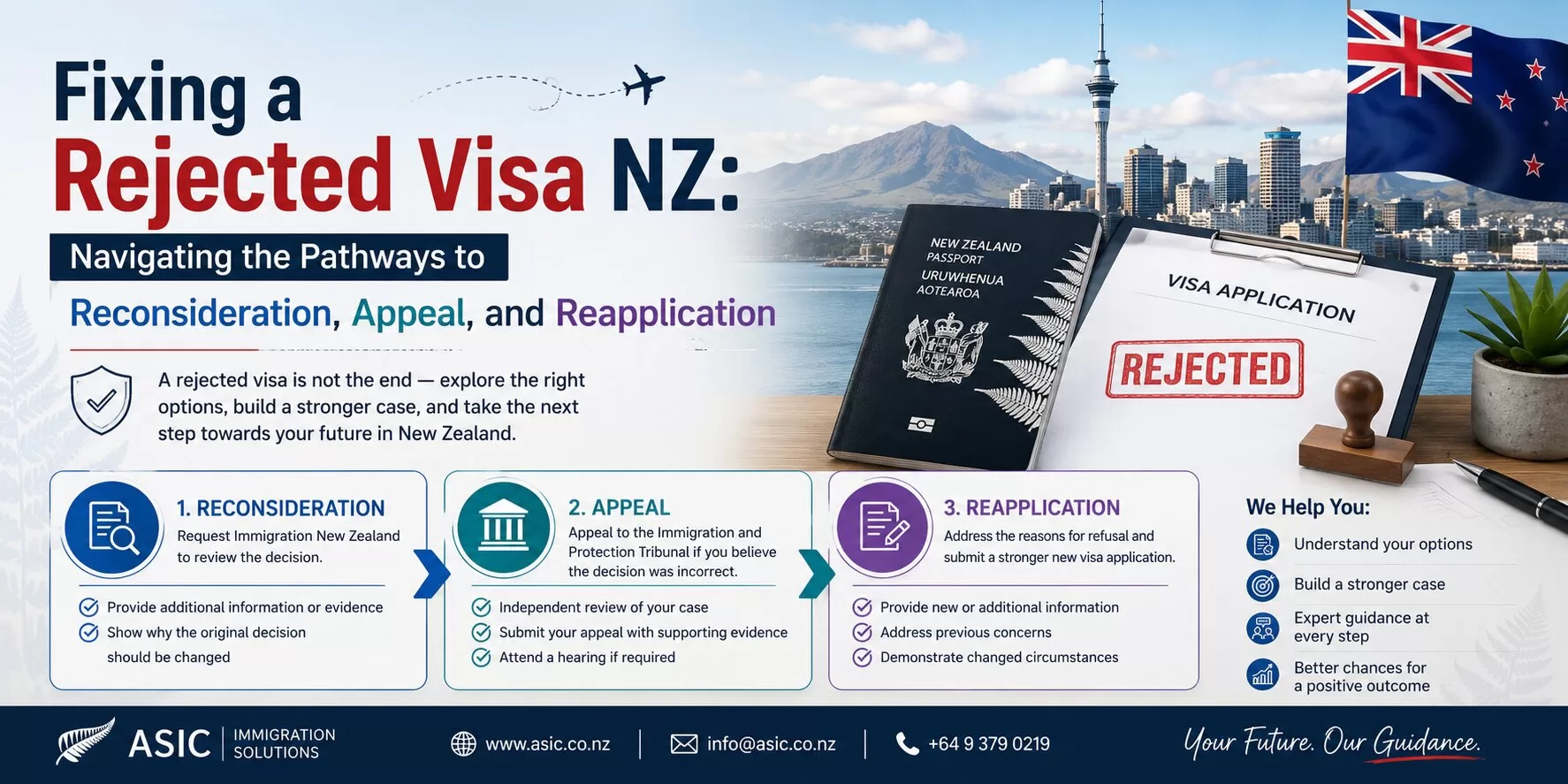
Receiving a Rejected Visa NZ decision can be a disheartening experience for anyone aspiring to live, work, or study in New Zealand. However, a declined visa application is not always the final word. Immigration New Zealand (INZ) provides several pathways for applicants to challenge or address a negative decision, including reconsideration, appeal, and reapplication.
Understanding the reasons behind a Rejected Visa NZ decision, along with the relevant eligibility criteria and deadlines, is crucial when choosing the most suitable next step. With accurate information, stronger supporting evidence, and professional guidance, applicants may be able to overcome a Rejected Visa NZ outcome and continue working toward their New Zealand immigration goals.
Understanding Your Visa Rejection: Temporary vs. Residence Class Visas
The first critical step after receiving a Rejected Visa NZ decision is to thoroughly understand the reasons for the decline and the type of visa that was refused. New Zealand distinguishes between two broad categories: Temporary Visas, such as visitor, student, and work visas, and Residence Class Visas for applicants seeking permanent residency.
The appropriate response to a Rejected Visa NZ outcome differs significantly depending on which visa category the application falls under. Carefully reviewing the decision letter, eligibility requirements, supporting evidence, and available review options can help applicants determine whether reconsideration, appeal, or reapplication is the most suitable pathway following a Rejected Visa NZ decision.
Temporary Visa Refusals: The Reconsideration Process
For most temporary visa refusals, the primary mechanism for challenging the decision is through a visa reconsideration request. This process allows applicants to ask INZ to review their original application, often by a different immigration officer, to identify any errors in the initial assessment or to clarify information. It is not an opportunity to submit entirely new information that was available at the time of the original application, but rather to address specific points of contention or misinterpretations.
Eligibility and Timelines for Reconsideration
To be eligible for a reconsideration, applicants typically must submit their request within 14 calendar days of receiving the decline notification. The request must be in writing, in English, and accompanied by the correct reconsideration fee, which is usually around NZD $220. It is imperative that the applicant’s immigration status remains lawful during this period; ideally, they should hold a valid visa at the time of the request. If the original visa was nearing expiry, acting swiftly is paramount.
What to Include in a Reconsideration Request
A compelling reconsideration request should clearly articulate why the original decision was incorrect. This might involve pointing out factual errors made by the immigration officer, providing clearer explanations for previously submitted supporting evidence, or demonstrating that INZ failed to apply the correct immigration instructions. While new information is generally not accepted, clarification of existing information or evidence of minor administrative oversights can be crucial. An Immigration adviser or lawyer can be invaluable in crafting such a request, ensuring it is precise and addresses the specific grounds for refusal.
Residence Class Visa Refusals: The Appeal to the Immigration and Protection Tribunal
When a Residence Class Visa application is declined, the process for challenging the decision is more formal and involves an appeal to the Immigration and Protection Tribunal (IPT). The IPT is an independent body that hears appeals against decisions made by INZ related to residence visas, deportation liability, and refugee or protected person status.
Grounds and Deadlines for Residence Appeals
Appeals to the IPT must be lodged within 42 calendar days of the date INZ or the Minister of Immigration notified you of the decision. This 42-day appeal period is strict, and late applications are rarely accepted. A significant appeal fee of NZD $964 (as of current information) is also required. Appeals can be made on various grounds, including that INZ made an error in assessing the application against immigration policy, or on humanitarian grounds where exceptional circumstances exist. For categories like the Skilled Migrant Category Resident Visa or Straight to Residence Visa, appeals often focus on whether the applicant genuinely met the points or specific criteria.
The Appeal Process and Outcome
The IPT process is more akin to a court hearing, where both the applicant (or their representative) and INZ present their cases. The Tribunal will review all submitted evidence, including any new information relevant to the appeal grounds, and may conduct hearings. The IPT’s decision is binding, though in some limited circumstances, a further appeal on a point of law can be made to the High Court. Residence appeals can be a lengthy process, often taking between 7 to 12 months for a decision.
Reapplication: A Strategic Alternative
In some cases, particularly for temporary visas, it may be more pragmatic to address the reasons for refusal and submit a new visa application rather than pursuing a lengthy appeal. This is especially true if the refusal was due to missing documents, easily rectifiable issues, or if the applicant’s circumstances have significantly changed. For instance, if a work visa was rejected due to an issue with the Immigration Interview Process NZ, and the applicant has since gained additional experience or clarified previous ambiguities, a new application might be more effective. Your Immigration consultant can help you assess whether a new application is a more viable path.
When to Consider a New Application
Reapplication is often the preferred route if:
- The original application had fundamental flaws that cannot be addressed through reconsideration (e.g., significant eligibility criteria were not met).
- The applicant’s circumstances have genuinely changed circumstances since the initial rejection (e.g., obtained a new job offer, improved English language proficiency, or gained relevant qualifications).
- The cost and time associated with reconsideration or appeal outweigh the benefits, especially for temporary visas.
Addressing Previous Rejection in a New Application
When reapplying, it is crucial to acknowledge the previous rejection and explicitly address the reasons for it. This might involve providing additional supporting documents, a detailed letter of explanation, or demonstrating how the issues that led to the previous decline have been resolved. Failing to disclose a previous rejection or to adequately address its grounds can be detrimental to the new application.
Common Reasons for Visa Rejection and How to Address Them
Understanding the typical reasons for visa rejection can help applicants proactively address potential issues or formulate a strong response to a decline.
Incomplete or Inaccurate Information
One of the most common reasons for a visa declined decision is an incomplete application or the provision of inaccurate information. This can range from missing documents to discrepancies in personal details. To address this, ensure all required supporting evidence is provided, and all information is consistent and verifiable. If the rejection was due to a minor oversight, a reconsideration or new application with the correct details can often resolve the issue.
Not Meeting Eligibility Requirements
Each visa category has specific visa eligibility requirements related to age, health, character, qualifications, work experience, and financial capacity. A rejection often stems from not clearly demonstrating that these requirements have been met. For example, if a Work Visa was declined because the job offer did not meet the median wage threshold, the applicant might need to secure a new job offer that complies with INZ’s wage requirements before reapplying.
Character and Health Concerns
Character requirements and health requirements are fundamental to all New Zealand visa applications. Applicants with criminal convictions or serious health conditions may face rejection. In such cases, a character waiver or medical waiver might be necessary. These waivers are granted in exceptional circumstances and require compelling arguments and evidence. The article on Immigration Ban NZ Rules further elaborates on how serious character issues can lead to long-term bans from New Zealand.
Genuine Intentions and Credibility
Immigration officers assess whether applicants have genuine intentions for their stay in New Zealand and whether their claims are credible. For visitor visas, this means demonstrating a genuine intention to visit and return to your home country. For student visas, it involves proving a genuine intent to study. Inconsistencies in information, weak ties to the home country, or a history of previous visa breaches can raise credibility concerns and lead to rejection. Experienced Immigration Advisers Auckland can help applicants present clear, consistent evidence and address potential concerns before submitting an application.
Seeking Professional Immigration Advice
Navigating the visa reconsideration, appeal, or reapplication process can be complex and daunting. Engaging a Licensed Immigration Adviser or an Immigration Lawyer is highly recommended, especially for residence visa appeals or cases involving complex issues like character or health waivers. These professionals can:
- Provide expert Immigration advice on the best course of action.
- Help identify the specific grounds for rejection and formulate a strong response.
- Assist in preparing and submitting reconsideration requests or appeal applications.
- Represent applicants before the Immigration and Protection Tribunal.
- Ensure all documentation is accurate, complete, and meets INZ’s stringent requirements.
Conclusion
A rejected visa application for New Zealand is not necessarily the end of your immigration journey. By understanding the distinctions between temporary and residence visa refusals, the processes of reconsideration and appeal, and the strategic advantages of reapplication, applicants can effectively address negative decisions. Timely action, meticulous preparation, and professional guidance are key to successfully navigating the complexities of the New Zealand immigration system and ultimately achieving your aspirations to live, work, or study in Aotearoa.