
Cheapest Way to Move to NZ: A Practical Relocation and Budget Guide
by | September 1, 2026 | Info Article
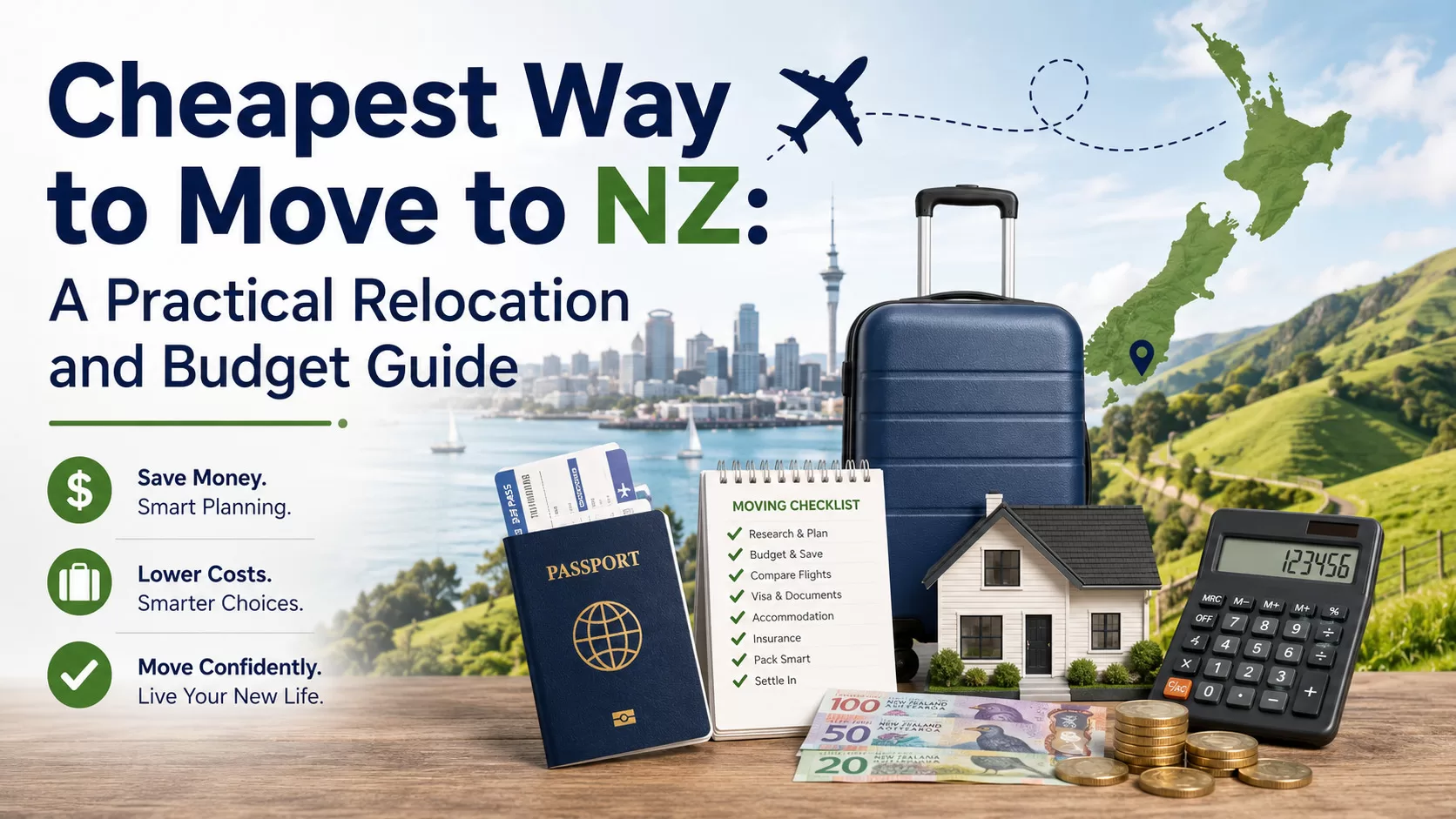
For many people, the cheapest way to Move to NZ is not about finding a single low-cost ticket or visa. It is a carefully planned combination of an affordable visa pathway, low-cost travel, limited shipping, sensible housing, and a realistic emergency reserve.
The overall cost to Move to NZ depends on where you are relocating from, your visa category, whether you are travelling alone or with a family, how many belongings you bring, and the type of accommodation you choose after arrival.
Planning carefully before you Move to NZ can help reduce unnecessary expenses, avoid last-minute costs, and make the relocation process more affordable and manageable, especially if you are moving during a busy travel or rental season.
A successful New Zealand relocation should separate one-time expenses from ongoing living costs. One-time expenses may include visa application fees, flights, medical examinations, police checks, shipping, temporary accommodation, rental bond, advance rent, and initial home setup. Ongoing expenses include rent, food, transport, utilities, insurance, and other daily costs. This article explains practical ways to reduce your moving costs while protecting your immigration status and financial security.
Choose an Affordable and Suitable Visa Pathway
The first major part of a relocation budget is the visa. New Zealand immigration costs vary by visa type, country of application, and the evidence required. Speaking with experienced Immigration Advisers Auckland can help applicants understand suitable visa pathways, expected costs, and documentation requirements before making major financial commitments. A person should never choose a visa only because it appears cheap. The visa must match the lawful purpose of the move, whether that purpose is skilled migration, employment, family reunification, study, or a temporary stay.
Compare Visa Fees and Immigration Routes
Potential migrants planning to Move to NZ should compare the total cost of a skilled worker visa, partner visa, student visa, visitor visa, or residence application rather than focusing only on the official application fee.
The total expense to Move to NZ may also include medical examinations, police checks, translations, qualification assessments, occupational registration, courier services, and professional immigration support.
A temporary visa may have a lower initial fee, but people who intend to Move to NZ permanently should consider the longer-term costs, as a residence strategy may require several visa applications and additional expenses over time.
A skilled worker with a genuine job offer may have a more economical long-term route than a student who must pay substantial tuition and living costs. A partner visa may be appropriate where the relationship meets the relevant requirements, while a visitor visa is not a substitute for a work or residence visa. Applicants should check current Immigration New Zealand requirements before paying, because fees and immigration instructions can change.
Balance Speed, Eligibility, and Total Cost
The Fastest Visa Pathway NZ is not always the cheapest route, and the cheapest route is not always the fastest. A direct residence option may involve a larger upfront application cost but reduce the expense of maintaining multiple temporary visas. Conversely, a temporary work visa may let a skilled migrant begin earning sooner, even if residence requires later New Zealand work experience.
An immigration adviser can help compare options, but adviser fees must be included in the relocation budget. If you use professional support, verify that the adviser is licensed or legally exempt and request a written service agreement. Avoid anyone who promises guaranteed approval or suggests hiding facts. A refusal can create additional immigration costs and delay the move.
Plan Flights, Insurance, and Your Arrival Budget
International travel is often the most visible moving expense. Flight costs depend on departure city, route, airline, baggage, season, and booking date. A flexible relocation timeline can reduce the price of one-way flights, particularly if you avoid school holidays, Christmas, and other peak travel periods.
Reduce Long-Haul Flight Costs
Compare one-way flights across several departure dates and nearby airports. Check baggage rules carefully before choosing a low headline fare, because additional bags can make a cheaper ticket more expensive. A couple or family should compare the cost of separate baggage allowances with the cost of shipping personal belongings. Keep passports, visa approval, documents, medication, valuables, and essential clothing in carry-on baggage where permitted.
If you are moving during summer, remember that New Zealand’s peak moving season can coincide with strong rental competition. The cheapest flight may not be the cheapest overall option if it leaves you paying for several weeks of expensive temporary accommodation. Coordinate the arrival date with a confirmed place to stay whenever possible.
Budget for Insurance and Initial Arrival Expenses
Travel insurance or relocation travel insurance can protect against medical emergencies, cancellations, lost baggage, and other unexpected costs. People on temporary visas should check whether their visa conditions require insurance and whether the policy covers the full intended stay. Health and travel cover may be particularly important for students, working holiday travellers, and new arrivals who are not eligible for publicly funded services.
An arrival budget should cover airport transport, food, phone connectivity, temporary housing, local transport, deposits, and basic household goods. Keep a financial buffer instead of spending every available New Zealand dollar on the journey. A reserve is especially important if employment begins after arrival or if a visa application is still being processed.
Decide What to Ship and What to Buy Locally
Shipping a full household move is often one of the largest avoidable expenses. International shipping costs depend on shipping volume, origin, destination, method, insurance, customs clearance, and whether the load is shared or dedicated. A partial shipping load may be more economical than a full container, but it can still cost more than replacing ordinary items in New Zealand.
Use a Household Shipping Cost Calculation
Before booking international shipping, create an inventory of furniture, appliances, clothing, kitchenware, electronics, and personal belongings. Ask whether each item is valuable, difficult to replace, sentimental, or compatible with New Zealand homes and power standards. Obtain several written quotes and check whether packing, collection, port charges, delivery, customs, and insurance are included.
Shipping furniture may make sense for high-value or sentimental pieces, but bulky low-value goods can consume expensive volume. Measure large items and compare the total shipping cost with the price of buying second-hand furniture after arrival. Sell, donate, or recycle items that would be expensive to transport and easy to replace.
Consider Biosecurity and Customs Requirements
New Zealand has strict biosecurity rules. Household goods, outdoor equipment, food, wooden items, and used camping or gardening equipment may require cleaning, inspection, treatment, or declaration. Failure to comply can lead to delays, treatment charges, seizure, or penalties. A moving checklist should include the official rules for personal effects before packing.
Do not assume that a shipping company’s advice replaces official requirements. Keep a detailed inventory and clean items thoroughly. This preparation can reduce inspection problems and prevent unexpected arrival expenses.
Manage Pet Relocation and Family Moving Costs
Moving pets to New Zealand can be significantly more expensive and complex than moving personal belongings. Pet relocation costs may include veterinary appointments, vaccinations, microchipping, blood tests, rabies testing where applicable, official certification, import permits, airline cargo fees, transport crates, and approved pet quarantine. Requirements depend on the species and the country from which the animal is travelling.
Prepare Pets Early
Start pet planning months before the moving date. Read the current Ministry for Primary Industries requirements and speak with an approved pet transport company or the relevant government authority in the country of export. MPI introduced a revised import health standard for cats and dogs in 2026, with a transition period and further identification requirements beginning later in the implementation schedule . Because pet rules can change, use the current MPI process rather than an old blog post or social media checklist.
Book required veterinary work early and keep originals of certificates, test results, permits, and quarantine confirmations. A missed blood-test window or incomplete document can force a delayed departure and create additional accommodation and airline costs. Pet owners should also budget for food, transport to the airport, and a suitable temporary arrangement if the animal arrives separately from the family.
Budget for Moving with Children
Family relocation requires more than multiplying a single person’s budget. A family of four may need larger temporary accommodation, additional baggage, school-related costs, furniture, transport, medical coverage, and a bigger emergency budget. Families should research school zones, public and private schooling, childcare, and the cost of living in the target location before booking flights.
Young families can reduce costs by bringing only essential clothing and documents, choosing furnished temporary housing, using public transport initially, and buying second-hand household goods. Couples relocating without children may have greater flexibility to choose shared accommodation or a smaller furnished rental while they search for permanent accommodation.
Find Affordable Housing After Arrival
Housing is usually the largest ongoing cost for people planning to Move to NZ. The Auckland rental market is often more expensive and competitive than many regional locations, although prices vary by neighbourhood and property type.
Those who Move to NZ should also compare housing costs across different cities. Wellington can be relatively expensive, while smaller cities and towns may offer lower rental costs but fewer employment opportunities and services.
Invercargill and other South Island locations may be more affordable, but the best place to Move to NZ ultimately depends on your employment prospects, housing budget, family needs, and preferred lifestyle.
Use Temporary Accommodation Strategically
Temporary accommodation provides flexibility while you inspect properties and complete a rental search. However, hotels and short-term furnished rentals can become expensive if the house-hunting period lasts too long. Book only enough short-term accommodation to manage the first stage of arrival, then move to a long-term rental when you understand the local market.
A furnished rental may cost more per week but save the initial expense of buying beds, cookware, appliances, and other home setup items. An unfurnished rental may be cheaper over time but requires furniture costs immediately. Compare the total cost rather than looking only at weekly rent.
Budget for Bond, Advance Rent, and Setup
Tenancy Services states that landlords may generally ask for one or two weeks’ rent in advance, and a landlord cannot ask for more than two weeks’ rent in advance during a tenancy . A general bond may also be required, subject to the legal limit and tenancy rules. New arrivals should budget for rental bond, advance rent, moving from temporary housing, utility connections, basic furnishings, and transport to the new home.
Landlords must advertise a rental price and cannot encourage rental bidding above the advertised amount . Compare market rent for similar homes, inspect the property carefully, and keep written records of payments. House hunting becomes easier when you have identification, proof of income or funds, references, and a clear explanation of your intended tenancy.
Build a Cost-Controlled Moving Plan
The most effective cost-saving strategies are planned before departure. Create a moving budget in NZD, list one-time and monthly expenses, and add a contingency for exchange-rate movement, flight changes, rising accommodation costs, and unexpected delays. A budget should show the minimum cash needed to arrive safely, not merely the cheapest possible scenario.
Create a Relocation Timeline and Checklist
Begin by identifying the target location, visa pathway, employment start date, travel window, and expected rental date. Obtain visa approval before making non-refundable arrangements where possible. Then arrange medical examinations, police checks, documents, flights, insurance, shipping, pet requirements, and temporary accommodation in a logical order.
Your moving checklist should include passports, visa documents, birth and marriage certificates, qualifications, employment records, prescriptions, financial records, translated documents, insurance details, and copies stored securely online. Keep enough money available for the period before your first New Zealand salary. A financial buffer protects against the financial pressure caused by delayed work, delayed shipping, or an unsuccessful rental search.
Choose Between Auckland, the North Island, and the South Island
Auckland offers a large job market, international connections, and extensive services, but its rental market and housing costs can be high. Wellington may suit people working in government, technology, education, or creative industries, although rental competition can be strong. Other North Island cities may reduce accommodation costs while keeping access to employment and services.
The South Island can offer different housing and lifestyle options, but flights, shipping, and job availability should be considered. A smaller target location may reduce monthly rent but increase transport or relocation costs if you later need to move for work. Compare the full cost of living, not just the weekly rental price.
In conclusion, the cheapest way to move to NZ is usually to choose a suitable visa early, compare the total immigration costs, book flexible travel, ship only high-value belongings, prepare pets well in advance, and secure housing without rushing into an expensive arrangement. Careful migration planning can make moving overseas more affordable without compromising visa compliance, insurance, or safety.