
Education System NZ Overview: A Comprehensive Guide to Academic Excellence and Learning Pathways
by | August 17, 2026 | Info Article
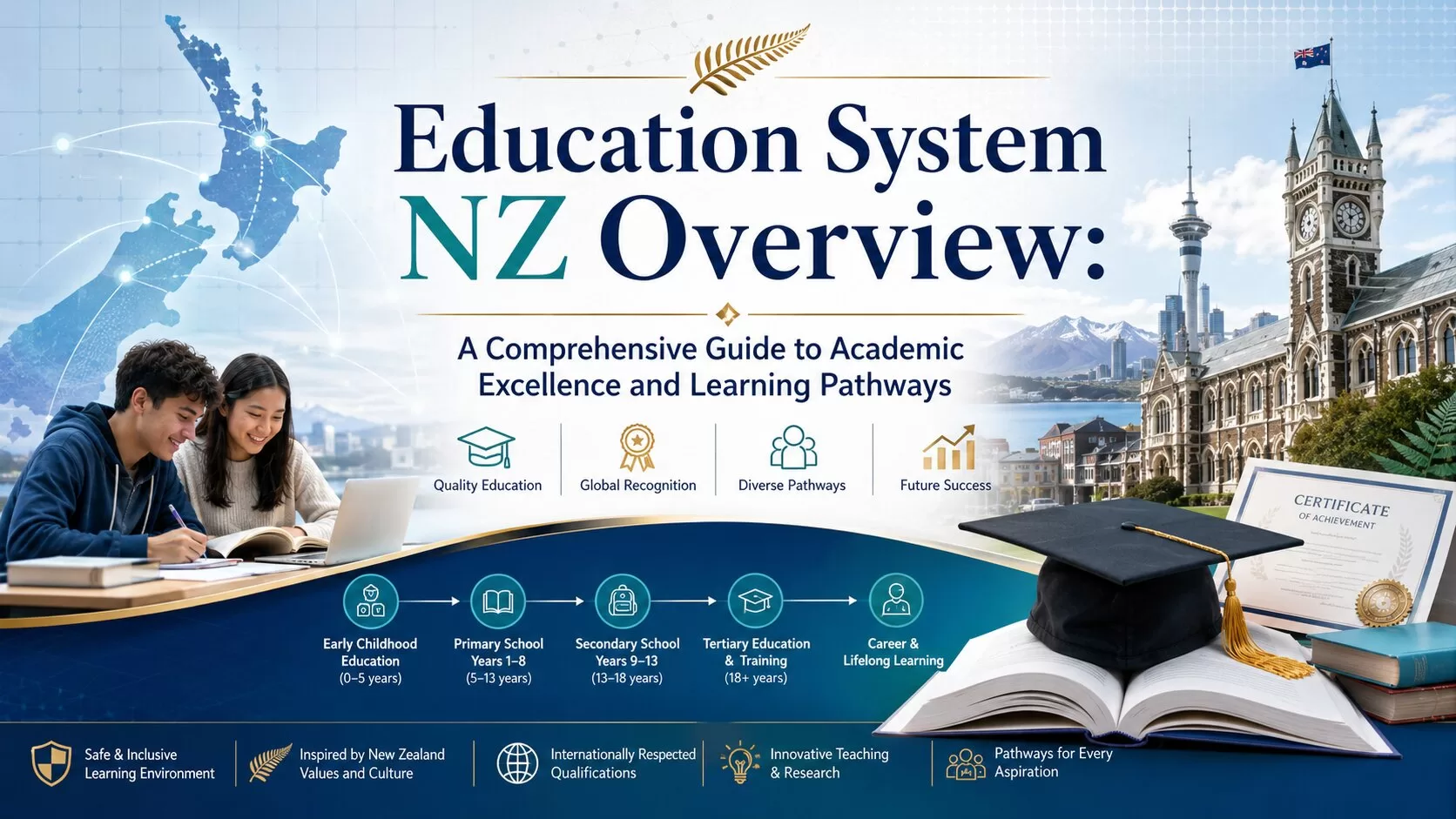
New Zealand has earned a stellar global reputation for fostering a world-class education environment that balances academic rigor with holistic student development. The Education System NZ is structured to provide seamless transitions from early childhood through to secondary schooling and advanced tertiary study. Whether domestic scholars or international students are navigating their educational journey, the country offers robust academic qualifications, flexible study options, and strong industry connections.
A key strength of the Education System NZ is its clear progression across different study levels, allowing learners to move from foundational education into vocational training, university study, and career-focused qualifications. This flexibility helps students choose pathways that align with their academic interests, practical skills, and long-term professional ambitions.
Understanding the architecture of the Education System NZ—including school types, qualification levels, and tertiary providers—is essential for mapping out effective career pathways and achieving long-term educational goals.
Overview of the Education System NZ : Education System NZ
The New Zealand education system is structured across three broad stages: early childhood education, schooling (encompassing primary, intermediate, and secondary levels), and tertiary education. The Education System NZ provides a clear progression between these stages, helping learners move smoothly from foundational study into higher education and career-focused pathways.
Governed by national standards and rigorous quality assurance mechanisms, the framework ensures that every learner experiences high-quality education regardless of their geographic location or provider choice. One of the strengths of the Education System NZ is its emphasis on maintaining consistent education standards while still allowing flexibility across different providers and study levels.
The system is designed to accommodate diverse study levels, promoting critical thinking, creativity, and practical problem-solving through modern teaching methods and student-centered learning environments. Through this balanced approach, the Education System NZ supports both academic development and the practical skills students need for further study and future careers.
The Schooling Journey: Primary to Secondary Education
Schooling in New Zealand spans 13 years, starting when children turn five years old. Throughout their school years, students benefit from a comprehensive national curriculum that emphasizes core competencies alongside vocational subjects and creative arts. Schools in New Zealand operate under three primary governance models: state schools funded by the government, state-integrated schools with a specific character or philosophy, and private schools that charge independent tuition fees.
Primary and Intermediate Schools: Building the Foundation
The formal schooling journey begins in primary schools, which typically cater to students from Year 0 or Year 1 through Year 6. In regions where dedicated middle-level education is implemented, intermediate schools cater specifically to students in Years 7 and 8 (ages 11 to 13). During these formative years, the focus is on establishing strong foundational literacy and numeracy skills while encouraging inquiry-based learning. Learning support services are readily available to assist students with diverse learning needs, ensuring an inclusive learning environment across all schools.
Secondary Schools and School Qualifications (NCEA)
Secondary schools accommodate students from Year 9 through Year 13, preparing them for higher education or direct entry into the workforce. The cornerstone of senior secondary assessment is the National Certificate of Educational Achievement (NCEA). Students generally begin NCEA Level 1 in Year 11 and progress through Level 3 by Year 13. This modular qualification structure allows for flexible course selection, enabling students to tailor their school qualifications to their specific interests and future career aspirations.
The New Zealand Qualifications and Credentials Framework (NZQCF)
At the heart of the nation’s training and academic structure is the New Zealand Qualifications and Credentials Framework (NZQCF). The NZQCF is a unified, 10-level hierarchy that classifies all approved academic qualifications, vocational certificates, and credentials. This framework provides absolute transparency for employers, education agents, academic institutions, and anyone seeking guidance from an Immigration advisor Auckland regarding the complexity, recognition, and depth of a given credential.
Understanding Study Levels and Quality Assurance
The NZQCF spans from Level 1 certificates to Level 10 doctoral degrees, ensuring clear education pathways for lifelong learning. Underpinning this framework is strict quality assurance managed by regulatory bodies such as the New Zealand Qualifications Authority (NZQA) and Universities New Zealand. These organizations maintain rigorous education standards across all education providers, guaranteeing that qualifications earned in New Zealand are trusted globally. Furthermore, navigating these administrative and settlement requirements often parallels the considerations families make when examining the Healthcare System NZ for Visa Holders.
Higher Education: Universities and Academic Excellence
New Zealand is home to eight state-funded universities, all of which consistently rank among the top tier globally . These institutions represent the pinnacle of higher education in the country, offering comprehensive degree programmes across a vast spectrum of academic disciplines and professional fields.
Research-Based Education and Degree Programmes
Universities in New Zealand are renowned for combining academic excellence with cutting-edge research. Students engage directly with leading academics, participating in research-based education that fosters critical inquiry and innovation. Undergraduate courses and programmes lead to bachelor’s degrees, while postgraduate options include honours, postgraduate diplomas, and master’s degrees tailored for advanced professional development and specialized areas of study.
PhD Study and Global Recognition
For those pursuing the highest level of academic achievement, PhD study in New Zealand offers exceptional opportunities. New Zealand universities welcome doctoral candidates from around the world, providing access to world-class research facilities and mentorship. A notable advantage for international doctoral candidates is that many universities charge domestic tuition rates for PhD study, making it a highly attractive destination for global researchers seeking globally recognised qualifications.
| NZQCF Level | Qualification Types | Primary Focus & Target Audience |
| Levels 1 – 4 | Certificates, Micro-credentials | Foundational skills, trades, and introductory vocational training |
| Levels 5 – 6 | Diplomas, Advanced Certificates | Technical proficiency and specialized paraprofessional training |
| Levels 7 | Bachelor’s Degrees, Graduate Diplomas | Comprehensive undergraduate study and career entry |
| Levels 8 – 10 | Postgraduate Degrees, Master’s, Doctorates | Advanced research, specialized expertise, and academic leadership |
Vocational Education: Polytechnics and Practical Skills
Beyond traditional universities, the tertiary sector features robust vocational pathways designed to meet the immediate demands of the labor market. This sector ensures that student learning translates directly into tangible, industry-focused education.
Institutes of Technology and Career-Focused Skills
Institutes of Technology and Polytechnics (ITPs) focus heavily on practical education, hands-on learning, and career-focused skills. These institutions offer a wide array of certificates, diplomas, and applied degrees that bridge the gap between classroom theory and workplace reality. Through close alignment with regional employers, these providers deliver practical training that equips graduates with the exact competencies required in fields like engineering, hospitality, and applied sciences.
Private Training Establishments and Specialised Programmes
Private training establishments (PTEs) complement the public tertiary network by offering specialised programmes tailored to niche industries. Operating in smaller class settings, PTEs provide focused study programmes ranging from foundation levels to advanced diplomas. Their agility allows them to respond rapidly to changing industry needs, ensuring that students receive targeted instruction and relevant professional connections.
Supporting International Students and Career Pathways
Welcoming learners from across the globe is a core pillar of New Zealand’s educational strategy. To ensure a safe and enriching experience, the government and institutions provide comprehensive support networks for all enrolled scholars.
The Code of Practice and Student Learning Support
All institutions enrolling international learners must adhere to the Education (Pastoral Care of Tertiary and International Learners) Code of Practice. This statutory framework ensures high standards of student welfare, safe accommodation, and dedicated learning support throughout their stay. Whether seeking study advice or personal counseling, international scholars have access to comprehensive on-campus resources that foster a secure and inclusive community.
Education Pathways and Career Development
Navigating the transition from academia to the professional world is facilitated by dedicated career centers embedded within institutions. These services assist students with CV writing, interview preparation, and networking events, directly supporting long-term career development. By combining rigorous academic study with practical internships and strong industry ties, New Zealand empowers graduates to succeed in an increasingly competitive global marketplace.
Conclusion
The Education System NZ offers a dynamic, inclusive, and world-class framework that empowers learners at every stage of their lives. From the foundational years in primary schools to advanced PhD study at globally ranked universities, New Zealand maintains uncompromising education quality and support. By integrating academic rigor with practical, vocational training, the nation ensures that all graduates are well-equipped for lifelong success. For those planning a move to Aotearoa, understanding this exemplary educational framework—alongside vital infrastructure like the Healthcare System NZ for Visa Holders—provides a solid foundation for a prosperous future.