
Immigration NZ Requirements Checklist
by | April 30, 2026 | Info Article
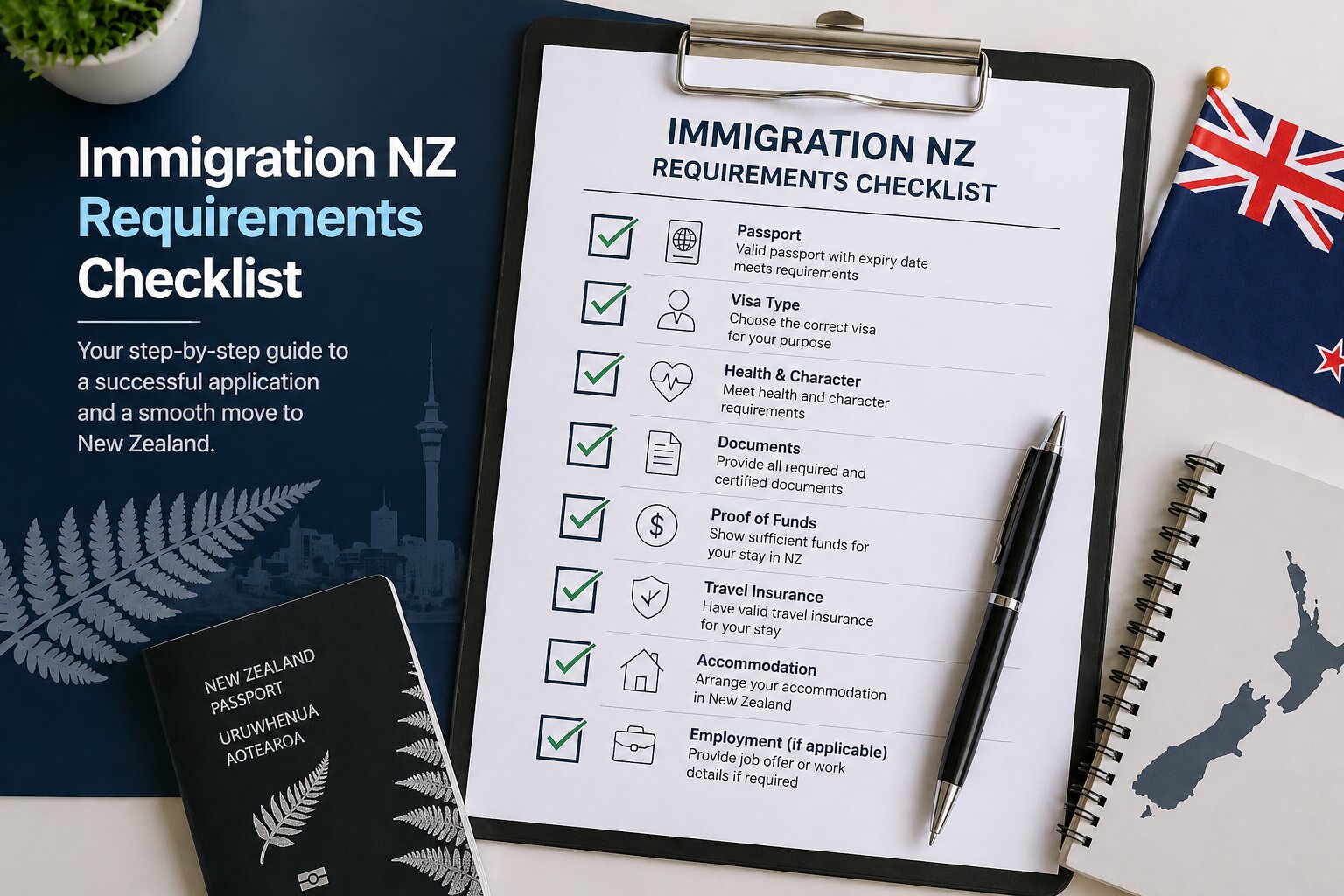
Moving to New Zealand is not only a visa decision; it is a practical transition into a new workplace, community, and daily routine. A strong Immigration NZ Requirements Checklist helps applicants, employers, and families prepare before travel, organise documents, understand expectations, and reduce avoidable delays. Whether someone is entering under a work pathway, planning study, or comparing family settlement needs, the checklist should connect the NZ Visa process with real-world preparation.
For Overseas workers, the most successful arrival plans usually begin before a flight is booked. The person needs to understand visa conditions, employment terms, living costs, accommodation choices, healthcare access, and community support. Employers also need a clear process for Worker onboarding, especially where the role is linked to accredited employment. Immigration New Zealand confirms that AEWV accredited employers must provide settlement information to workers within their first month of employment, and evidence may include copies of settlement material, communication with workers, and induction plans.
This article explains the core requirements, preparation steps, and workplace expectations that should sit behind a professional NZ Visa checklist. It is written for applicants, employers, education advisers, and families who want a clear, practical structure for Moving to New Zealand.
Immigration New Zealand requires AEWV accredited employers to give migrant workers information that helps them settle in New Zealand, including accommodation, transport, healthcare, community groups, IRD numbers, training, and job or industry hazards.
Understanding the Immigration NZ Requirements Checklist
An Immigration NZ Requirements Checklist should do more than list passport scans and application forms. It should help a person understand the relationship between their visa, their employment, and their settlement needs. A complete checklist covers eligibility, evidence, timing, arrival planning, employer duties, and ongoing responsibilities after arrival.
For an NZ Visa applicant, the first question is whether the visa category matches the person’s purpose. A worker may need an Accredited Employer Work Visa or another work pathway. A student may need to check New Zealand student visa requirements. A family may need to understand whether dependants can apply for related visas. An employer may need to understand the employer accreditation NZ process before offering support to migrant workers. Each situation is different, but all require careful preparation.
Why an NZ Visa checklist matters
A checklist matters because immigration applications are evidence-based. Immigration officers do not assess intention alone; they assess documents, eligibility, consistency, and whether the applicant meets the rules of the selected NZ Visa category. Missing documents, unclear employment evidence, weak financial information, or inconsistent personal details can create delays.
A checklist also protects applicants from making assumptions. For example, a person may think that getting a job offer is enough, but the role, employer, pay, documentation, and visa conditions may all matter. A student may think an admission letter is enough, but the Fee Paying Student Visa page states that applicants must have an offer of place from an approved education provider, enough money for tuition and living expenses, acceptable insurance, good health, good character, and a genuine reason for coming to New Zealand.
Who should use this checklist
This checklist is useful for Overseas workers, employers, students, partners, and families. It is especially useful where several people are involved in the transition, such as a hiring manager, HR adviser, immigration adviser, education provider, spouse, and children. A shared checklist improves coordination and reduces confusion.
Pre-Arrival Preparation for Overseas Workers
Pre-arrival preparation is the foundation of a smooth immigration and settlement experience. Before travelling, applicants should confirm that the selected NZ Visa matches their purpose, that their documents are current, and that they understand the conditions attached to their visa. Employers should confirm that the role, employment agreement, and onboarding information are ready before the worker leaves their home country.
Visa and document readiness
Document readiness begins with identity, passport validity, translations, relationship evidence where relevant, employment evidence, and financial documents. Applicants should keep copies of the visa approval, passport, employment agreement, qualifications, police certificates, medical documents, and insurance details. If children are travelling, birth certificates, school records, immunisation records, and custody documents may also be relevant.
For workers, the employment evidence should align with the role being offered. For students, New Zealand student visa requirements may include an offer of place, tuition fee evidence, living cost evidence, insurance, health, character, and genuine study intentions.
For employers, the employer accreditation NZ process may be relevant where the organisation is hiring migrants under accredited employer settings.
Settlement planning before travel
Settlement planning should start before departure because early decisions affect the first month in New Zealand. Applicants should research temporary accommodation, rental requirements, transport routes, mobile phone options, bank account processes, tax numbers, local schools, and medical enrolment. This preparation supports New environment adaptation and helps reduce stress during the first few weeks.
A professional checklist should include Housing information, Healthcare information, and Education and schooling. Housing information should explain short-term and long-term accommodation choices. Healthcare information should explain how to access general practitioners, pharmacies, urgent care, and emergency services. Education information should cover local schools, enrolment documents, term dates, and the needs of children who may be adapting to a new curriculum.
Employer Responsibilities and Worker Onboarding
Employers play a major role in helping migrant workers settle. Good Worker onboarding should explain the job, the workplace, safety expectations, reporting lines, employment rights, Employment expectations, and the practical realities of living locally. This support is not only administrative; it contributes to Employee productivity, retention, and wellbeing.
For accredited employers, Immigration New Zealand expects workers to receive settlement information within their first month of employment. Required topics include accommodation, transport, cost of living, healthcare, Citizens Advice Bureau services, community groups, IRD numbers, industry training, qualifications, and job or industry hazards.
This makes the checklist an important compliance and support tool.
Written job description and workplace structure
A Written job description should clearly describe the role title, duties, location, reporting line, required skills, and expected outcomes. It should match the employment agreement and the work that the employee will actually perform. If the worker is sponsored or supported for an NZ Visa, consistency between the role description and visa-related information is essential.
The checklist should also explain the Workplace structure. New workers should know who their manager is, who approves leave, who handles payroll, and who to contact for workplace concerns. A simple organisation chart can help, but the explanation should also be discussed during induction so the worker understands how decisions are made.
Communication channels and workplace policies
Clear Communication channels reduce mistakes and anxiety. The employer should explain whether employees use email, messaging platforms, rosters, HR systems, team meetings, or direct supervisor check-ins. This is especially important where Language barriers may affect confidence or where workplace instructions involve safety, compliance, or customer service.
The checklist should also include Workplace policies, including the Work hours policy, leave procedures, payroll timing, health and safety reporting, privacy expectations, harassment and bullying policies, and the Internet and email usage policy. These policies should be explained in plain language. New workers should understand both their rights and their Employee responsibilities, including punctuality, safe work practices, accurate time recording, confidentiality, and respectful behaviour.
First Days Support After New Workers Arrival
The first days after arrival are often the most stressful. A person may be dealing with jet lag, unfamiliar roads, banking, mobile phone setup, housing viewings, school enrolment, and a new workplace at the same time. Thoughtful First days support can make the difference between confusion and confidence.
Employers should plan the first week carefully. The worker should know where to go, what time to arrive, what to bring, who will meet them, and what will happen during induction. A structured approach to New workers arrival improves Workplace communication and helps the employee feel welcome.
Welcome kit and living and working information
A Welcome kit does not need to be complicated, but it should be practical. It may include local contact details, emergency numbers, transport information, payroll instructions, workplace policies, a first-week schedule, and contacts for support. It should also include Living and working information so the worker can understand how everyday systems work in New Zealand.
A useful welcome kit may include the following items:
- A first-week induction schedule with manager and HR contact details.
- Local Housing information, transport options, and basic cost-of-living guidance.
- Healthcare information, including how to find a doctor, pharmacy, or urgent medical help.
- Education and schooling notes for workers arriving with children.
- Workplace health and safety instructions, including how to report hazards or incidents.
- A plain-language summary of work hours, leave, communication channels, and employee responsibilities.
Workplace safety, wellbeing, and productivity
Workplace safety must be explained clearly from the beginning. Workers should understand job or industry hazards, emergency procedures, personal protective equipment, reporting systems, and who to contact if something feels unsafe. Immigration New Zealand specifically lists job or industry hazards as part of the settlement information accredited employers must provide.
Worker wellbeing is also important. New employees may experience culture shock, homesickness, financial pressure, or uncertainty about local systems. Employers can support wellbeing through regular check-ins, respectful communication, buddy systems, and referrals to appropriate community or support services. When wellbeing is supported, Employee productivity usually improves because the worker can focus on learning the role rather than struggling alone with settlement problems.
Family Settlement Support and Community Adaptation
For many migrants, success depends on the whole family, not only the main applicant. Family settlement support should include housing, schooling, healthcare, transport, language support, and community connection. If a partner or children feel isolated, the worker may also struggle to remain settled and productive.
Relocation guidance should therefore explain practical steps for families. Parents need to understand school zones, enrolment processes, childcare options, and transport to school. Partners may need information about study, work rights, English language classes, volunteering, or community groups. Children may need time and support for Cultural adaptation, friendship-building, and confidence in a new classroom.
Community support can reduce isolation. Local libraries, Citizens Advice Bureau services, cultural associations, faith communities, sports clubs, migrant support organisations, and neighbourhood groups can all help newcomers build connections. Employers should not try to solve every personal issue, but they can provide direction and encourage workers to access reliable support.
Language is another important part of settlement. Language barriers can affect safety, training, customer service, and confidence. Employers should avoid assuming that a person understands every instruction simply because they nod politely. Good practice includes checking understanding, using plain English, providing written summaries, encouraging questions, and allowing time for the worker to adapt to accents, workplace vocabulary, and local expressions.
Final Checklist for a Smooth NZ Visa and Settlement Process
A strong NZ Visa and settlement checklist should bring immigration, employment, and practical living requirements into one plan. It should begin before the application, continue through the visa decision, and remain active during the first month after arrival. This approach supports compliance, reduces uncertainty, and helps migrants become confident members of their workplace and community.
Before submitting an application, applicants should confirm the visa category, eligibility, required documents, evidence quality, application timing, and visa processing time NZ. Students should review New Zealand student visa requirements carefully, including offer of place, funds, insurance, health, character, and genuine intentions.
Workers should confirm employment terms, role details, and employer obligations. Employers using accredited pathways should understand the employer accreditation NZ process and the settlement information expected for migrant workers.
Before travel, the checklist should include passport validity, visa approval, travel bookings, temporary accommodation, money access, insurance, transport, school records, medical information, and emergency contacts. After arrival, it should include workplace induction, IRD number guidance, payroll setup, health and safety training, local orientation, housing support, healthcare access, schooling, and community links.
The best checklist is not a one-off document. It is a living plan that changes as the person moves from application to approval, from travel to arrival, and from induction to long-term settlement. For Overseas workers, families, and employers, this wider approach turns the immigration process into a practical settlement pathway. It helps the applicant meet NZ Visa requirements, helps the employer build a stronger workplace, and helps the newcomer adapt with confidence to life in Aotearoa New Zealand.