
Visa Officer Decision Process NZ: Inside the Immigration Assessment Workflow
by | June 23, 2026 | Info Article
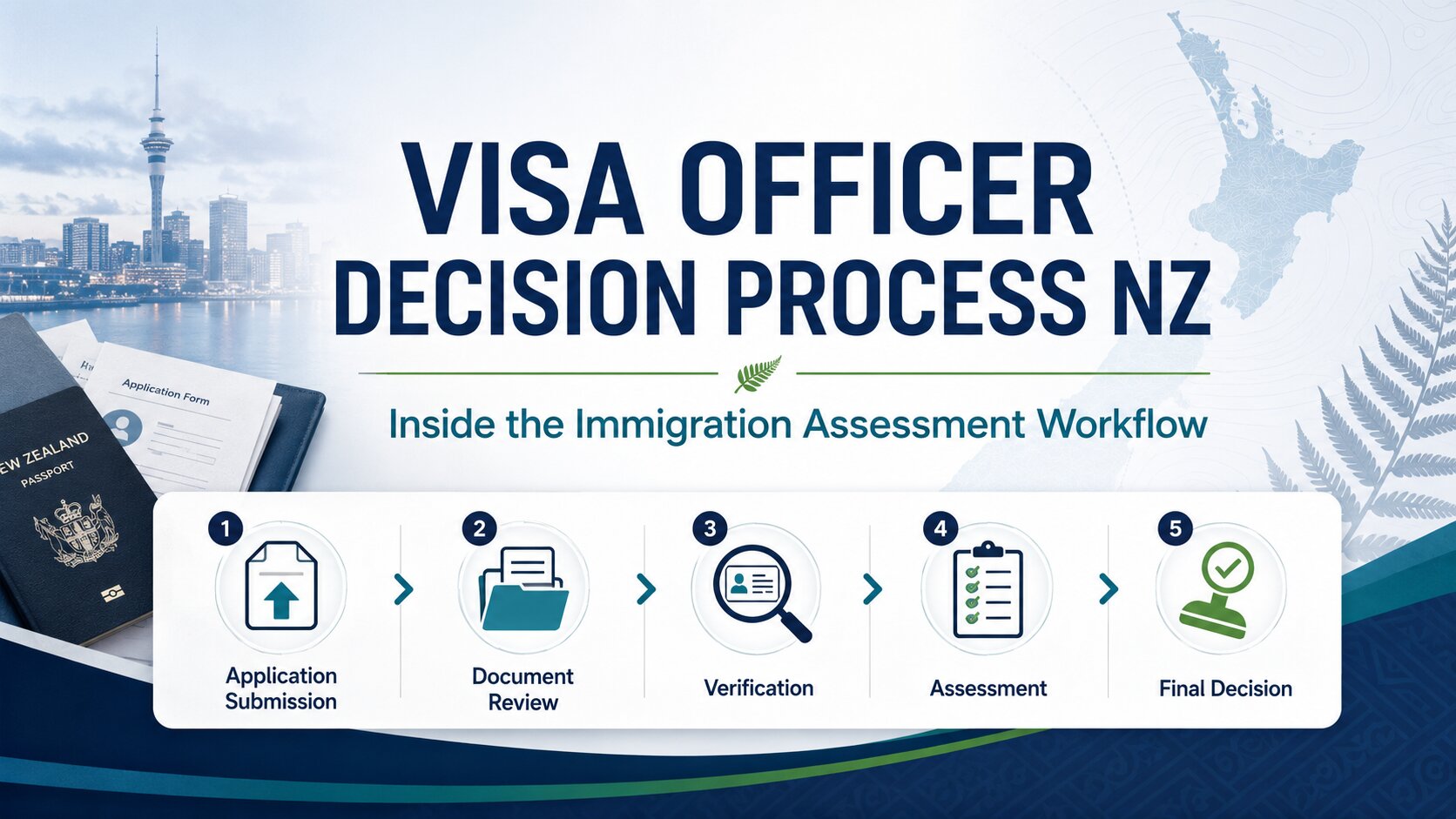
Submitting an application to live, work, study, or travel in New Zealand marks the beginning of a waiting period. Once lodged, your application enters the Immigration New Zealand (INZ) queue. The internal mechanics of the Visa Officer Decision Process NZ are governed by strict operational guidelines, statutory criteria, and workflow management. Understanding the Visa Officer Decision Process NZ can clarify how your immigration application moves from submission to final assessment, demystify New Zealand visa processing times, and help prevent unnecessary delays. This guide explores the Visa Officer Decision Process NZ, explaining how INZ assesses applications, manages queues, verifies supporting evidence, and how case officers reach fair, informed, and legally compliant final determinations.
1. How Immigration NZ Assesses Applications: The Assessment Framework
Every application submitted to INZ is evaluated against a rigid set of criteria established under New Zealand’s immigration instructions .
The Core Principles of Assessment
When an immigration officer or case officer is assigned to your file, they do not make decisions based on personal discretion . Instead, they apply a systematic process known as how immigration nz assesses applications . This framework requires the officer to evaluate whether the applicant meets all visa eligibility requirements, holds genuine intentions, and presents no risk to New Zealand’s security, public order, or health systems.
Straightforward vs. Complex Files
INZ divides incoming files into straightforward and complex applications . A straightforward application is one that includes all required evidence, contains no errors, and has no complicating factors such as health or character issues . These files are processed quickly, often well within the estimated processing time . In contrast, a complex application—which may involve previous visa declines, health conditions, or character declarations—requires a much deeper application review and extended verification checks.
2. The Journey of an Application: Queue, Allocation, and Case Officers
The timeline of a New Zealand visa application is divided into distinct operational phases.
Submission and the Application Queue
When you submit an online visa application, your file is assigned an application submission date and placed in the visa application queue for that specific visa category . Applications are generally allocated to officers in the order they are received . During this waiting period, your visa application status on your immigration online account will show as “Submitted” or “Received”.
Allocation to a Case Officer
“Allocation” is the formal step where a manager assigns your file to a specific immigration officer to begin the active visa application assessment . Once allocated, the officer becomes your case officer . They will review the supporting documents and decide if the file can be processed immediately or if it requires an additional information request .
3. Verification Checks: The Rigorous Security and Document Audits
A significant portion of the visa approval process is dedicated to verification and background checks .
Identity and Document Verification
The case officer must verify that all documents submitted are genuine . If you have submitted foreign language documents, they must be accompanied by English Translations NZ Visa . The officer will check the authenticity of these translations, ensuring they meet certified standards if required for your visa type . They will also perform identity verification to ensure your passport details match all supporting records .
Health, Character, and Security Checks
To protect the New Zealand public, all applicants must undergo background checks .
- Character Checks: The officer reviews police certificates to ensure the applicant meets character standards .
- Health Checks: Medical certificates and chest X-rays are reviewed by panel doctors to ensure the applicant does not pose a public health risk .
- Security Checks: In some cases, third-party agencies conduct security checks to ensure the applicant is not a security risk .
4. Understanding New Zealand Visa Processing Times and Wait Times
INZ publishes extensive data to help applicants understand how long a visa takes to process .
The Processing Time Tool and Monthly Data
Applicants can use the Immigration New Zealand processing time tool to check current wait times . This tool provides an estimated New Zealand visa wait time based on recent processing trends, showing the timeframe in which 50% and 80% of applications are completed . Additionally, INZ publishes monthly visa processing data, allowing applicants to track processing times by month over the last six months.
Average Processing Times by Visa Type
Processing timeframes vary significantly depending on the visa type and the complexity of the assessment .
| Visa Category | Average Processing Time (80% of Files) | Key Factors Influencing Timeline |
| NZeTA | 24 to 72 Hours | Automated processing; dependent on security database matches. |
| Visitor Visa | 2 to 5 Weeks | High application volumes during summer peak (October to February). |
| Student Visa | 3 to 6 Weeks | Academic intake deadlines; verification of international students’ funds. |
| Work Visa (AEWV) | 4 to 8 Weeks | Employer accreditation status and complexity of the job check. |
| Resident Visa | 4 to 10 Months | High application complexity; extensive background and verification checks. |
5. Factors Affecting Visa Processing Times and Application Delays
Many applicants experience unexpected New Zealand visa application delays due to common, avoidable mistakes .
Incomplete Applications and Poor Supporting Evidence
Submitting an incomplete application is the primary cause of processing delays . If a case officer must issue an additional information request for missing documents, your file is put on hold, and the visa decision timeframe is extended . To ensure a smooth process, applicants must provide a complete and accurate application with all required evidence from the outset .
External Factors and Peak Seasons
Even with a perfect application, external factors can influence visa wait times . High application volumes during peak seasons—such as the summer tourism peak or the university intake period—can create backlogs in the application queue . Additionally, if INZ must wait for external organisations to verify qualifications or police records, it will slow down the application processing time.
6. The Final Decision and Tracking Your Application
Once all verification checks are complete and the officer is satisfied that you meet all criteria, they will make the final visa decision .
How to Track a Visa Application
You can track a New Zealand visa application by logging into your immigration online account . The portal will provide a visa processing update as your file moves through the system . Once a decision is reached, your visa application status will update to show the final application outcome—either approved or declined.
Priority Processing and Escalations
While INZ does not offer a paid priority processing service, you can request an urgent escalation under exceptional circumstances . An escalation request must be based on compelling personal or business circumstances, humanitarian factors, or matters of national interest . If accepted, your file is allocated as a priority, though this does not guarantee a positive visa decision or a shorter assessment process . By submitting a complete, well-documented file, you can ensure your application is processed as efficiently as possible .