
How Immigration NZ Assesses Applications: Rules, Criteria, and the Decision Process
by | June 22, 2026 | Info Article
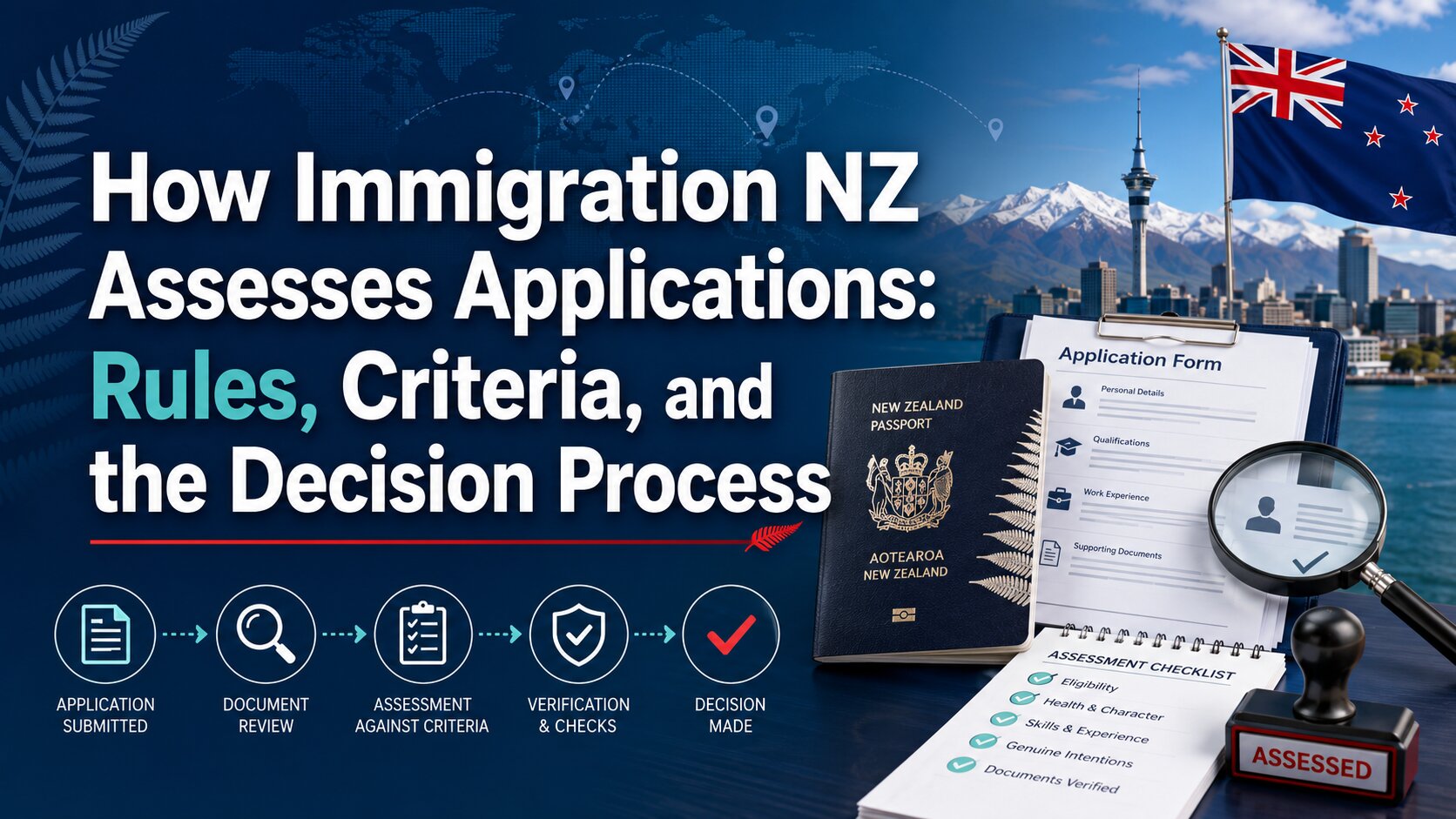
Submitting a New Zealand visa application is the beginning of an important journey, whether your goal is to visit, study, work, or settle permanently. Once you submit your paperwork, your file enters the official visa application processing system. Understanding How Immigration NZ Assesses Applications can help you prepare a complete and accurate submission, reduce avoidable errors, and minimise application processing delays. Learning How Immigration NZ Assesses Applications also enables you to provide stronger supporting documents and meet the relevant visa eligibility requirements. By knowing How Immigration NZ Assesses Applications, you can improve the overall quality of your submission and position it for a more positive visa application outcome.
Immigration New Zealand (INZ) uses a rigorous, evidence-based visa application assessment method governed by strict visa rules and criteria. This article provides a comprehensive, behind-the-scenes look at the visa decision process, the criteria used by officers, and how you can ensure your application meets all visa eligibility requirements.
Immigration New Zealand (INZ) uses a rigorous, evidence-based visa application assessment method governed by strict visa rules and criteria. This article provides a comprehensive, behind-the-scenes look at the visa decision process, the criteria used by officers, and how you can ensure your application meets all visa eligibility requirements.
1. The Initial Stages of Visa Application Processing
The moment you submit your online visa application or paper form, the New Zealand visa application enters its first stage of review. During this initial phase, the primary focus is on checking your application and supporting documents to ensure that all basic requirements have been met.
An immigration officer will first assess whether you have submitted a complete visa application. If your application is deemed an incomplete application, it may be returned to you immediately, or it will suffer from severe application processing delays. The officer will verify that all required fields are filled, the correct fees are paid, and all mandatory supporting documents are attached. If you are applying from outside New Zealand, the officer will also verify your country of application and check the specific processing timeframe associated with your region. During high application seasons, application volumes can rise dramatically, which directly impacts the visa waiting time and overall visa processing time.
2. Document and Information Verification: The Core of the Assessment
Once your application is accepted as complete, it moves into the core stage of visa application assessment. Understanding How Immigration NZ Assesses Applications helps clarify how an immigration officer conducts detailed document verification and applicant verification to ensure all submitted information is genuine, consistent, and accurate. During this stage, How Immigration NZ Assesses Applications may involve reviewing supporting evidence, checking immigration history, and confirming that eligibility requirements are satisfied. Learning How Immigration NZ Assesses Applications can help applicants submit reliable documentation, respond effectively to additional requests, and avoid unnecessary processing delays.
Verification of Financial and Personal Records
The officer will carefully review your supporting evidence, cross-referencing your details with various databases. For any foreign language documents, you must provide accurate English translations. While a visitor visa may accept uncertified translations, other visa categories, such as a residence visa, require a certified English translation. The officer will verify your proof of funds, examining bank statements and pay records to ensure the money is genuinely available. If you have a sponsor, the officer will review the sponsor’s details, and if any family members are included, they will perform a thorough relationship verification to confirm partner details and family member details.
Additional Information and Further Documents
If the officer encounters any inconsistencies or requires further clarification, they will issue an additional information request. This is a formal request for further documents, which must be provided within a strict timeframe. Depending on the visa category, the officer may request photographic evidence, onward travel evidence, plane tickets, or require you to undergo a medical examination with an approved panel doctor. In some complex cases, the officer may also schedule a telephonic or face-to-face visa interview to verify your claims.
3. The Bona Fide Applicant Test: Assessing Genuine Intentions
One of the most critical aspects of how Immigration NZ assesses applications is the “bona fide” or genuine applicant test. Meeting the technical visa eligibility requirements is not enough; you must also convince the immigration officer that you have genuine intentions.
Establishing Genuine Intentions
To be considered a genuine applicant, you must satisfy the officer that you will comply with all visa conditions, will not breach the terms of your stay, and have a clear intention to leave New Zealand before your visa expiry. For a temporary visa application—such as a visitor visa, student visa, or work visa—the officer will assess your home country commitments, family ties, and financial assets to determine if you have a strong incentive to return home. If you are applying for a student visa, they will evaluate your study plans, your academic background, and whether you have a realistic New Zealand study budget.
Evaluating Travel and Immigration History
Your previous visa application history plays a significant role in this assessment. The officer will review your travel history, checking if you have ever overstayed a visa, breached visa conditions, or had a declined visa application in New Zealand or any other country. If you have a history of visa compliance, it strongly supports your credibility. Conversely, any past visa refusal or immigration violation will raise red flags and require a thorough explanation and supporting evidence to overcome.
4. Health, Character, and Security Standards
Every applicant wishing to enter New Zealand must meet strict health and character requirements to ensure they do not pose a risk to the local community or public interest.
Character and Security Clearances
To assess your character, INZ requires police certificates from your country of citizenship and any country where you have lived for a significant period. The officer will check these certificates to ensure you do not have a criminal record, gang associations, or any deportation history from another country. Any attempt to provide false information or misleading information during this process is a serious offense. If the officer discovers that you have withheld relevant information or provided fraudulent documents, it will lead to an immediate declined visa application and may result in a long-term ban from entering New Zealand.
Health Assessments and Public Health Risks
Depending on your duration of stay and country of origin, you may need to submit a chest X-ray or a full medical certificate. The medical examination must be completed by an approved panel physician. The immigration officer will review the radiologist and laboratory reports to ensure you do not have a medical condition that poses a public health risk, such as active tuberculosis, or a condition that will impose significant costs on New Zealand’s public health system
5. Visa-Specific Criteria and Category Assessments
The specific criteria used during the visa decision process vary significantly depending on the visa category you are applying for.
Temporary Visas: Visitor, Student, and Work
For temporary entry visas, the focus is on your immediate plans and your ability to support yourself.
•Visitor Visa: The officer assesses your genuine reason to visit, your financial capacity, and your onward travel arrangements, such as having return plane tickets or sufficient funds to purchase them.
•Student Visa: The assessment focuses on your offer of place from an approved New Zealand education provider, proof of tuition fee payment, and a credible funding plan for your living expenses.
•Work Visa: The officer verifies your job offer, ensures your employer has accredited employer status, and checks that your pay and job conditions comply with New Zealand employment law.
Residence and Special Visa Categories
Residence visa applications undergo a much more complex and lengthy assessment. The officer will evaluate your points under the Skilled Migrant Category, verify your qualifications and work experience, and conduct a detailed background check. In some rare cases, such as a Limited Visa or special humanitarian visas, standard rules may have exceptions, but these require a high level of justification and are assessed under strict ministerial guidelines. In some situations, the officer may impose an immigration bond as a condition of visa approval to guarantee compliance.
6. Understanding the Visa Application Outcome
After completing all verification and assessment stages, the immigration officer will make a final visa application decision.
Visa Approval and Conditions
If your application meets all the criteria, you will receive a visa approval. Your visa will be issued electronically as an eVisa, or as a physical label in your passport. It is your responsibility to understand and comply with all the conditions of your visa, such as your allowed work rights, study conditions, and the exact visa expiry date. If your circumstances change before you travel or while you are in New Zealand, you must notify INZ immediately, as traveling on a visa with outdated information can lead to border entry refusal.
Visa Refusal and Post-Decision Options
If the officer decides that you do not meet the requirements or do not have genuine intentions, you will receive a declined visa application. INZ will provide a formal letter outlining the specific reasons for the visa refusal. Depending on your situation and whether you applied from onshore or offshore, you may have application alternatives. You may be eligible to request a temporary visa reconsideration, lodge an appeal with the Immigration and Protection Tribunal, or address the officer’s concerns by preparing a new visa application with stronger supporting evidence and professional immigration advice.