Immigration NZ Requirements Checklist

Immigration NZ Requirements Checklist

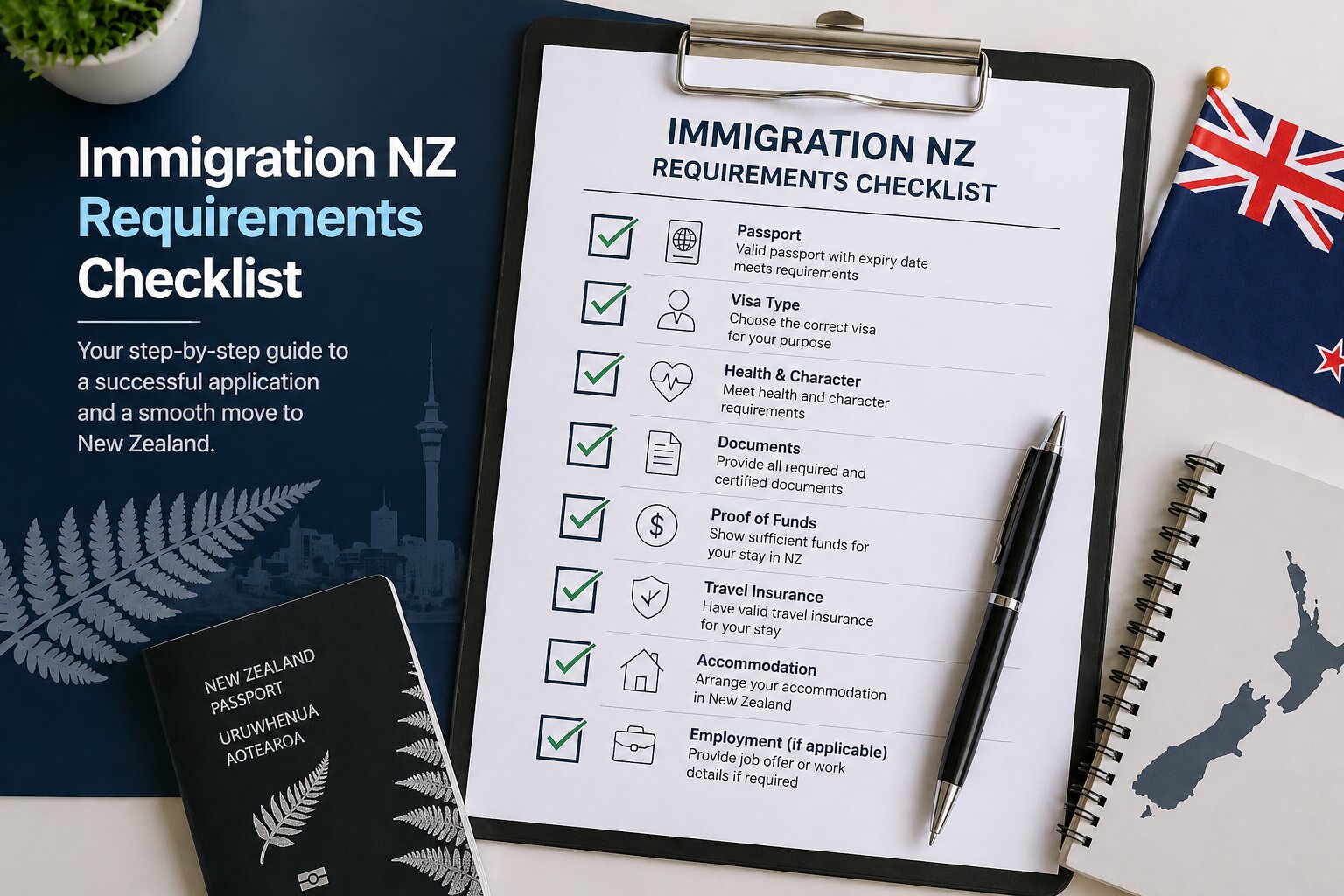
Moving to New Zealand is not only a visa decision; it is a practical transition into a new workplace, community, and daily routine. A strong Immigration NZ Requirements Checklist helps applicants, employers, and families prepare before travel, organise documents, understand expectations, and reduce avoidable delays. Whether someone is entering under a work pathway, planning study, or comparing family settlement needs, the checklist should connect the NZ Visa process with real-world preparation.

For Overseas workers, the most successful arrival plans usually begin before a flight is booked. The person needs to understand visa conditions, employment terms, living costs, accommodation choices, healthcare access, and community support. Employers also need a clear process for Worker onboarding, especially where the role is linked to accredited employment. Immigration New Zealand confirms that AEWV accredited employers must provide settlement information to workers within their first month of employment, and evidence may include copies of settlement material, communication with workers, and induction plans.

This article explains the core requirements, preparation steps, and workplace expectations that should sit behind a professional NZ Visa checklist. It is written for applicants, employers, education advisers, and families who want a clear, practical structure for Moving to New Zealand.

Immigration New Zealand requires AEWV accredited employers to give migrant workers information that helps them settle in New Zealand, including accommodation, transport, healthcare, community groups, IRD numbers, training, and job or industry hazards.

Understanding the Immigration NZ Requirements Checklist

An Immigration NZ Requirements Checklist should do more than list passport scans and application forms. It should help a person understand the relationship between their visa, their employment, and their settlement needs. A complete checklist covers eligibility, evidence, timing, arrival planning, employer duties, and ongoing responsibilities after arrival.

For an NZ Visa applicant, the first question is whether the visa category matches the person’s purpose. A worker may need an Accredited Employer Work Visa or another work pathway. A student may need to check New Zealand student visa requirements. A family may need to understand whether dependants can apply for related visas. An employer may need to understand the employer accreditation NZ process before offering support to migrant workers. Each situation is different, but all require careful preparation.

Why an NZ Visa checklist matters

A checklist matters because immigration applications are evidence-based. Immigration officers do not assess intention alone; they assess documents, eligibility, consistency, and whether the applicant meets the rules of the selected NZ Visa category. Missing documents, unclear employment evidence, weak financial information, or inconsistent personal details can create delays.

A checklist also protects applicants from making assumptions. For example, a person may think that getting a job offer is enough, but the role, employer, pay, documentation, and visa conditions may all matter. A student may think an admission letter is enough, but the Fee Paying Student Visa page states that applicants must have an offer of place from an approved education provider, enough money for tuition and living expenses, acceptable insurance, good health, good character, and a genuine reason for coming to New Zealand.

Who should use this checklist

This checklist is useful for Overseas workers, employers, students, partners, and families. It is especially useful where several people are involved in the transition, such as a hiring manager, HR adviser, immigration adviser, education provider, spouse, and children. A shared checklist improves coordination and reduces confusion.

Employers should use Immigration NZ guidance to support new worker arrival, induction, workplace communication, and settlement. Applicants can follow Immigration NZ to plan documents, travel timing, housing, healthcare, banking, and schooling. Families can rely on Immigration NZ to map practical needs such as education, transport, local services, and settlement support.

Pre-Arrival Preparation for Overseas Workers

Pre-arrival preparation is the foundation of a smooth immigration and settlement experience. Before travelling, applicants should confirm that the selected NZ Visa matches their purpose, that their documents are current, and that they understand the conditions attached to their visa. Employers should confirm that the role, employment agreement, and onboarding information are ready before the worker leaves their home country.

A practical preparation plan should cover immigration documents, employment documents, travel arrangements, housing options, family needs, and timing. It should also include a review of visa processing time NZ, as advised by Immigration NZ, because travel plans should not rely on assumptions. Immigration NZ provides tools and data to estimate timelines, but Immigration NZ processing times are guidance, not a personal guarantee.

Visa and document readiness

Document readiness begins with identity, passport validity, translations, relationship evidence where relevant, employment evidence, and financial documents. Applicants should keep copies of the visa approval, passport, employment agreement, qualifications, police certificates, medical documents, and insurance details. If children are travelling, birth certificates, school records, immunisation records, and custody documents may also be relevant.

For workers, the employment evidence should align with the role being offered. For students, New Zealand student visa requirements may include an offer of place, tuition fee evidence, living cost evidence, insurance, health, character, and genuine study intentions.

For employers, the employer accreditation NZ process may be relevant where the organisation is hiring migrants under accredited employer settings.

Settlement planning before travel

Settlement planning should start before departure because early decisions affect the first month in New Zealand. Applicants should research temporary accommodation, rental requirements, transport routes, mobile phone options, bank account processes, tax numbers, local schools, and medical enrolment. This preparation supports New environment adaptation and helps reduce stress during the first few weeks.

A professional checklist should include Housing information, Healthcare information, and Education and schooling. Housing information should explain short-term and long-term accommodation choices. Healthcare information should explain how to access general practitioners, pharmacies, urgent care, and emergency services. Education information should cover local schools, enrolment documents, term dates, and the needs of children who may be adapting to a new curriculum.

Employer Responsibilities and Worker Onboarding

Employers play a major role in helping migrant workers settle. Good Worker onboarding should explain the job, the workplace, safety expectations, reporting lines, employment rights, Employment expectations, and the practical realities of living locally. This support is not only administrative; it contributes to Employee productivity, retention, and wellbeing.

For accredited employers, Immigration New Zealand expects workers to receive settlement information within their first month of employment. Required topics include accommodation, transport, cost of living, healthcare, Citizens Advice Bureau services, community groups, IRD numbers, industry training, qualifications, and job or industry hazards.

This makes the checklist an important compliance and support tool.

Written job description and workplace structure

A Written job description should clearly describe the role title, duties, location, reporting line, required skills, and expected outcomes. It should match the employment agreement and the work that the employee will actually perform. If the worker is sponsored or supported for an NZ Visa, consistency between the role description and visa-related information is essential.

The checklist should also explain the Workplace structure. New workers should know who their manager is, who approves leave, who handles payroll, and who to contact for workplace concerns. A simple organisation chart can help, but the explanation should also be discussed during induction so the worker understands how decisions are made.

Communication channels and workplace policies

Clear Communication channels reduce mistakes and anxiety. The employer should explain whether employees use email, messaging platforms, rosters, HR systems, team meetings, or direct supervisor check-ins. This is especially important where Language barriers may affect confidence or where workplace instructions involve safety, compliance, or customer service.

The checklist should also include Workplace policies, including the Work hours policy, leave procedures, payroll timing, health and safety reporting, privacy expectations, harassment and bullying policies, and the Internet and email usage policy. These policies should be explained in plain language. New workers should understand both their rights and their Employee responsibilities, including punctuality, safe work practices, accurate time recording, confidentiality, and respectful behaviour.

First Days Support After New Workers Arrival

The first days after arrival are often the most stressful. A person may be dealing with jet lag, unfamiliar roads, banking, mobile phone setup, housing viewings, school enrolment, and a new workplace at the same time. Thoughtful First days support can make the difference between confusion and confidence.

Employers should plan the first week carefully. The worker should know where to go, what time to arrive, what to bring, who will meet them, and what will happen during induction. A structured approach to New workers arrival improves Workplace communication and helps the employee feel welcome.

Welcome kit and living and working information

A Welcome kit does not need to be complicated, but it should be practical. It may include local contact details, emergency numbers, transport information, payroll instructions, workplace policies, a first-week schedule, and contacts for support. It should also include Living and working information so the worker can understand how everyday systems work in New Zealand.

A useful welcome kit may include the following items:

  • A first-week induction schedule with manager and HR contact details.
  • Local Housing information, transport options, and basic cost-of-living guidance.
  • Healthcare information, including how to find a doctor, pharmacy, or urgent medical help.
  • Education and schooling notes for workers arriving with children.
  • Workplace health and safety instructions, including how to report hazards or incidents.
  • A plain-language summary of work hours, leave, communication channels, and employee responsibilities.

Workplace safety, wellbeing, and productivity

Workplace safety must be explained clearly from the beginning. Workers should understand job or industry hazards, emergency procedures, personal protective equipment, reporting systems, and who to contact if something feels unsafe. Immigration New Zealand specifically lists job or industry hazards as part of the settlement information accredited employers must provide.

Worker wellbeing is also important. New employees may experience culture shock, homesickness, financial pressure, or uncertainty about local systems. Employers can support wellbeing through regular check-ins, respectful communication, buddy systems, and referrals to appropriate community or support services. When wellbeing is supported, Employee productivity usually improves because the worker can focus on learning the role rather than struggling alone with settlement problems.

Family Settlement Support and Community Adaptation

For many migrants, success depends on the whole family, not only the main applicant. Family settlement support should include housing, schooling, healthcare, transport, language support, and community connection. If a partner or children feel isolated, the worker may also struggle to remain settled and productive.

Relocation guidance should therefore explain practical steps for families. Parents need to understand school zones, enrolment processes, childcare options, and transport to school. Partners may need information about study, work rights, English language classes, volunteering, or community groups. Children may need time and support for Cultural adaptation, friendship-building, and confidence in a new classroom.

Community support can reduce isolation. Local libraries, Citizens Advice Bureau services, cultural associations, faith communities, sports clubs, migrant support organisations, and neighbourhood groups can all help newcomers build connections. Employers should not try to solve every personal issue, but they can provide direction and encourage workers to access reliable support.

Language is another important part of settlement. Language barriers can affect safety, training, customer service, and confidence. Employers should avoid assuming that a person understands every instruction simply because they nod politely. Good practice includes checking understanding, using plain English, providing written summaries, encouraging questions, and allowing time for the worker to adapt to accents, workplace vocabulary, and local expressions.

Final Checklist for a Smooth NZ Visa and Settlement Process

A strong NZ Visa and settlement checklist should bring immigration, employment, and practical living requirements into one plan. It should begin before the application, continue through the visa decision, and remain active during the first month after arrival. This approach supports compliance, reduces uncertainty, and helps migrants become confident members of their workplace and community.

Before submitting an application, applicants should confirm the visa category, eligibility, required documents, evidence quality, application timing, and visa processing time NZ. Students should review New Zealand student visa requirements carefully, including offer of place, funds, insurance, health, character, and genuine intentions.

Workers should confirm employment terms, role details, and employer obligations. Employers using accredited pathways should understand the employer accreditation NZ process and the settlement information expected for migrant workers.

Before travel, the checklist should include passport validity, visa approval, travel bookings, temporary accommodation, money access, insurance, transport, school records, medical information, and emergency contacts. After arrival, it should include workplace induction, IRD number guidance, payroll setup, health and safety training, local orientation, housing support, healthcare access, schooling, and community links.

The best checklist is not a one-off document. It is a living plan that changes as the person moves from application to approval, from travel to arrival, and from induction to long-term settlement. For Overseas workers, families, and employers, this wider approach turns the immigration process into a practical settlement pathway. It helps the applicant meet NZ Visa requirements, helps the employer build a stronger workplace, and helps the newcomer adapt with confidence to life in Aotearoa New Zealand.
Visa Processing Time NZ: How Long Does an NZ Visa Take?

Understanding Visa Processing Time NZ is essential for anyone planning to visit, study, work, join family, or settle in Aotearoa New Zealand. While many applicants focus mainly on eligibility, the application decision timeframe can be just as important. Your travel date, job start date, study intake, family plans, or residence strategy may all depend on how quickly Immigration New Zealand can assess your application.

The phrase NZ Visa processing time does not refer to one fixed period. Instead, it changes by visa type, application quality, document readiness, seasonal demand, and whether further information is required. Immigration New Zealand provides a processing time tool that helps applicants estimate how long a visa application may take to be processed, based on the visa selected and the relevant application date.

“Both the 50% and the 80% figures are calculated using working days. ‘Working days’ excludes Saturdays, Sundays and public holidays.” — Immigration New Zealand.

This article explains visa processing times, median processing time (50%), 80% processing time, 90% processing time, working days processing, monthly processing data, and practical ways to plan around New Zealand visa wait times.

1. Understanding Visa Processing Time NZ

The term visa processing time NZ describes the period between submitting an application and receiving a decision, although the real experience can involve several stages. An applicant may first create an online account, complete forms, upload documents, pay fees, and then wait while Immigration New Zealand reviews the file. If the application is complete and straightforward, the visa decision time may be close to the published estimate. If evidence is missing or further checks are needed, the application processing duration may be longer.

A processing estimate is not a guarantee. It is a guide based on current or recent processing performance. Immigration New Zealand explains that its processing-time tool is based on current application processing timeframes and may change when processing times are updated.

This means applicants should avoid treating a published timeframe as a promise of visa approval time.

What Processing Time Actually Measures

Processing time generally measures how long Immigration New Zealand takes to decide applications in a particular category. It does not always include the time applicants spend gathering documents before submission, arranging medical checks, obtaining police certificates, translating documents, or waiting for third parties to provide evidence. For practical planning, applicants should therefore separate preparation time from the official processing timeline.

For example, a person applying for a work visa may need an employment agreement, employer information, identity evidence, health evidence, and character documents. A residence applicant may need far more detailed evidence, especially for skilled, family, or investment pathways. The official visa processing statistics help applicants estimate wait times, but they do not replace careful preparation.

Why an Estimate Is Not a Guarantee

Immigration decisions involve individual assessment. Two applicants applying for the same NZ Visa may receive decisions at different times because their circumstances differ. One application may be simple, complete, and supported by clear evidence. Another may require verification, medical follow-up, character assessment, relationship evidence, employment checks, or additional documents.

This is why the phrase application decision timeframe should be understood as a planning estimate rather than a fixed deadline. Applicants should avoid booking non-refundable travel, resigning from employment, or making irreversible commitments until they understand the risks around their own visa category and evidence.

2. How Immigration New Zealand Reports Processing Times

Immigration New Zealand reports processing information in several ways. Its online processing time tool shows a timeline based on the selected visa and application date. The result can show the date when 50% of applications are expected to be processed and the date when 80% of applications are expected to be processed.

The research and statistics section also publishes processing time by month for different student, work, visitor, and residence visas.

These figures are useful because they show distribution rather than a single average. A single average can be misleading because some applications are decided quickly while others take much longer. Percentile-style figures help applicants understand where their case may sit within the wider group of recent decisions.

Median Processing Time (50%) Explained

The median processing time (50%) means that half of applications in that category were processed within that timeframe. It is often more useful than a simple average because it shows the midpoint of recent processing outcomes. If the median is 20 working days, that does not mean every application will be decided in 20 working days. It means 50% were processed within that time, while the other 50% took longer.

Applicants should use the median as an early planning indicator. If your application is very straightforward and complete, it may be processed near or before the median. If your application is complex, incomplete, or requires extra checks, it may move beyond the median and closer to the 80% or 90% figure.

80% Processing Time and 90% Processing Time

The 80% processing time shows when most applications in a category are processed. Immigration New Zealand’s tool specifically shows the date when 80% of applications will be processed, using working days.

This figure is often more realistic for planning than the median because it allows more room for ordinary variation.

The 90% processing time is commonly shown in the monthly processing data. Immigration New Zealand’s monthly page uses columns for “Median (50% of applications)”, “80% of applications”, and “90% of applications”.

The 90% figure helps applicants understand the longer end of typical processing for recent applications. If your case goes beyond the 90% figure, it does not automatically mean something is wrong, but it may be sensible to check your application status and ensure no request for information has been missed.

Working Days Processing

Working days processing is important because immigration timeframes are not usually counted the same way as calendar days. Immigration New Zealand states that both 50% and 80% figures in its processing time tool are calculated using working days, excluding Saturdays, Sundays, and public holidays.

This can make a visible difference. Ten working days is usually about two calendar weeks, but public holidays can extend that period. Applicants should be especially careful around Christmas, New Year, Easter, and other New Zealand public holidays. If an employer, education provider, or family member asks about timing, explain that published figures may be in working days rather than calendar days.

3. Why NZ Visa Processing Times Change

Visa processing times can change from month to month because Immigration New Zealand receives different volumes of applications across categories. Seasonal travel, study intakes, labour market demand, policy changes, residence pathway updates, and global events can all affect workloads. The same visa type may be processed quickly during one period and more slowly during another.

The official monthly statistics are useful because they show recent patterns rather than old assumptions. Immigration New Zealand states that detailed data is available for processing times for the past six months for various student, work, visitor, and residence visas.

Applicants should therefore check current data rather than relying on stories from friends, online forums, or old migration blogs.

Monthly Processing Data and Processing Time by Month

Monthly processing data helps applicants understand how timing changes over recent months. The processing time by month page includes different visa categories and reports median, 80%, and 90% figures.

This is particularly helpful for applicants who need to choose when to apply or who want to understand whether their category has recently slowed down.

For example, the extracted official page showed visitor visa figures using the median, 80%, and 90% format. Rather than assuming those figures apply forever, applicants should treat them as a snapshot and check the live page before applying. The practical lesson is clear: processing time is dynamic, and the best planning is based on the most recent official statistics.

Factors That Can Extend Visa Decision Time

Several factors can extend visa decision time. Missing documents are one of the most common problems. Inconsistent evidence, unclear employment documents, relationship concerns, health issues, character matters, translation problems, or unpaid fees can also slow assessment. Immigration New Zealand notes that an application may take longer than the estimated time, for example if it needs to contact the applicant for more information.

Applicants can reduce delays by submitting a complete application, checking every document before upload, using certified translations where required, and responding quickly to any request for further information. A well-prepared application cannot guarantee a faster decision, but it can reduce avoidable delays.

4. Processing Times by Visa Category

Every NZ Visa category has its own timing pattern. A visitor visa may have a different application processing duration from a student visa, work visa, resident visa, or Permanent Resident Visa. A temporary visa may be assessed differently from a residence application because the evidence, risk checks, and legal requirements may differ.

This is why applicants should never use a single generic estimate for all visas. If someone says their visitor visa was approved quickly, that does not mean a work, partnership, child, or residence application will follow the same timeframe. A serious visa comparison should consider both eligibility and processing time.

Visitor, Student, and Work Visa Wait Times

Visitor, student, and work visas are often linked to specific dates. A visitor may have travel bookings, a student may have a course start date, and a worker may have an employment start date. For these categories, visa wait times can create real practical pressure. Applicants should apply early, provide evidence of genuine intentions, and avoid leaving supporting documents until the last moment.

Student and work applicants should also consider whether a delay could affect enrolment, employment, accommodation, or family arrangements. A student who misses an intake may need to defer study. A worker whose job start date passes may need updated employment evidence. The safest approach is to build extra time into the processing timeline.

Residence Visa and New Zealand Residence Visa Pathways

Residence applications often involve deeper assessment because they can lead to long-term settlement. New Zealand residence visa pathways may include skilled employment, work to residence, family categories, partnership, dependent child routes, business or investor options, and other categories. Each pathway has its own eligibility rules and evidence requirements.

For applicants comparing Temporary vs Resident Visa NZ, timing is only one part of the decision. A temporary visa may sometimes be processed faster, but it may not provide the same stability as residence. A resident visa may take longer to assess, but it can create a stronger long-term immigration status. The best strategy depends on the applicant’s purpose, eligibility, and long-term plan.

Child Resident Visa NZ Eligibility and Family Timing

The phrase child resident visa NZ eligibility is important for families planning settlement. A child’s eligibility may depend on the parent’s immigration status, relationship evidence, dependency, age, custody arrangements, health, character where applicable, and the specific visa instructions for the category. Because family applications often involve personal documents, timing can be affected by the quality and completeness of evidence.

Families should prepare early by collecting birth certificates, passports, adoption or custody documents where relevant, relationship evidence, translations, and any required medical information. A family-based application is not just an administrative form; it is an evidence-based request for immigration status. Strong preparation can make the assessment process clearer.

5. How to Plan Around Your Application Decision Timeframe

Planning around an application decision timeframe requires more than checking a number online. Applicants should consider the visa category, the date they intend to apply, the latest official statistics, the complexity of their evidence, and the consequences of delay. A person travelling for a holiday may have more flexibility than someone starting a job, beginning study, or joining family.

A practical approach is to build a personal timeline. First, list the date you need the visa by. Second, check current visa processing statistics for your category. Third, add preparation time for documents, health checks, police certificates, translations, and employer or education provider evidence. Fourth, include a buffer for requests for further information.

Building a Realistic Processing Timeline

A realistic processing timeline should begin before the application is submitted. If an applicant needs police certificates from another country, those documents may take weeks or months. If a medical issue requires follow-up, the file may take longer. If an employer or school must provide documents, delays can occur before Immigration New Zealand even begins its assessment.

Applicants should also understand that submitting close to a travel date increases stress. Even if the published visa approval time appears short, the application may still take longer than expected. A better approach is to apply as early as the rules allow and avoid relying on the shortest published estimate.

Reducing Avoidable Application Processing Duration

The best way to reduce avoidable application processing duration is to submit a complete and consistent application. Names should match passports and supporting documents. Employment evidence should align with the role being claimed. Financial documents should be clear. Relationship evidence should be genuine, relevant, and organised. Translations should meet official expectations.

Applicants should also monitor their online account and email after submission. If Immigration New Zealand requests more information, respond within the required timeframe. Delayed responses can extend the visa decision time, and missed communication may create unnecessary complications.

6. Final Checklist for a Smoother NZ Visa Decision

A smoother NZ Visa decision begins with accurate expectations. Processing times are helpful, but they are not guarantees. The median processing time (50%) shows the midpoint, the 80% processing time shows when most applications are processed, and the 90% processing time helps applicants understand longer recent outcomes. Working days processing excludes weekends and public holidays, so applicants should translate official figures into realistic calendar planning.

Before applying, check the official processing tool, review the latest monthly processing data, and confirm your category-specific requirements. If your application involves employment, study, family, residence, or investment, prepare evidence early. If your goal is long-term settlement, consider how your current application fits into New Zealand residence visa pathways and whether a temporary route can support residence later.

A final checklist can be helpful. Make sure your passport is valid, your documents are complete, your translations are suitable, your evidence is consistent, your fees are paid, and your contact details are current. If your case involves children, relationship evidence, skilled work, or residence, check the exact requirements before submitting. If you are comparing Temporary vs Resident Visa NZ, remember that processing speed should never be the only factor; immigration status, conditions, and long-term eligibility matter as well.

In the end, the strongest applications are usually those that combine eligibility, preparation, and patience. By understanding visa processing times, using official processing time by month data, and planning around realistic visa wait times, applicants can make better decisions and reduce avoidable stress. The right NZ Visa is not only about approval; it is about choosing the correct pathway and giving the application the best possible foundation.

Temporary vs Resident Visa NZ: Understanding the Right NZ Visa Pathway

Choosing the right NZ Visa is one of the most important decisions for anyone planning to visit, study, work, invest, or settle in New Zealand. Many applicants begin by comparing a temporary visa with a resident visa, but the real difference goes beyond the length of stay. It affects your immigration status, rights in New Zealand, travel conditions, family planning, employment flexibility, and future pathway to permanent residency.

In simple terms, a temporary visa is usually designed for a specific purpose and time period, while a resident visa is designed for people who have met residence criteria and can live in New Zealand permanently. Immigration New Zealand explains that a person can live in New Zealand permanently on a resident visa, but there are rules about travel; if they later obtain a Permanent Resident Visa, they can travel in and out of New Zealand at any time.

“A resident visa and a Permanent Resident Visa both allow you live in New Zealand permanently. The difference is that a resident visa has conditions, or rules, on it but a Permanent Resident Visa does not have any conditions.” — Immigration New Zealand.

This guide explains temporary vs permanent residency, the difference between resident and permanent resident visa options, and how applicants can compare visa options NZ before making a long-term decision.

1. What a Temporary NZ Visa Means

A temporary NZ Visa allows a person to stay in New Zealand for a limited period and usually for a clearly defined purpose. This purpose may include visiting family, travelling, studying, working for an approved employer, completing post-study employment, or investing in and operating a business. The visa holder’s rights are shaped by the visa label or eVisa conditions, which may limit the length of stay, type of work, employer, study rights, or ability to bring family.

A temporary visa is not automatically a weak option. For many people, it is the correct first step. Students may need a student visa before applying for a post-study work visa. Skilled workers may need an employment-based visa before becoming eligible for residence. Entrepreneurs and investors may need a temporary business pathway before meeting residence requirements. The key is to understand the visa’s role in your wider immigration pathways.

Temporary Visa Conditions and Validity

Temporary visas are condition-based. A work visa may specify the employer, occupation, region, or employment terms. A study visa may specify the education provider and programme. A visitor visa may limit work rights and only permit short-term study in limited circumstances. These conditions matter because breaching them can affect future applications, including a later resident visa or permanent residency application.

A visa validity comparison is also important. Some temporary visas last only a few months, while others can last several years. For example, the Post Study Work Visa can allow eligible graduates to stay and work in New Zealand for up to three years, depending on what they studied.

A Business Investor Work Visa can be valid for up to four years and can lead to residence if the applicant meets the relevant business and investment requirements.

Common Temporary Visa Options NZ Applicants Compare

Applicants often compare visitor, student, work, post-study, partnership-based temporary, and business-related visas. Each option has a different purpose. A visitor visa is usually suitable for short stays. A student visa is for study. A work visa may support employment. A post-study work visa may help graduates gain New Zealand work experience. A business investor work visa may support people who want to invest in and actively run an established business.

When comparing visa options NZ, applicants should consider the purpose of travel, the duration of stay, whether work is allowed, whether study is allowed, whether family can be included, and whether the visa can support a later visa transition process. The best temporary visa is not simply the easiest one to obtain; it is the one that matches the applicant’s real plans and evidence.

2. What a Resident Visa Means in New Zealand

A resident visa gives a person a much stronger and more settled immigration status than most temporary visas. It can allow a person to live, work, and study in New Zealand permanently, although some resident visas may still have conditions. For many migrants, residence is the major goal because it provides stability, employment flexibility, and a clearer future for family life.

However, a resident visa should not be confused with a Permanent Resident Visa. This is one of the most common misunderstandings in visa comparison. A resident visa may still carry travel conditions, including an “Expiry date travel”, while a Permanent Resident Visa generally has no visa conditions and allows indefinite travel in and out of New Zealand.

Resident Visa Rights and Responsibilities

A resident visa can give broad rights to live in New Zealand permanently, but applicants must still understand the conditions attached to their own visa. Some resident visas include section 49 conditions, which may require the visa holder to meet specific obligations after residence is granted. These conditions can be important when later applying for a Permanent Resident Visa.

Responsible residence planning means keeping records, meeting any employment or investment obligations, maintaining lawful conduct, and understanding travel rules. If a resident leaves New Zealand after the travel condition expires, they may not be able to return on that resident visa.

This is why travel conditions visa rules are a central part of the residency vs PR differences conversation.

Permanent Residency and No-Condition Status

Permanent residency in New Zealand usually refers to holding a Permanent Resident Visa. Immigration New Zealand states that a Permanent Resident Visa does not have any conditions and that a person can apply after holding a resident visa for at least two years, provided they meet the other requirements.

This makes it different from a resident visa, which may still have conditions even though it allows permanent living in New Zealand.

The phrase visa conditions vs no conditions is therefore useful. A resident visa may provide the right to live, work, and study, but travel rights can be time-limited and other requirements may apply. A Permanent Resident Visa removes those visa conditions and provides more secure international mobility. For many applicants, this is the final stage in visa progression NZ.

3. Temporary vs Permanent Residency: Key Differences

The phrase temporary vs permanent residency often sounds simple, but it includes several practical differences. A temporary visa is normally linked to a purpose and expiry date. A resident visa is linked to a permanent right to live in New Zealand but may include conditions. A Permanent Resident Visa is a later status that normally removes those conditions. Understanding this sequence helps applicants avoid unrealistic expectations.

The main distinction is not only “short stay” versus “long stay”. It is about the legal basis of the person’s stay. A temporary worker may be lawfully employed, but only within the conditions of their visa. A resident may have broader work rights, but may still need to manage travel conditions. A permanent resident generally has the strongest visa status, particularly where travel and conditions are concerned.

Difference Between Resident and Permanent Resident Visa

The difference between resident and permanent resident visa options is especially important for applicants who travel often. A resident visa allows permanent residence in New Zealand, but travel permission is usually limited to a set period. The official Immigration New Zealand guidance explains that resident visas only allow the holder to leave and return to New Zealand until a certain date, called the “Expiry date travel”.

A Permanent Resident Visa is different because it does not have visa conditions and permits indefinite travel in and out of New Zealand.

This distinction is why some people say a resident visa gives settlement rights, while a Permanent Resident Visa gives settlement rights with stronger travel freedom. Applicants should check their own visa details rather than relying on general assumptions.

Visa Conditions vs No Conditions

The phrase visa conditions vs no conditions describes one of the clearest differences between temporary, resident, and permanent resident status. Temporary visas almost always have conditions. Resident visas may also have conditions, particularly travel conditions or section 49 conditions. Permanent Resident Visas generally do not have visa conditions.

This distinction can affect employment choices, study plans, family travel, business decisions, and long-term planning. A person with a temporary work visa may be tied to a specific role. A person with residence may have more flexibility but still needs to protect their travel status. A permanent resident has a more secure status because their visa is not subject to those conditions.

4. Pathways from Temporary Visa to Residence

Many people do not move directly into residence. Instead, they follow staged immigration pathways that begin with a temporary visa and later support a resident visa application. This may happen through skilled employment, study followed by work, business investment, partnership, or other residence categories. The most appropriate route depends on the applicant’s qualifications, job offer, income, relationship, investment capacity, age, English ability, and long-term plans.

Immigration New Zealand also notes that some resident visas have requirements that can only be met while in New Zealand. In such cases, a person may need to begin with a temporary visa so they can work, study, or own a business before becoming eligible for residence.

This makes careful visa progression NZ planning essential.

Work to Residence Visa and Employment Pathways

A work to residence visa pathway can be suitable for people whose employment in New Zealand may later support residence. In practical terms, the applicant may first need a temporary work visa, then gain the required New Zealand work experience, meet role or sector requirements, and apply for a resident visa when eligible. This is a common example of a visa transition process.

The advantage of a work-led pathway is that it can connect real employment with long-term settlement. The risk is that rules, job conditions, employer obligations, and eligibility criteria must be managed carefully. Applicants should keep employment agreements, payslips, tax records, role descriptions, and evidence of compliance with visa conditions because these documents may become important later.

Post Study Work Visa NZ Eligibility

The phrase post study work visa NZ eligibility is important for international students who want to work after completing their New Zealand qualification. Immigration New Zealand states that applicants must have recently finished studying in New Zealand for an approved qualification, apply within the relevant timeframe after their student visa expires, have at least NZD $5,000 for living expenses, and meet other requirements.

This visa can be an important bridge between study and employment. The official page also states that the Post Study Work Visa can lead to a resident visa.

However, students should not assume that study alone guarantees residence. The stronger strategy is to choose a suitable programme, understand qualification requirements, maintain lawful study status, and prepare for skilled or eligible employment after graduation.

Business Investor Visa NZ Requirements

People researching business investor visa NZ requirements should understand that New Zealand has business investment pathways that may begin with a temporary visa and later support residence. Immigration New Zealand states that the Business Investor Work Visa is for people who want to invest in and operate a business in New Zealand, and that applicants must invest at least NZD $1 million in an established business.

The official requirements also include showing at least NZD $500,000 to support the applicant and family if included, being aged 55 or younger, meeting business experience requirements, showing English ability, being a fit and proper person, and meeting other requirements.

The pathway can lead to residence, and the time required before residence eligibility may depend on the level of investment and the operation of the business.

5. Residency Requirements and Permanent Residency Planning

A successful residence plan should begin well before the applicant submits a residence application. Residency requirements can involve age, health, character, employment, qualifications, income, relationship evidence, investment funds, English ability, or time spent in New Zealand. The exact requirements depend on the visa category. This is why applicants should avoid copying another person’s pathway without checking their own eligibility.

For people already holding a resident visa, the next question is often how to apply for permanent residency. Immigration New Zealand says a person can generally apply for a Permanent Resident Visa after holding a resident visa for at least two years, while also meeting other requirements, including any conditions on the resident visa and showing commitment to New Zealand.

Travel Conditions Visa and Commitment to New Zealand

The travel conditions visa issue is central for resident visa holders. A resident visa may let a person live in New Zealand permanently, but the ability to leave and return is usually limited by the travel expiry date. If the holder is outside New Zealand after that travel condition expires, the visa may no longer allow return.

To progress to permanent residence, applicants must usually show commitment to New Zealand. This can involve time spent in New Zealand, tax residence, business establishment, investment, or other recognised forms depending on the official criteria. The main point is that permanent residence is not merely a time-based upgrade; it also requires compliance and evidence.

Apply for Permanent Residency with Strong Evidence

When preparing to apply for permanent residency, applicants should first check that they have held residence for the required period, met any resident visa conditions, and gathered evidence showing commitment to New Zealand. Documents should be organised, consistent, and aligned with the official checklist for the Permanent Resident Visa.

Useful evidence may include passports, resident visa records, travel history, Inland Revenue records, employment records, business documents, investment evidence, relationship documents, or other proof relevant to the applicant’s situation. A careful application reduces the risk of delays and helps Immigration New Zealand assess whether the applicant has genuinely met the criteria.

6. How to Choose the Best NZ Visa for Your Future

The best NZ Visa is the one that matches your current purpose and your future plan. If your goal is short-term travel, a temporary visa may be enough. If your goal is employment, a temporary work visa may be the first step. If your goal is study followed by work, then student and post-study options may be relevant. If your goal is business migration, investor and business pathways may need to be assessed. If your goal is long-term settlement, residence and permanent residence planning should begin early.

A strong visa comparison should consider visa eligibility, visa validity, conditions, travel rules, family options, cost, processing time, supporting documents, and future residence potential. When reviewing different NZ Visa Types, it’s important to understand how each option aligns with your long-term goals. The easiest visa is not always the best visa, especially if you intend to live in New Zealand long term. Immigration New Zealand itself notes that the easiest visa is not always the best if a person plans on living in New Zealand.

The most reliable approach is to treat the visa transition process as a sequence. First, identify your current lawful option. Second, understand whether that visa supports your next step. Third, protect your immigration status by meeting every condition. Fourth, prepare documents early for residence or permanent residence. By taking this structured approach, applicants can compare temporary vs permanent residency, understand the residency vs PR differences, and choose a realistic pathway to permanent residency.

In the end, the New Zealand immigration system rewards clarity, evidence, and compliance. Whether you are considering a temporary visa, resident visa, work to residence visa, business investor route, post-study pathway, or Permanent Resident Visa, your decision should be based on official requirements and your genuine circumstances. With the right planning, the correct NZ Visa can become more than permission to enter New Zealand; it can become the foundation for a secure and confident future.

NZ Visa Types Explained: How the New Zealand Visa System Helps You Choose the Right Path

New Zealand attracts travellers, skilled workers, students, partners, families, entrepreneurs, and future residents from around the world. Because each person has a different purpose for coming to Aotearoa New Zealand, the Visa System is designed to classify applications into practical visa categories and assess whether each applicant meets the relevant visa eligibility and visa requirements. Understanding these immigration visa types before you apply can save time, reduce confusion, and help you prepare stronger supporting documents.

Immigration New Zealand’s official “Find and choose a visa” page explains that applicants can use a find a visa tool or visa search tool to “find and compare visas”. It also presents common pathways such as the Visitor Visa, NZeTA, Fee Paying Student Visa, Post Study Work Visa, and Accredited Employer Work Visa.

In other words, the modern Visa System is not just a list of forms. It is a structured visa selection process that helps you compare visas, choose a visa that matches your circumstances, and understand the application requirements attached to each option.

“Use our find a visa tool or visa search to find and compare visas.” — Immigration New Zealand, Find and choose a visa.

1. Understanding the New Zealand Visa System

The New Zealand Visa System is built around the reason a person wants to enter or remain in the country. A person who wants to holiday in Queenstown has very different obligations from someone who wants to work for an accredited employer, study full-time at a university, join a partner, or apply for residence. For that reason, visa classification matters. It determines the evidence you must provide, the length of stay you may be granted, whether you can work or study, and whether the visa may support a long-term visa pathway.

In broad terms, New Zealand visas can be understood as temporary visas and resident visas. A temporary visa normally allows a person to stay for a defined period for a specific purpose, such as tourism, employment, study, family visits, or a special event. A resident visa, by contrast, is intended for people who meet residence policy settings and want a more permanent future in New Zealand. This distinction is central to the visa decision process because Immigration New Zealand assesses whether the applicant’s declared purpose matches the correct visa category.

Temporary and Resident Visa Classification

A temporary visa is usually appropriate when your stay has a limited purpose and time frame. Common examples include a visit visa, work visa, study visa, or other short-term visa options. These visas generally come with conditions, such as restrictions on employment, study duration, employer, occupation, location, or length of stay. A resident visa is different because it may allow people to live, work, and study in New Zealand on a more settled basis, subject to the conditions of the specific visa.

This classification also affects how applicants should think about the visa application process. Temporary visa applications tend to focus on the purpose of travel, funds, health, character, and whether the applicant will comply with visa conditions. Residence applications often require deeper evidence about skills, employment, family relationship, investment, or other policy criteria. Therefore, before asking “how to apply for visa”, it is better to ask which visa classification reflects your real goal.

2. How to Find a Visa Tool and Compare Visa Options

If you are unsure where to start, the official Immigration New Zealand website is the most reliable place to conduct a visa lookup. The official page uses clear language: applicants can use the find a visa tool or visa search to find and compare visas.[^1] This is useful because New Zealand has many visa options, and similar names can easily be confused. For example, a business visitor pathway is not the same as a work visa, and a post-study work pathway is not the same as a student visa.

A practical visa finder or visa comparison tool helps applicants move from general interest to a more informed shortlist. Instead of reading every visa page one by one, you can filter by your purpose, such as visiting, working, studying, or living in New Zealand. This kind of visa filtering tool is especially helpful for people comparing short-term visa and long-term visa choices, or for those who are unsure whether they need a visit visa, work visa, study visa, or resident visa.

Using a Visa Search Tool Effectively

To use a visa search tool effectively, begin with your primary purpose. If your purpose is tourism, family visits, or short business meetings, you should start with visit-related visa options. If your purpose is paid employment, you should look at work-related visas. If your purpose is formal education, you should focus on study-related visas. If your goal is settlement, you should review residence and live-related pathways.

The next step is to check eligibility assessment criteria, not just the visa name. A visa may look attractive but still be unsuitable if you cannot meet the application requirements. You should compare visas by asking whether you have the required passport, funds, offer of study, job offer, relationship evidence, health evidence, character evidence, and supporting documents. The right visa is the one that matches both your purpose and your evidence.

Compare Visas Before You Choose a Visa

A good comparison should examine length of stay, rights in New Zealand, restrictions, costs, processing expectations, evidence requirements, and whether the visa can support future plans. For example, a short-term visa may be simple for a holiday, but it may not allow work. A study visa may allow full-time study, but it is not automatically a pathway to residence. A work visa may allow employment, but often only under the conditions stated on that visa.

When comparing visas, focus on the purpose of stay, length of stay, work or study rights, eligibility criteria, supporting documents, and future pathway. These factors matter because the Visa System is purpose-based, and the wrong visa selection can create delays, restrictions, or avoidable refusal risks. A careful comparison helps applicants understand whether a short-term visa, long-term visa, temporary visa, or resident visa best matches their plans.

3. Main New Zealand Visa Categories Explained

The main visa categories in New Zealand are usually grouped by purpose: visit, work, study, residence, family or partnership, and other special categories. Each category has its own logic. Visit-related visas are for temporary entry. Work-related visas are for employment. Study-related visas are for education and training. Resident visas are for people who meet residence criteria. Family and partnership options focus on genuine relationships and sponsorship or support criteria.

Understanding these visa categories helps applicants avoid common mistakes. A person may want to visit a partner, but if the longer-term goal is to live together in New Zealand, partnership instructions may become relevant. A person may want to study, but if they also hope to work after graduation, they should understand how study and post-study rules interact. A skilled worker may be eligible for a work visa now and a resident visa later, but those are separate immigration visa types with different evidence requirements.

Visit Visa and Short-Term Visa Pathways

A visit visa is typically used by people who want to come to New Zealand for tourism, visiting family or friends, short business activities, or other temporary purposes. Some travellers may instead need an NZeTA, depending on nationality and circumstances, while others must apply for a visitor visa before travelling. Immigration New Zealand’s official visa page highlights visitor-related options, including the Visitor Visa and Business Visitor Visa, as common top visas.

A visit visa is a classic short-term visa because it is not designed for long-term employment or permanent settlement. Applicants should be prepared to show a genuine temporary purpose, sufficient funds, onward travel arrangements where required, and any documents that support the reason for the visit. If the real intention is to work, study long-term, or remain permanently, a visitor pathway may be inappropriate.

Work Visa and Employment-Based Options

A work visa allows a person to work in New Zealand under specific conditions. One of the most recognised employment pathways is the Accredited Employer Work Visa, which is listed among the official top visas on Immigration New Zealand’s visa finder page.

Work visas often depend on a job offer, employer status, occupation, remuneration, skills, and whether the role meets current immigration settings.

Work visa applicants should carefully review the conditions attached to the visa. Some visas are employer-specific, meaning you may only work for a named employer in a named role. Others may be more flexible, depending on the policy. The supporting documents commonly include identity evidence, employment documents, qualifications, work experience, health checks, police certificates where required, and proof that the applicant meets the stated visa requirements.

Study Visa for Education in New Zealand

A study visa is designed for international students who want to study full-time in New Zealand. The Fee Paying Student Visa is one of the official top visa examples shown by Immigration New Zealand.

Applicants generally need evidence of an offer of place from an approved education provider, funds for tuition and living costs, identity documents, and health and character evidence where required.

A study visa can be an important step for people planning academic or professional development in New Zealand. However, applicants should not assume that study automatically guarantees a work visa or resident visa later. The best approach is to compare visas before enrolment, understand possible post-study options, and keep records of qualifications, attendance, funds, and immigration compliance.

Resident Visa and Long-Term Visa Pathways

A resident visa is usually associated with a more permanent intention to live in New Zealand. Residence pathways may be based on skilled employment, family connection, partnership, investment, or other policy grounds. Because residence applications can be more complex than temporary entry applications, applicants should treat the eligibility assessment as a detailed process rather than a quick form.

A long-term visa strategy should be realistic. Many applicants begin with a temporary visa, such as a work visa or study visa, and later assess whether they qualify for residence. Others may already meet criteria for a resident visa. The important point is that each step should be lawful, evidence-based, and aligned with the applicant’s actual circumstances.

4. Partnership, Family, and Culturally Arranged Marriage Visas

Family and relationship-based visas are important parts of the New Zealand Visa System because they recognise that migration is not only about tourism, study, or employment. People may need to join a partner, support family unity, or enter New Zealand for a culturally arranged marriage. These pathways can be sensitive because they require evidence of genuine intentions, relationship context, and compliance with immigration instructions.

Applicants researching New Zealand partnership visa requirements should understand that relationship evidence is central. Immigration decision-makers generally need to be satisfied that the relationship meets the relevant criteria for the specific visa. Evidence may include communication history, shared financial responsibilities, living arrangements, photographs, travel records, statements from family or friends, and other documents that show the relationship is genuine and stable.

New Zealand Partnership Visa Requirements

The phrase New Zealand partnership visa requirements usually refers to the criteria and evidence needed when a person applies based on their relationship with a New Zealand citizen, resident, or eligible visa holder. The exact requirements depend on the specific partnership visa being considered. Some applications may be temporary, while others may be linked to residence.

The strongest applications usually provide clear, organised, and consistent supporting documents. Applicants should avoid relying on a single type of evidence. Instead, they should present a complete picture of the relationship, including how it began, how it developed, how the couple communicates, whether they live together, and how they plan to continue the relationship in New Zealand.

Culturally Arranged Marriage Visa NZ Requirements

People searching for culturally arranged marriage visa NZ requirements are often trying to understand whether New Zealand has a pathway for someone entering the country to marry a partner where the marriage has been arranged according to cultural traditions. This area requires careful reading because the evidence may differ from a standard partnership application, especially where the couple has not lived together for a long period before applying.

Applicants should prepare documents that explain the cultural arrangement, the intended marriage, family involvement, identity details, communication records, and any evidence requested by Immigration New Zealand. Because relationship-based pathways can involve detailed legal and factual questions, applicants should use the official visa lookup tools and consider professional advice if their situation is complex.

5. Visa Eligibility, Requirements, and Supporting Documents

Every visa application depends on evidence. Even when a person appears to fit a visa category, Immigration New Zealand must still assess whether the applicant meets the actual visa eligibility and visa requirements. This is why the application requirements section of a visa page is often more important than the general description. A visa name tells you the purpose; the requirements tell you whether you can apply successfully.

Common requirements include a valid passport, acceptable photographs, proof of funds, travel details, health evidence, character evidence, employment documents, education documents, relationship evidence, or sponsorship details. Some applicants may need medical examinations or police certificates. Others may need job offers, enrolment confirmations, employer documents, or evidence that they genuinely intend to stay temporarily.

For a more professional and organised application, applicants should check that their file includes the following essentials:

  • Identity evidence, such as a current passport and any required photographs.
  • Purpose-based evidence, such as a travel itinerary, job offer, offer of place, relationship evidence, or residence pathway documents.
  • Financial evidence, including bank statements, sponsorship details, or proof that tuition and living costs can be covered.
  • Health and character evidence, where medical checks, police certificates, or declarations are required.
  • Consistent supporting documents, ensuring that dates, names, addresses, and explanations match across the application.

Eligibility Assessment and Visa Decision Process

An eligibility assessment should happen before you pay fees or upload documents. This assessment is not just a yes-or-no question. It should examine your purpose, current immigration status, passport, nationality, location, family situation, employment, funds, health, character, and long-term plans. It should also consider whether a different visa category would be more accurate.

The visa decision process is evidence-based. Immigration officers compare the applicant’s claims with the supporting documents and the rules for that visa. If the evidence is incomplete, inconsistent, or not relevant, the application may be delayed or declined. A careful applicant therefore treats the visa selection process and document preparation as equally important.

Application Requirements and Supporting Documents

Supporting documents should be clear, complete, translated where necessary, and consistent with the answers in the application form. For a visit visa, documents may focus on funds, travel plans, and genuine temporary intentions. For a work visa, documents may focus on employment and qualifications. For a study visa, they may focus on enrolment and financial capacity. For a resident visa, they may be broader and more detailed.

A practical document checklist should be created from the official visa page for the specific pathway. Applicants should not copy a generic checklist from another visa type because different visa categories require different evidence. A good rule is simple: every important claim in the application should be supported by a document where possible.

6. How to Apply for Visa and Make a Confident Choice

The question “how to apply for visa” should be answered only after you know which visa you are applying for. Start by using the official visa finder, visa search tool, or visa lookup function to identify relevant visa options. Then compare visas based on purpose, eligibility, requirements, conditions, and future plans. Once you have chosen a visa, read the official instructions carefully and prepare your supporting documents before submitting the application.

A confident choice is not always the fastest or easiest option. It is the visa that honestly matches your purpose and evidence. If you want a holiday, a visit pathway may be right. If you want to work, a work visa may be required. If you want to study, a study visa should be considered. If you want to settle, a resident visa or long-term visa strategy may be more appropriate. If your situation involves a partner or culturally arranged marriage, relationship-specific requirements must be reviewed carefully.

The New Zealand Visa System is detailed, but it becomes easier when approached step by step. Use a reliable visa comparison tool, understand the visa classification, review the application requirements, prepare strong supporting documents, and choose a visa based on your real circumstances. By following a structured visa selection process, applicants can make better decisions, reduce avoidable mistakes, and approach the New Zealand immigration process with greater clarity.

Get In Touch