Fastest Visa Pathway NZ: Comparing Skilled Routes to New Zealand Residence

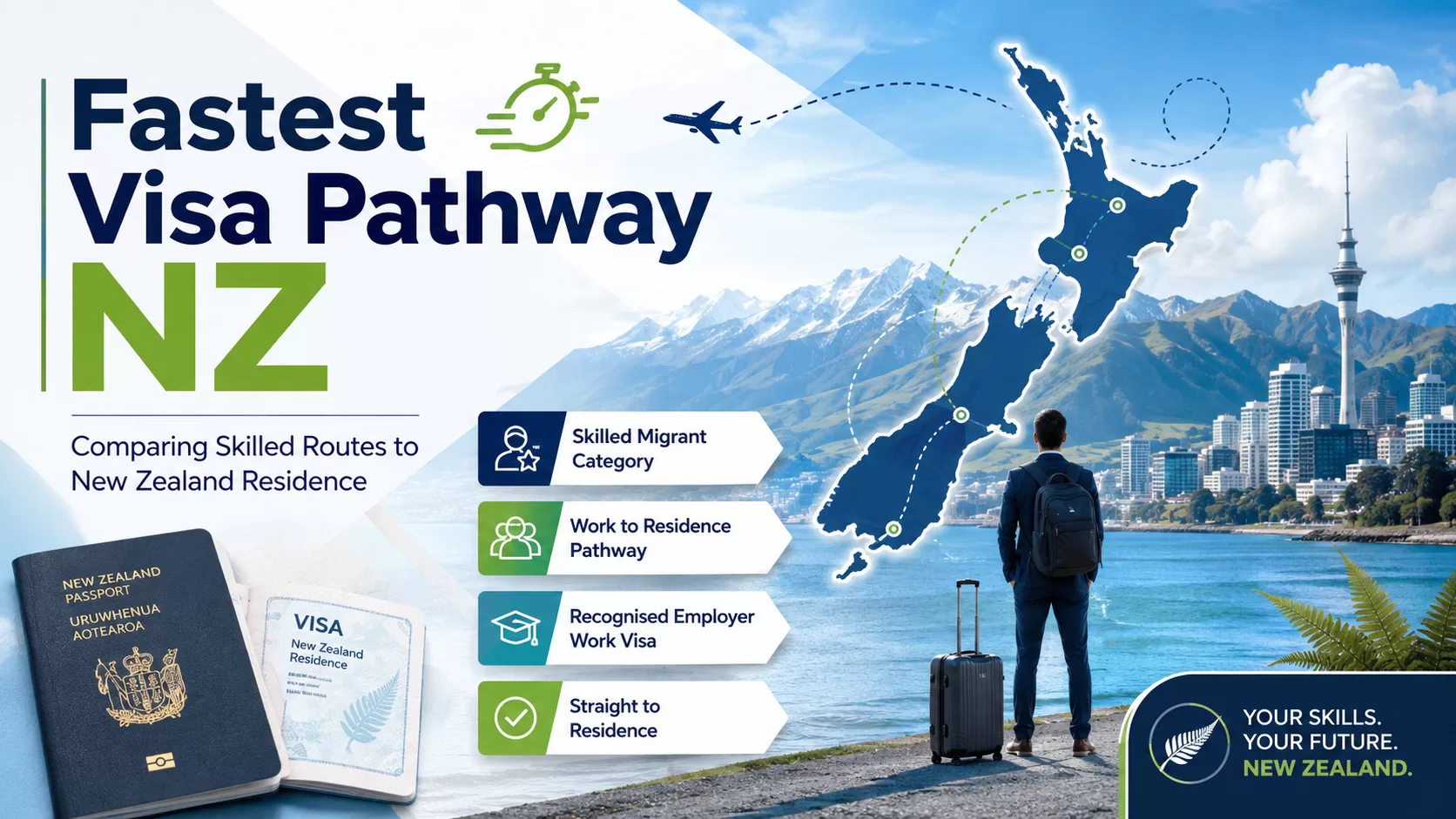
Fastest Visa Pathway NZ: Comparing Skilled Routes to New Zealand Residence

Finding the fastest visa pathway NZ applicants can use depends on what “fastest” means. The quickest way to enter New Zealand may be a temporary work visa, while the quickest route to New Zealand residence may be a direct Green List residence application. There is no universal shortcut, which is why consulting experienced Immigration Advisers Auckland can help applicants understand which pathway best matches their circumstances. The suitable pathway depends on your occupation, qualifications, occupational registration, salary, employer, work history, health, character, English ability, and whether you already have a qualifying job offer.

For skilled workers, the main routes to compare are the Green List pathway, the Skilled Migrant Category Resident Visa, and sector-based Work to Residence options. Immigration New Zealand (INZ) currently describes Green List Tier 1 roles as eligible for the Straight to Residence Visa, while Tier 2 roles generally lead to the Work to Residence Visa after the required New Zealand work period . The Skilled Migrant Category (SMC) also has a points-based pathway, a Skilled Work Experience pathway, and a Trades and Technician pathway .

This guide explains how those routes work, what evidence is required, and how to identify the most realistic pathway to residence. Because immigration instructions, occupation lists, and pay requirements can change, applicants should verify current rules directly with INZ before submitting a visa application or residence application.

What Makes a Visa Pathway the Fastest?

The fastest route is not necessarily the visa with the shortest online processing time. It is usually the route that allows you to meet all legal requirements with the fewest additional steps. Someone with a Tier 1 Green List job, the required registration, and an accredited employer may qualify for residence immediately. Another applicant in a Tier 2 job may first need a New Zealand work visa and 24 months of eligible work experience.

Entry Speed Versus Residence Speed

A temporary work visa may allow a skilled migrant to enter New Zealand and begin employment sooner than a residence application can be finalized. However, a temporary visa does not itself create permanent residence. The applicant must continue to comply with visa conditions, maintain the required job and pay, and later submit a separate residence application if the pathway requires it.

By contrast, a Straight to Residence Visa can be a faster route to residence for an eligible Tier 1 applicant because the person does not generally need to complete a preliminary 24-month New Zealand work period. The applicant must still satisfy the full visa requirements, including the correct job, accredited employer, qualifications or professional registration, pay, health, character, and English requirements .

Personal Circumstances Determine the Best Route

The right immigration pathway depends on the applicant’s individual profile. A person with a recognized qualification, such as a Bachelor’s Degree, Master’s Degree, or PhD, may be well positioned for the SMC Points-Based Pathway. A person without a degree but with a strong trade qualification and post-qualification experience may fit the Trades and Technician Pathway. A healthcare or care worker may qualify through the Care Workforce route, while a person in an approved transport role may need to use the Transport Sector pathway.

A useful first step is to compare the occupation list, skill level, salary requirements, qualification requirements, registration requirements, and work experience requirements side by side. A pathway is only “fast” if the applicant can prove every requirement with reliable evidence.

Green List Pathway to Residence

The Green List is designed for jobs New Zealand needs and divides eligible occupations into Tier 1 and Tier 2. The Green List pathway is often considered the fastest skilled residence route because Tier 1 may permit a direct application for residence, while Tier 2 provides a structured route after relevant New Zealand experience .

Tier 1 and the Straight to Residence Visa

A Green List Tier 1 occupation can lead to the Straight to Residence Visa. To use this route, the applicant generally needs to be working for, or holding a skilled job offer from, an accredited employer. The position must match the relevant Green List occupation and satisfy its specific requirements for skill level, pay, qualifications, and occupational registration.

The applicant must not rely solely on a job title. INZ may examine the job description, duties, workplace, employment agreement, hours, salary, and evidence that the position genuinely matches the listed occupation. Applicants in engineering, education, health, information technology, construction, or other in-demand jobs should check the exact Green List entry rather than assuming that every role in the industry qualifies.

A Tier 1 applicant may apply from outside New Zealand or enter on a suitable work visa and then apply for residence. Partner inclusion and dependent children depend on the specific visa rules and the evidence provided. The route may be fast, but professional registration or qualification assessment can add time before the application is ready.

Tier 2 and the Work to Residence Visa

A Green List Tier 2 occupation generally leads to the Work to Residence Visa. The applicant normally needs a qualifying job or job offer from an accredited employer, must meet the occupation’s qualification, registration, and pay rules, and must complete 24 months of relevant work experience in New Zealand on an acceptable visa .

The 24-month requirement means Tier 2 is not usually the fastest direct residence route for a person who has not yet worked in New Zealand. Nevertheless, it can be a predictable Skilled Residence pathway for applicants who have a genuine job offer and can maintain lawful employment. They should preserve payslips, employment agreements, tax records, job descriptions, and evidence of the exact pay rate throughout the qualifying period.

Skilled Migrant Category Pathways

The Skilled Migrant Category Resident Visa is a broad skilled migration route for people with a skilled New Zealand job or job offer. INZ currently identifies three SMC pathways: the Points-Based Pathway, the Skilled Work Experience Pathway, and the Trades and Technician Pathway . Only one pathway needs to be satisfied, but all applicants must generally meet health, character, English, job, and pay requirements.

Points-Based Pathway and the Six-Point System

The SMC Points-Based Pathway requires six skilled resident points. Points may be available through a recognized qualification, occupational registration, or income. Applicants may be able to combine points from one skill category with eligible New Zealand skilled work experience, but they cannot freely mix points from different skill categories .

For example, a person with a recognized doctoral qualification, a qualifying New Zealand Master’s Degree, substantial occupational registration, or a sufficiently highly paid job may be able to claim six points from one category. Another applicant with a Bachelor’s Degree may need New Zealand work experience to reach six points. The official points calculator should be used because the result depends on the qualification, registration, pay, study location, and other details.

Skilled Work Experience and Trades Pathways

The SMC Skilled Work Experience Pathway is designed for people who have built a career through employment. The official requirements include a job or job offer in an ANZSCO skill level 1 to 3 occupation, pay of at least 1.1 times the applicable SMC wage threshold, at least three years of relevant work experience, and an additional two years of skilled work experience in New Zealand . Amber List occupations may have higher requirements, and Red List occupations cannot use this pathway.

The Trades and Technician Pathway may suit people in eligible construction jobs, engineering jobs, manufacturing, automotive trades, and technical support roles. It requires an eligible occupation, pay at least the applicable SMC wage threshold, a relevant qualification at NZQCF Level 4 or comparable level, at least 2.5 years of relevant post-qualification experience, and an additional 1.5 years of post-qualification skilled work experience in New Zealand . Work completed before the relevant qualification or registration may not count.

Wage, Qualification, and Registration Requirements

Pay requirements are central to skilled residence. A job may be in a desirable industry but still fail the residence test if its pay is below the applicable wage threshold. Applicants should calculate their hourly rate using the maximum contracted hours in the employment agreement, not an informal estimate of annual income .

Current SMC Wage Threshold Framework

The SMC wage threshold is based on the median wage and is updated periodically. INZ’s current wage table lists, from 9 March 2026, a standard threshold of NZD $35.00 per hour for relevant SMC pathways. The same table lists higher rates, including NZD $38.50 at 1.1 times, NZD $42.00 at 1.2 times, NZD $52.50 at 1.5 times, NZD $70.00 at 2 times, and NZD $105.00 at 3 times where the pathway requires those levels .

The applicable threshold can depend on the pathway, ANZSCO skill level, income points, and the date skilled work experience in New Zealand began. An applicant should retain evidence of pay from the beginning of the qualifying period. If the threshold was not met when work started, that earlier period may not count even if the salary later increases.

Qualifications, Registration, and Evidence

A recognized qualification may be a Bachelor’s Degree, Master’s Degree, PhD, trade qualification, or another approved credential. Some applicants may need an International Qualification Assessment or evidence that their qualification is comparable to the required New Zealand level. Regulated professions may instead require occupational registration or professional registration from the relevant New Zealand authority.

Evidence should be consistent across the application. Useful material can include qualification certificates, academic transcripts, registration certificates, employment agreements, employer letters, position descriptions, payslips, tax records, and reference letters. A job offer alone is not enough if the occupation, duties, pay, or employer status does not meet the selected pathway.

Care Workforce and Transport Sector Routes

New Zealand also has dedicated pathways for certain care workforce jobs and transport sector jobs. These routes can be suitable for applicants who do not fit the main Green List or SMC route but have approved sector experience and a qualifying employer .

Care Workforce Work to Residence

The Care Workforce Work to Residence Visa generally requires at least 24 months of relevant work in an approved care workforce job during the 30 months before application. Listed roles include Disabilities Services Officer, Residential Care Officer, Aged or Disabled Carer, Nursing Support Worker, Personal Care Assistant, Therapy Aide, Child or Youth Residential Care Assistant, and Diversional Therapist .

The applicant must work in the approved role, meet the relevant care workforce wage rate, hold the appropriate visa status, and have a current approved job or job offer with an accredited employer when applying. A person should keep detailed evidence of duties and pay because a similar-sounding care role may not automatically qualify.

Transport Work to Residence

The Transport Work to Residence Visa is designed for approved transport sector jobs. The current pathway information identifies roles such as ship’s master and deck hand, while historical rules may apply to certain other jobs. Applicants must check the exact job, wage, qualification, age, work experience, and employer requirements on the current visa page .

As with the care route, applicants generally need 24 months of qualifying New Zealand work experience in the relevant period and must be working in, or have an offer for, an approved role when applying. Because transport rules have changed over time, old online advice may be inaccurate.

Building the Fastest Realistic Immigration Strategy

A strong strategy begins with occupation verification, not with a promise that a particular visa is always fastest. Confirm whether the role appears on the Green List, whether the employer is accredited, which ANZSCO skill level applies, and whether the salary is high enough. Then check qualifications, professional registration, English, health, character, and work experience.

EOI, Residence Application, and Family Planning

For the SMC, an Expression of Interest (EOI) is the first step. If the EOI shows that the applicant meets the requirements, INZ may issue an Invitation to Apply. The applicant should not claim points without documentary evidence. The residence application must reflect the same job, qualification, registration, and work history stated in the EOI.

An eligible applicant may be able to include a partner and dependent children, but family members can have their own health, character, and English requirements. Planning family inclusion at the beginning prevents delays and helps the applicant understand the full cost, documentation, and timing of the residence application.

Avoiding Delays and Choosing a Pathway

The fastest route is usually the one with the clearest evidence and fewest unresolved conditions. Delays may result from incomplete documents, qualification recognition, professional registration, employer verification, wage uncertainty, medical issues, police checks, or a mismatch between the job title and actual duties. Applicants should also budget for application charges, medical examinations, police certificates, translations, and other costs. The broader Visa Application Cost NZ should be included in financial planning rather than treated as an afterthought.

In conclusion, the fastest visa pathway NZ applicants can use may be the Straight to Residence route for an eligible Green List Tier 1 role. For others, the SMC Points-Based Pathway, SMC Skilled Work Experience Pathway, Trades and Technician Pathway, Green List Tier 2 route, Care Workforce pathway, or Transport Sector pathway may be more realistic. The best choice is determined by evidence, not marketing language. Verify current INZ instructions, wage thresholds, occupation lists, and residence requirements before applying.
Visa Application Cost NZ: A Complete Guide to Fees, Levies, Waivers, and Refunds

Understanding the Visa Application Cost NZ is an essential part of planning a move, visit, study period, or work arrangement in New Zealand. The total amount payable is not always limited to a single visa application fee. Depending on the visa type, applicant citizenship, country of residence, application location, and reason for travel, the final Visa Application Cost NZ may include an immigration levy, the International Visitor Conservation and Tourism Levy (IVL), service fees, medical expenses, document costs, or professional advice. Knowing the likely Visa Application Cost NZ in advance can make budgeting easier and help applicants prepare for all potential immigration-related expenses.

Immigration New Zealand (INZ) updates its charges and application processes from time to time. Therefore, applicants should use the official Fees, decision times and where to apply tool and consult the current Fees Guide, known as INZ 1028, before submitting an application [1] [2]. This article explains how the New Zealand visa cost is calculated, when payment is made, who may qualify for an exemption, and why a fee is usually not returned after a declined visa application.

What Makes Up the Visa Application Cost NZ?

Most New Zealand visa applications involve an application fee, while some also require an immigration levy. The fee helps recover the cost of receiving, assessing, and deciding the application. The levy supports broader immigration services, including settlement-related functions. The exact amount depends on the visa category and the applicant’s circumstances rather than simply the length of the proposed stay.

Application Fees, Immigration Levies, and Service Charges

A temporary visa, residence visa, visitor visa, student visa, or work visa may each have a different application fee. Some applications can be submitted online, while others may require paper forms or processing through a Visa Application Centre. An applicant may also face a service charge if a passport, biometric collection, or document handling service is required by the location where the application is lodged.

The immigration levy is generally charged for certain temporary and residence applications. It is usually charged per application, although the treatment of a group visitor visa can differ because the levy may be calculated per person. Applicants should not assume that a previous payment covers a new visa application. Each application should be checked separately using the official fee calculator or visa fee tool.

Citizenship, Residence, and Application Location

Your country of citizenship and where you are physically located when applying can affect your visa application fee. Two applicants seeking the same visa may pay different amounts if they hold different passports or apply from different regions. This is why searching for a generic “visa fees New Zealand” figure online can be misleading.

The official tool can show the applicable visa application charges, whether a levy applies, where to apply, the accepted payment method, and the expected processing information. It is also useful for applicants comparing the cost of a visa before choosing between several visa options.

Costs by Visa Type and Travel Purpose

The correct price depends first on the correct visa. Applicants should identify the appropriate category before calculating fees. Applying for the wrong visa can create delays, additional costs, or a declined application, even if the payment itself was processed correctly.

Visitor Visas, Group Applications, and the IVL

A visitor visa application normally includes a visa fee and, for many applicants, the International Visitor Conservation and Tourism Levy. The IVL is currently NZD $100 for people who must pay it [3]. It applies to many visitors and may also apply to certain people arriving for working holidays, study, or specific work purposes.

The IVL is generally paid when you submit the visa application or request a New Zealand Electronic Travel Authority (NZeTA). It is separate from the visa application fee, although both may appear together during the payment process. Most visitors who travel on a visa waiver arrangement still need an NZeTA and may need to pay the IVL. A visa waiver does not automatically mean that the entire journey is free.

A group visitor visa may have different charging rules from an individual visitor visa. Applicants should check whether the group is eligible, which person is responsible for the submission, and whether the levy is calculated per applicant. International visitors should also budget for insurance, accommodation, transport, and onward travel because the visa charge represents only one part of the total trip expense.

Student, Work, and Residence Applications

A student visa may include an application fee, an immigration levy, and potentially the IVL, depending on the visa and the applicant’s passport. International students should also budget for tuition fees, insurance, medical examinations, translations, police certificates, and travel costs. The New Zealand visa application fee does not cover those separate education and settlement expenses.

Work visa applicants may pay different amounts depending on the category. An application linked to an Accredited Employer Work Visa, a specific work scheme, a working holiday arrangement, or another temporary work category can have distinct fees and levies. Employers may separately incur costs for accreditation, job checks, or recruitment compliance; those employer expenses should not automatically be passed unlawfully to a migrant worker.

Residence applications can involve higher overall immigration costs because the process may require extensive supporting evidence, health checks, police certificates, qualification assessments, translations, and, in some situations, professional representation. Applicants comparing a temporary visa with a residence visa should consider both the immediate fee and the wider cost of preparing a complete application.

Fee Waivers and Exemptions

New Zealand provides several categories of fee waiver or exemption. These provisions are important, but they are not automatic for every applicant who experiences financial hardship. Eligibility depends on the relevant legal or policy category and should be confirmed through the official fees tool.

Refugees, Protected People, and Family Violence Applicants

Refugees, refugee claimants, and protected people generally do not have to pay a visa application fee or immigration levy in circumstances covered by the applicable rules [1]. Similarly, victims of family violence may qualify for an application fee waiver and immigration levy exemption. Applicants should provide the required evidence and select the correct exemption rather than simply omitting payment.

A fee waiver does not necessarily remove every expense. The applicant may still need to pay for medical services, translations, travel, document certification, courier delivery, or other third-party services. If the immigration authority requests evidence to confirm the exemption, the applicant should respond promptly and retain copies of the supporting material.

Country-Based and Visa-Based Exemptions

New Zealand may have agreements with citizens of certain countries that reduce or waive a visa application fee for particular travel purposes. Some visa categories are also exempt from the immigration levy or IVL. For example, people traveling on a New Zealand or Australian passport generally do not pay the IVL, and Australian permanent residents may also be exempt in relevant circumstances [3].

The IVL can also be excluded for certain transit passengers, resident visa holders, business visitors, APEC business travel card holders, and some partner or dependent categories. The exemption depends on the passport, travel purpose, and visa type. Applicants should not rely on a general online list when the official tool can provide a category-specific result.

Payment, Processing, and Visa Decisions

Payment is normally required when the application is lodged, although the exact process varies between online and paper applications. Applicants should use the permitted payment method, ensure that card or bank details are correct, and save the receipt or confirmation page. An unpaid or unsuccessful transaction can prevent an application from being accepted for processing.

When to Pay and How Processing Time Relates to Cost

Most applicants pay the application fee and any levy at submission. The payment date does not guarantee a decision by a particular date. Visa processing depends on the visa category, application volume, completeness of evidence, verification requirements, and whether INZ asks for further information. The official fees page provides links to current decision-time information [2].

A faster decision is not normally available simply because an applicant has paid more. Applicants should apply early, particularly when travel, study, employment, or visa expiry dates are important. A complete application can reduce avoidable delays, but no fee guarantees visa approval or a particular visa decision time.

Why Fees Are Usually Non-Refundable

INZ states that the application fee contributes to the cost of deciding the application and is not refunded merely because the application is declined [1]. In practical terms, a non-refundable visa fee may remain payable even when the final visa application outcome is negative. The same principle can apply to the IVL, which is generally not refunded when an application is declined [3].

A refund may be available only in limited circumstances, such as an administrative error, duplicate payment, or a specific situation described in the applicable refund policy. Applicants should not assume that withdrawing an application automatically creates an immigration refund. They should review the official visa application refund policy and contact INZ if they believe a special refund circumstance applies.

Budgeting for the Full New Zealand Visa Cost

The official fee is only one element of the total visa application expenses. A realistic budget should include document preparation, medical and character requirements, travel, accommodation, insurance, and possible professional assistance.

Additional Application and Settlement Expenses

Applicants may need to pay for a medical examination, chest X-ray, laboratory reports, police certificates, certified translations, passport photographs, document certification, courier delivery, and Visa Application Centre services. Students should add tuition deposits, accommodation, living costs, insurance, and air tickets. Workers may need qualification assessments, occupational registration, relocation expenses, or a professional CV and document review.

Those comparing a DIY application with an adviser should consider the difference between a professional fee and the potential cost of an avoidable error. The earlier article DIY vs Consultant Visa NZ is useful background for assessing when self-application may be appropriate and when professional support may reduce application risk. Any consultant or adviser should explain fees clearly and should not promise a guaranteed outcome.

Checking the Final Amount Before Submission

Before you apply for a New Zealand visa, confirm five points: the selected visa type, the applicant’s citizenship, the country and location of application, the applicable application fee, and whether an immigration levy or IVL is payable. Then check payment instructions and processing information using the official INZ tool.

Important: Visa fees, levies, exemptions, and processing arrangements can change. Always verify the current figure with Immigration New Zealand before paying or submitting an application.

Conclusion

The Visa Application Cost NZ depends on more than a headline fee. The final amount may include an application charge, immigration levy, IVL, service costs, medical and police documentation, translations, and other expenses associated with proving eligibility. Citizenship, application location, visa category, travel purpose, and exemption status can all affect the total.

Planning carefully helps applicants avoid budget surprises. Use the current Fees Guide (INZ 1028), the official fee calculator, and the fees-and-decision-times tool before submission. Keep proof of payment, do not assume a refused application will generate a refund, and apply only after checking that the selected visa matches your purpose. With accurate information and a realistic budget, applicants can approach the New Zealand immigration process with greater financial clarity.

DIY vs Consultant Visa NZ: Which Approach Is Right for Your Immigration Journey?

Choosing between a DIY visa application and hiring an immigration professional is one of the most important decisions a potential migrant can make. When comparing DIY vs Consultant Visa NZ, applicants need to consider their visa type, personal circumstances, documentation requirements, and confidence in handling the process independently. New Zealand publishes extensive official immigration information, and many people can complete an online visa application without representation. However, visa rules can be detailed, evidence requirements may vary by category, and an applicant’s personal history can affect the outcome. For anyone researching DIY vs Consultant Visa NZ, it is important to understand where self-management may be suitable and when professional guidance can provide added value. Understanding the key differences in DIY vs Consultant Visa NZ can help you decide whether self-managing the application or seeking professional support is the better option. This guide explains the practical benefits, risks, and considerations involved in DIY vs Consultant Visa NZ so you can make a more informed decision.

A self-managed application may suit a straightforward temporary visa with clear documentation. A licensed immigration adviser may be more appropriate where the case involves skilled work experience, multiple visa pathways, unusual applicant circumstances, previous refusals, health concerns, character issues, or a residence strategy. Immigration New Zealand (INZ) remains the decision-maker in every case; neither a consultant nor software can guarantee visa approval.

Understanding the DIY Visa Application Process

A DIY visa process means that the applicant researches the relevant visa, completes the forms, gathers evidence, pays the application costs, and communicates directly with INZ. The official online immigration platform provides information about visa options, eligibility, requirements, supporting documents, and application steps. Applicants are responsible for reading the rules carefully and ensuring that every statement and document is accurate. For applicants who are unsure about the process or have more complex circumstances, seeking guidance from experienced Immigration Advisers Auckland can help reduce mistakes and clarify the most suitable visa pathway.

When a DIY Application May Be Suitable

A self-application may be practical for a person whose circumstances are simple and well documented. Examples can include a visitor visa applicant with a clear travel purpose, sufficient funds, a strong intention to leave New Zealand, and no complicated immigration history. It may also suit a student who has a straightforward offer of place, clear financial evidence, and the required health and character documents. A temporary visa with a single purpose, consistent evidence, and no previous visa complications is generally easier to organize than a complex residence application.
DIY immigration can reduce professional fees and give applicants direct control over their information. It also helps a migrant understand the visa process, the questions asked, and the conditions attached to the visa. However, saving money on advice does not remove other migration costs, including application fees, medical examinations, police certificates, translations, document certification, travel, and possible costs caused by delays or a refusal.

The Applicant’s Responsibilities

INZ expects the applicant to provide complete and truthful information, even when applying without representation. The applicant must choose the correct New Zealand visa, demonstrate visa eligibility, satisfy the applicable visa requirements, and upload readable visa documents in the required format. Missing documents, incorrect answers, unexplained gaps in employment, or inconsistent dates can create questions during the visa assessment.
Applicants should keep copies of the submitted application, payment receipt, supporting documents, and correspondence. They should also monitor requests for further information and respond within the stated deadline. An automated visa application system may make submission convenient, but visa automation does not transfer responsibility away from the applicant. Technology can help with administration, while an immigration officer may still conduct detailed human assessment and make the final immigration decision.

What an Immigration Consultant or Adviser Can Do

A qualified professional can provide structured immigration advice, assess the applicant’s background, and develop an immigration strategy around the person’s goals. In New Zealand, tailored advice about what visa to choose, which documents are needed, how to answer a form question, or how to respond to INZ generally must come from a licensed immigration adviser or an exempt person, such as an appropriately qualified lawyer. Applicants should verify credentials before paying for assistance.

Assessment, Strategy, and Visa Selection

A professional consultation begins by reviewing the applicant’s individual circumstances. This may include nationality, current location, travel history, qualifications, skilled work experience, job in New Zealand, family relationships, finances, medical history, character history, and previous visa applications. The adviser can compare a temporary visa, work visa, family visa, business visa, skilled migrant visa, or residence visa and explain the advantages and limits of each route.
This broader review is valuable when the first available visa is not necessarily the best long-term option. For example, a job may support a work visa but also connect to multiple residence pathways. A study plan may involve later work rights, while a family application may require evidence that is different from the evidence needed for a visitor visa. Professional visa advice can help prevent an applicant from making a decision that undermines future eligibility.

Documents, Evidence, and Communication with INZ

An adviser can create a document plan that matches the selected visa category. Depending on the case, this may include employment records, qualifications, financial evidence, relationship material, medical reports, police certificates, translations, and explanations for unusual circumstances. The professional may identify gaps before submission and help organize application evidence so that an immigration officer can understand the story without unnecessary confusion.
Where representation is authorized, the adviser can communicate with INZ, track visa processing, answer follow-up questions, and prepare responses to concerns. This does not guarantee a positive outcome, but it may reduce avoidable visa delays, improve consistency, and ensure that relevant information is presented in a logical way. The adviser must not invent evidence or encourage the applicant to hide information. Accurate disclosure remains essential to immigration compliance.

Comparing Cost, Control, and Risk

The most visible difference between DIY immigration and professional assistance is price. A DIY applicant does not pay an adviser’s professional fee, while a consultant’s fee varies according to the visa type, complexity, service scope, and amount of representation required. The cheapest option is not always the lowest-risk option, because an incomplete or incorrectly prepared application can produce additional expense, lost time, or a visa decline.
Consideration
DIY Visa Application
Licensed Consultant or Adviser
Direct cost
Lower professional cost, but official fees and document costs still apply
Higher total cost because professional fees are added
Control
Applicant controls research, forms, evidence, and communication
Applicant provides information while the adviser supports preparation and communication
Best suited to
Straightforward cases with clear eligibility and evidence
Complex cases, unusual circumstances, multiple pathways, or higher application risk
Main risk
Missing documents, misunderstanding criteria, or application errors
Choosing an unlicensed or unsuitable provider, or assuming advice guarantees approval
Strategic value
Strong when the applicant is confident and well organized
Strong when interpretation, strategy, representation, or risk management is needed

When Professional Assistance May Save Money

Professional immigration assistance may be worthwhile where the consequences of error are significant. A residence application, an application involving a medical condition, a character concern, a previous visa refusal, or a case involving several family members may require careful analysis. The same applies where an applicant has worked in several countries, held different passports, changed names, or needs to explain gaps in travel or employment history.
A professional cannot remove the legal requirements, but can identify potential weaknesses and advise whether more evidence, a different visa option, or a carefully written explanation is appropriate. In complex situations, the value lies less in completing a form and more in reducing application risk through preparation and strategy.

Immigration Technology, Automation, and Human Assessment

Modern immigration systems use online platforms to receive applications, accept payments, store documents, and provide status updates. Some applications may be triaged or supported by automated processes. Artificial intelligence, AI immigration advice, document tools, and visa software can help users find information or organize materials, but these tools should not be treated as a substitute for official rules or professional legal judgment.

What Automation Can and Cannot Do

An online application system can identify missing fields, guide an applicant toward common documents, and make submission faster. It may also support automated processing for some routine steps. However, automation cannot reliably understand every personal narrative, cross-check every cultural or employment nuance, or guarantee that evidence proves a genuine claim. A checklist may say that a document is present without showing whether the document is credible, current, translated correctly, or relevant to the visa criteria.
The Role of Human Decision-Making
The final outcome depends on the applicable immigration criteria, the evidence submitted, and the assessment performed by INZ. An immigration officer may examine the applicant’s purpose, funds, health standard, character requirements, identity, employment, family links, and compliance history. Where the facts are unclear, INZ may request more information or assess the application based on the available record. No consultant, AI tool, or automated system can replace the legal authority of the officer who makes the visa decision.

Choosing the Right Approach for Different Visa Types

The appropriate approach depends on the visa category and the applicant’s risk profile. A visitor visa may be suitable for DIY preparation where travel plans and finances are uncomplicated. A student visa may also be manageable independently if the applicant has a genuine study plan, an offer from an approved provider, funds, health evidence, and a clear explanation of future intentions.

Temporary, Work, and Family Applications

A temporary visa application can be relatively simple, but work visa applicants must still satisfy job, employer, pay, qualification, and health or character requirements. A job in New Zealand does not automatically produce a visa, and applicants should verify the employer, job terms, and visa conditions. Family visa applications may require detailed relationship evidence, sponsorship material, and proof that the relationship is genuine and stable. These cases may benefit from professional review if the couple has spent periods apart or has limited shared documentation.

Residence and Skilled Migrant Pathways

Residence applications are often more strategic than transactional. A skilled migrant visa, work-to-residence option, family pathway, or business visa can affect a person’s ability to stay in New Zealand permanently. Applicants may need to understand qualifications, occupational requirements, employment evidence, settlement factors, and the timing of linked applications. A consultant can help map multiple visa pathways, but applicants should still understand the strategy and review all information submitted in their name.

How to Make a Safe and Informed Decision

Before selecting DIY immigration or professional help, write down the intended visa, the reason for travel, the timeline, the applicant’s immigration history, and any possible health, character, family, employment, or financial issues. Then compare the official visa information with the evidence available. If the criteria are clear and the application is low risk, a DIY visa process may be reasonable. If uncertainty remains, an initial immigration consultation can clarify whether full representation is necessary.
If you hire an adviser, check the person’s licence or exempt status, experience with your visa type, written service agreement, fees, refund terms, privacy practices, and communication arrangements. Be cautious of promises of guaranteed visa success, requests to submit false documents, pressure to pay immediately, or advice that conflicts with official immigration information. A reputable professional explains risks honestly and keeps the applicant involved.
The best choice in the DIY vs Consultant Visa NZ decision is the one that matches the complexity of the case, the applicant’s confidence, and the consequences of an error. Independent research is valuable, and professional visa advice can be equally valuable when the application involves uncertainty or a long-term migration strategy. For additional background, readers may also consult an Immigration Consultant NZ Guide and verify all current requirements directly with INZ before submission.

Immigration Consultant NZ Guide: Navigating Pathways with Professional Expertise

Embarking on a journey to relocate, study, or work in New Zealand is an exciting milestone, but the complexities of the immigration framework require careful planning and precise execution. For prospective migrants, engaging an immigration consultant NZ can make the difference between a smooth relocation and a stressful, delayed journey . Navigating immigration matters demands a thorough understanding of immigration regulations, policy updates, and procedural guidelines set forth by Immigration New Zealand (INZ). Whether you are exploring visa options for a work visa, a study visa, a visitor visa, or a permanent residence visa, understanding how to choose and work with qualified professionals is paramount . This comprehensive guide explores the regulatory landscape, licensing standards, and strategic advantages of securing professional immigration advice.

The Importance of Professional Immigration Advice in New Zealand

When embarking on an immigration application, every detail matters. Working with an Immigration Consultant NZ can help ensure that your application is prepared accurately and in line with current immigration requirements. The visa application process is governed by strict legal criteria, and even minor errors in a visa application form can lead to serious setbacks. An experienced Immigration Consultant NZ can provide professional immigration advice, review supporting documentation, and help identify potential issues before submission. By seeking guidance from an Immigration Consultant NZ, applicants can better align their submission with current immigration instructions and improve their chances of a favorable outcome.

Navigating Complex Immigration Matters and Regulations

Immigration laws are dynamic, frequently updated to reflect economic and social priorities. Trying to interpret complex visa requirements without professional guidance often results in misunderstandings regarding visa eligibility and evidentiary thresholds. An experienced immigration adviser helps applicants dissect intricate visa information, ensuring that every legal nuance is addressed . This expertise is particularly valuable when dealing with ambiguous application questions or when assessing future visa eligibility based on shifting government policies, individual circumstances, and unique immigration needs. Furthermore, professional guidance helps applicants compare visas, evaluate alternative pathways, and execute an informed visa selection aligned with their long-term personal and career objectives.

Understanding the Licensing Framework for Immigration Advisers

The provision of regulated immigration advice in New Zealand is strictly controlled by law to protect consumers from malpractice and exploitation. The Immigration Advisers Authority (IAA) serves as the statutory regulatory body responsible for administering the licensing regime established under the Immigration Advisers Licensing Act .

Competency Standards and the IAA Code of Conduct

To legally operate, a licensed immigration adviser must complete rigorous training, demonstrate specialized legal knowledge, and hold a valid current licence. These professionals are bound by mandatory competency standards and a strict code of conduct enforced by the IAA . This regulatory framework mandates high professional standards, ensuring that practitioners maintain client confidentiality, transparent fee structures, and uncompromised ethical integrity throughout the application processing phase.

How to Verify an Adviser Using the Licensed Adviser Register

Before sharing sensitive personal information or paying professional fees, applicants must perform thorough adviser verification. The official licensed adviser register—publicly accessible via the IAA website—allows any visa applicant to check an adviser’s professional details, current licence status, and any historical disciplinary actions . Confirming that your chosen immigration advice provider is listed on the immigration adviser register safeguards you against fraudulent operators .

Licensed Immigration Advisers vs. Exempt Persons

While most professionals offering guidance must hold an active adviser licence, New Zealand law recognizes certain exempt person categories. Understanding who qualifies as an exempt immigration adviser or an authorized legal representative prevents reliance on unqualified or illegal sources .

When to Consult an Immigration Lawyer or Legal Representative

A qualified lawyer holding a current certificate to practise issued by the New Zealand Law Society is automatically exempt from holding an IAA license. An immigration lawyer is exceptionally well-equipped to handle contentious cases, such as appealing declined decisions, managing complex character or medical waivers, or defending clients facing deportation . When an immigration lawyer acts as your legal representative, they provide comprehensive legal immigration advice anchored in broader administrative and statutory law. Furthermore, education agents operate under specific exemptions when providing student visa advice tied directly to academic enrollments.

Adviser Category Legal Authority to Advise Primary Regulatory Body / Oversight
Licensed Immigration Adviser (LIA) Full authority across all visa categories Immigration Advisers Authority (IAA)
New Zealand Lawyer Full authority across all legal and immigration matters New Zealand Law Society (NZLS)
Education Agent Limited strictly to student visa advice Industry codes and INZ guidelines
Unlawful / Unlicensed Operator Strictly prohibited (constitutes an immigration offence) Prosecuted by the IAA and New Zealand Police

The Value of Professional Immigration Advice for Your Visa Application

The mechanics of preparing and lodging a successful visa application involve meticulous attention to detail. A professional application guide and hands-on visa application support can drastically reduce the administrative burden on the applicant .

Managing Supporting Documents and Immigration Records

A primary reason for processing delays or refusals is the submission of incomplete supporting documents or poorly verified immigration documents. Professional practitioners assist in organizing critical evidence, including verifying police certificate records, scheduling a medical examination, and cataloging official transcripts . Furthermore, experienced advisers maintain detailed file notes and secure application records, ensuring that all submitted documents and proof accurately reflect your personal details and travel movements.

Representation and Handling Follow-Up Questions from INZ

When INZ reviews a current application, case officers frequently issue follow-up questions or requests for further evidence. Having formal representation ensures that all communication is handled professionally . An authorized adviser prepares structured responses, drafts formal submissions, and manages any privacy request or written request for additional information on your behalf, ensuring that your application documentation remains cohesive and persuasive.

Risks of Unlicensed Immigration Advice and Compliance

Attempting a self-application without professional oversight may seem cost-effective, but relying on unqualified individuals introduces severe legal and strategic risks .

Identifying an Immigration Offence and Protecting Your Future Eligibility

Providing unexempt, unlicensed immigration advice is treated as a serious immigration offence under New Zealand legislation, carrying penalties of up to seven years imprisonment and substantial financial fines [15]. Utilizing an illegal adviser not only jeopardizes your immediate visa processing but can permanently damage your future visa eligibility if misleading information is submitted on your behalf. Ensuring strict immigration advice compliance protects you from fraudulent schemes and preserves your standing with immigration authorities .

Preparing for Your Move: Beyond the Visa Application

Securing your visa is only the first phase of establishing your life in Aotearoa. Once your immigration application is approved and you prepare to travel, settling into the community involves understanding local infrastructure, employment norms, and essential public services.

Integrating into the Local Environment and Healthcare

Transitioning smoothly into New Zealand society requires proactive planning regarding housing, banking, and public services. For instance, newcomers must familiarize themselves with the Healthcare System NZ for Visa Holders, understanding their eligibility for publicly funded medical services versus the necessity of private health insurance based on their specific visa category . Comprehensive preparation across all facets of daily life ensures that your relocation is both legally secure and personally fulfilling.

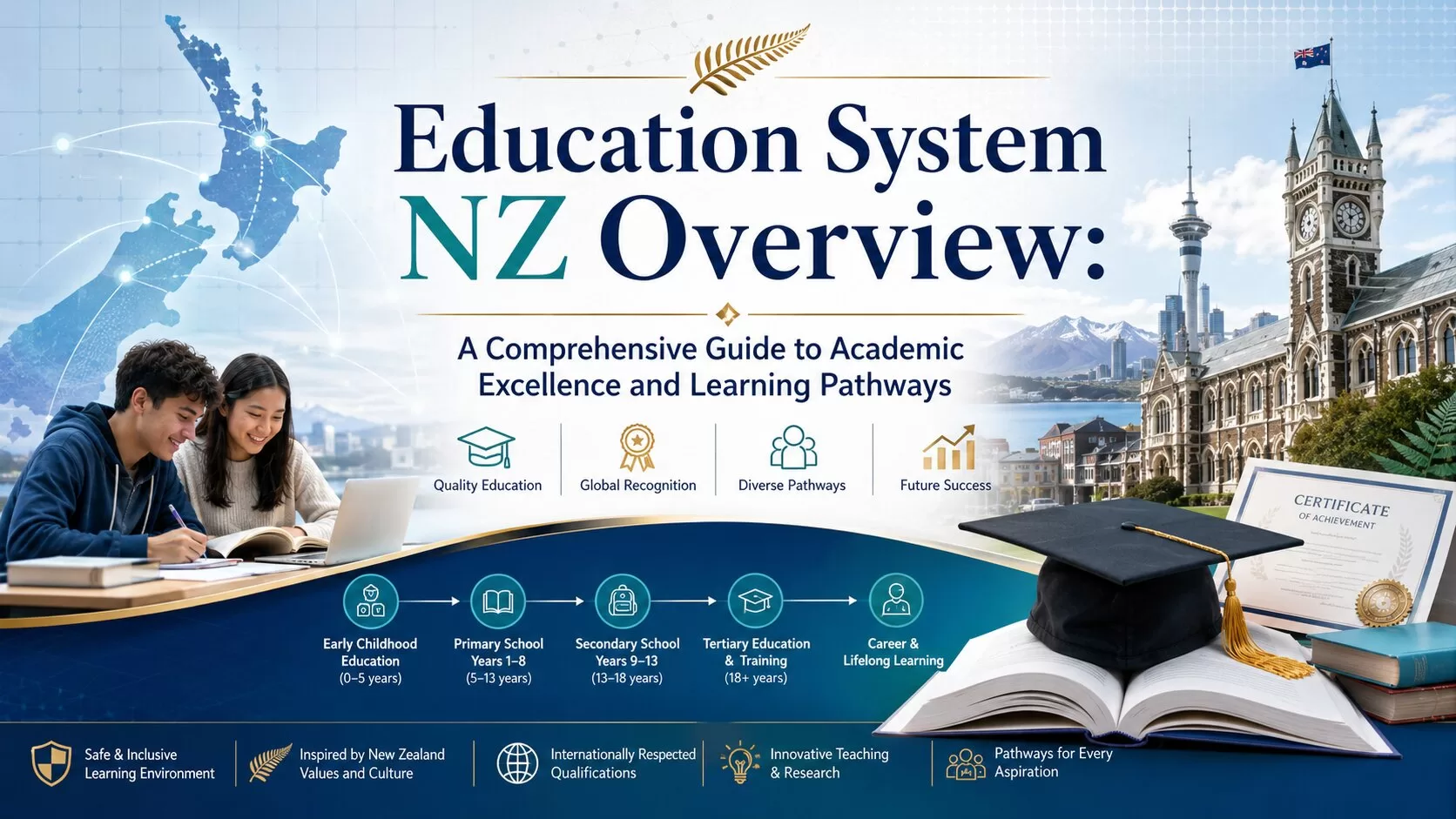
Education System NZ Overview: A Comprehensive Guide to Academic Excellence and Learning Pathways

New Zealand has earned a stellar global reputation for fostering a world-class education environment that balances academic rigor with holistic student development. The Education System NZ is structured to provide seamless transitions from early childhood through to secondary schooling and advanced tertiary study. Whether domestic scholars or international students are navigating their educational journey, the country offers robust academic qualifications, flexible study options, and strong industry connections.

A key strength of the Education System NZ is its clear progression across different study levels, allowing learners to move from foundational education into vocational training, university study, and career-focused qualifications. This flexibility helps students choose pathways that align with their academic interests, practical skills, and long-term professional ambitions.

Understanding the architecture of the Education System NZ—including school types, qualification levels, and tertiary providers—is essential for mapping out effective career pathways and achieving long-term educational goals.

Overview of the Education System NZ : Education System NZ

The New Zealand education system is structured across three broad stages: early childhood education, schooling (encompassing primary, intermediate, and secondary levels), and tertiary education. The Education System NZ provides a clear progression between these stages, helping learners move smoothly from foundational study into higher education and career-focused pathways.

Governed by national standards and rigorous quality assurance mechanisms, the framework ensures that every learner experiences high-quality education regardless of their geographic location or provider choice. One of the strengths of the Education System NZ is its emphasis on maintaining consistent education standards while still allowing flexibility across different providers and study levels.

The system is designed to accommodate diverse study levels, promoting critical thinking, creativity, and practical problem-solving through modern teaching methods and student-centered learning environments. Through this balanced approach, the Education System NZ supports both academic development and the practical skills students need for further study and future careers.

The Schooling Journey: Primary to Secondary Education

Schooling in New Zealand spans 13 years, starting when children turn five years old. Throughout their school years, students benefit from a comprehensive national curriculum that emphasizes core competencies alongside vocational subjects and creative arts. Schools in New Zealand operate under three primary governance models: state schools funded by the government, state-integrated schools with a specific character or philosophy, and private schools that charge independent tuition fees.

Primary and Intermediate Schools: Building the Foundation

The formal schooling journey begins in primary schools, which typically cater to students from Year 0 or Year 1 through Year 6. In regions where dedicated middle-level education is implemented, intermediate schools cater specifically to students in Years 7 and 8 (ages 11 to 13). During these formative years, the focus is on establishing strong foundational literacy and numeracy skills while encouraging inquiry-based learning. Learning support services are readily available to assist students with diverse learning needs, ensuring an inclusive learning environment across all schools.

Secondary Schools and School Qualifications (NCEA)

Secondary schools accommodate students from Year 9 through Year 13, preparing them for higher education or direct entry into the workforce. The cornerstone of senior secondary assessment is the National Certificate of Educational Achievement (NCEA). Students generally begin NCEA Level 1 in Year 11 and progress through Level 3 by Year 13. This modular qualification structure allows for flexible course selection, enabling students to tailor their school qualifications to their specific interests and future career aspirations.

The New Zealand Qualifications and Credentials Framework (NZQCF)

At the heart of the nation’s training and academic structure is the New Zealand Qualifications and Credentials Framework (NZQCF). The NZQCF is a unified, 10-level hierarchy that classifies all approved academic qualifications, vocational certificates, and credentials. This framework provides absolute transparency for employers, education agents, academic institutions, and anyone seeking guidance from an Immigration advisor Auckland regarding the complexity, recognition, and depth of a given credential.

Understanding Study Levels and Quality Assurance

The NZQCF spans from Level 1 certificates to Level 10 doctoral degrees, ensuring clear education pathways for lifelong learning. Underpinning this framework is strict quality assurance managed by regulatory bodies such as the New Zealand Qualifications Authority (NZQA) and Universities New Zealand. These organizations maintain rigorous education standards across all education providers, guaranteeing that qualifications earned in New Zealand are trusted globally. Furthermore, navigating these administrative and settlement requirements often parallels the considerations families make when examining the Healthcare System NZ for Visa Holders.

Higher Education: Universities and Academic Excellence

New Zealand is home to eight state-funded universities, all of which consistently rank among the top tier globally . These institutions represent the pinnacle of higher education in the country, offering comprehensive degree programmes across a vast spectrum of academic disciplines and professional fields.

Research-Based Education and Degree Programmes

Universities in New Zealand are renowned for combining academic excellence with cutting-edge research. Students engage directly with leading academics, participating in research-based education that fosters critical inquiry and innovation. Undergraduate courses and programmes lead to bachelor’s degrees, while postgraduate options include honours, postgraduate diplomas, and master’s degrees tailored for advanced professional development and specialized areas of study.

PhD Study and Global Recognition

For those pursuing the highest level of academic achievement, PhD study in New Zealand offers exceptional opportunities. New Zealand universities welcome doctoral candidates from around the world, providing access to world-class research facilities and mentorship. A notable advantage for international doctoral candidates is that many universities charge domestic tuition rates for PhD study, making it a highly attractive destination for global researchers seeking globally recognised qualifications.

NZQCF Level Qualification Types Primary Focus & Target Audience
Levels 1 – 4 Certificates, Micro-credentials Foundational skills, trades, and introductory vocational training
Levels 5 – 6 Diplomas, Advanced Certificates Technical proficiency and specialized paraprofessional training
Levels 7 Bachelor’s Degrees, Graduate Diplomas Comprehensive undergraduate study and career entry
Levels 8 – 10 Postgraduate Degrees, Master’s, Doctorates Advanced research, specialized expertise, and academic leadership

Vocational Education: Polytechnics and Practical Skills

Beyond traditional universities, the tertiary sector features robust vocational pathways designed to meet the immediate demands of the labor market. This sector ensures that student learning translates directly into tangible, industry-focused education.

Institutes of Technology and Career-Focused Skills

Institutes of Technology and Polytechnics (ITPs) focus heavily on practical education, hands-on learning, and career-focused skills. These institutions offer a wide array of certificates, diplomas, and applied degrees that bridge the gap between classroom theory and workplace reality. Through close alignment with regional employers, these providers deliver practical training that equips graduates with the exact competencies required in fields like engineering, hospitality, and applied sciences.

Private Training Establishments and Specialised Programmes

Private training establishments (PTEs) complement the public tertiary network by offering specialised programmes tailored to niche industries. Operating in smaller class settings, PTEs provide focused study programmes ranging from foundation levels to advanced diplomas. Their agility allows them to respond rapidly to changing industry needs, ensuring that students receive targeted instruction and relevant professional connections.

Supporting International Students and Career Pathways

Welcoming learners from across the globe is a core pillar of New Zealand’s educational strategy. To ensure a safe and enriching experience, the government and institutions provide comprehensive support networks for all enrolled scholars.

The Code of Practice and Student Learning Support

All institutions enrolling international learners must adhere to the Education (Pastoral Care of Tertiary and International Learners) Code of Practice. This statutory framework ensures high standards of student welfare, safe accommodation, and dedicated learning support throughout their stay. Whether seeking study advice or personal counseling, international scholars have access to comprehensive on-campus resources that foster a secure and inclusive community.

Education Pathways and Career Development

Navigating the transition from academia to the professional world is facilitated by dedicated career centers embedded within institutions. These services assist students with CV writing, interview preparation, and networking events, directly supporting long-term career development. By combining rigorous academic study with practical internships and strong industry ties, New Zealand empowers graduates to succeed in an increasingly competitive global marketplace.

Conclusion

The Education System NZ offers a dynamic, inclusive, and world-class framework that empowers learners at every stage of their lives. From the foundational years in primary schools to advanced PhD study at globally ranked universities, New Zealand maintains uncompromising education quality and support. By integrating academic rigor with practical, vocational training, the nation ensures that all graduates are well-equipped for lifelong success. For those planning a move to Aotearoa, understanding this exemplary educational framework—alongside vital infrastructure like the Healthcare System NZ for Visa Holders—provides a solid foundation for a prosperous future.

Healthcare System NZ for Visa Holders: A Comprehensive Guide to Eligibility, Costs, and Services

Navigating the healthcare system NZ is a critical priority for anyone planning to move to Aotearoa. Whether you are arriving for work opportunities NZ, embarking on a study-abroad journey, or joining family, understanding your rights to medical care is essential for both your physical well-being and financial security. New Zealand operates a high-quality, dual-track healthcare model where public health care and private health care coexist, but access to these services is strictly governed by your immigration status and specific visa conditions. This guide provides a detailed breakdown of how visa holders can access health and disability services, the associated costs, and the mandatory insurance requirements for temporary residents.

Understanding Health Care Eligibility in New Zealand

The cornerstone of the New Zealand health model is the provision of publicly funded health care to those who meet specific eligibility requirements. Unlike many other nations, eligibility is not based on tax contributions alone but on the duration and type of visa held by the applicant.

Eligibility for Residents and Long-Term Workers

New Zealand residents, including those holding resident visas and permanent resident visas, are generally entitled to the same public health services as New Zealand citizens. This entitlement extends to individuals holding temporary visas that allow them to stay in New Zealand for at least two consecutive years (e.g., a two-year work visa). To access these services, you must provide proof of eligibility to your health care provider, which typically includes your passport and an e-Visa letter or physical visa label. Once eligibility is confirmed, you can access funded services at little to no cost in public hospitals.

Healthcare for Temporary Visa Holders and Visitors

Most people holding short-term temporary visas, such as a visitor visa or a working holiday visa, are not eligible for subsidised health care. These individuals are considered “non-residents” for health purposes and must pay the full health care costs for any medical treatment received. This includes medical assistance for illnesses, routine check-ups, and non-emergency hospital admissions. Consequently, maintaining comprehensive travel insurance or private health insurance is not just a recommendation but often a mandatory visa condition for these groups to prevent high medical bills.

Primary Care: Enrolling with a General Practitioner

For most non-emergency health issues, the first point of contact in the healthcare system NZ is a general practitioner (GP). GP services are the backbone of subsidised primary health care for eligible residents, but the experience differs for those on temporary visas.

Finding and Enrolling with a Medical Practice

It is highly recommended that you enrol with a medical practice as soon as you settle in your new community. Enrollment allows you to access lower doctors’ fees if you are eligible for subsidies. For New Zealand residents, a standard GP visit may cost between $20 and $60, depending on the clinic and whether you are a Community Card holder. For non-eligible visa holders, doctor visits are significantly more expensive, with medical costs for a single consultation often ranging from $100 to $250.

Prescription and Medicine Costs

When a GP prescribes medication, the cost is often subsidised for eligible patients. As of 2026, many prescribed medicines are free or cost a nominal fee (around $5) at pharmacies for those with public health eligibility. However, for those on temporary visas without a qualifying work visa, the full medicine costs must be paid out of pocket. It is important to check if your insurance plans cover prescription costs, as some chronic medications can be expensive when not subsidised.

Service Type Eligible Resident Cost Non-Eligible Visitor Cost
GP Consultation $20 – $60 $100 – $250
Prescription Fee $0 – $5 Full Market Price
Public Hospital (Emergency) Free High Daily Rates
Specialist Visit Subsidised/Free (Referral) $300+

The Role of ACC: Accident and Injury Coverage

One of the most unique aspects of the healthcare system NZ is the Accident Compensation Scheme, managed by the Accident Compensation Corporation (ACC). Unlike standard health services, ACC coverage is not restricted by immigration status.

Accident Treatment and Rehabilitation

If you suffer a physical injury caused by an accident while in New Zealand, you are likely covered by ACC. This “no-fault” scheme provides for accident treatment, including emergency room visits, surgery, and treatment and rehabilitation services like physiotherapy. Whether you are a citizen or a visitor on a student visa, you can file an ACC claim through your health care provider. ACC helps cover medical treatment costs and can even provide partial income replacement if you are unable to work due to the injury.

What ACC Does Not Cover

It is a common misconception that ACC covers all medical needs. ACC does not cover medical bills related to illnesses, infections, or age-related conditions. For example, if you require hospital treatment for appendicitis or the flu, ACC will not pay for it. This gap in coverage is why travel insurance and private care insurance remain vital for all visa holders, ensuring that non-accidental health issues do not lead to financial ruin.

Specialized Services: Maternity, Dental, and Disability

Access to specialized health and disability services is often where visa holders face the most stringent eligibility requirements, particularly for those considering Nursing In Newzealand or seeking access to long-term healthcare support.

Maternity Care and Pregnancy Costs

Maternity care in New Zealand is free for those who are eligible for publicly funded health care. This includes prenatal check-ups, labour, and postnatal support. However, if a woman is on a temporary visa, such as a visitor visa, and does not meet the two-year residency criteria, she must cover all pregnancy costs herself. These costs can be substantial, often exceeding $9,000 for a standard delivery. A Certified Immigration Consultant New Zealand can help applicants understand the relevant visa requirements, while Immigration New Zealand requires non-eligible pregnant applicants to provide evidence of how they will pay for these services before a visa is granted.

Dental Care and Disability Support

In New Zealand, dental care is generally not part of the public health system for adults. Most New Zealand residents and visitors must pay for their own dental treatment through private dentists. Dental care costs can be high, and many residents opt for specific dental add-ons in their health insurance requirements. Similarly, disability support services are largely reserved for citizens and those with resident visas, with limited access for those on short-term visas unless the disability is the result of an accident covered by ACC.

Healthcare for International Students and Seasonal Workers

New Zealand places specific health insurance requirements on certain groups of migrants to ensure they are protected while contributing to work opportunities NZ.

Insurance for International Students

All international students in New Zealand, including those on a Fee-paying Student Visa, are required by the Education (Pastoral Care of Tertiary and International Learners) Code of Practice to have comprehensive travel insurance. This insurance must cover health care services, medical treatment, and emergency evacuation for the duration of their student visa. Universities often provide preferred insurance plans, but students can choose their own as long as it meets the government’s minimum standards.

Requirements for Seasonal Workers

Seasonal workers, such as those on a Recognised Seasonal Employer (RSE) visa, must also have medical insurance. Given the physical nature of their work, having access to medical assistance is crucial. While ACC covers workplace injuries, private insurance ensures that seasonal workers can afford GP services and treatment for non-work-related illnesses without facing prohibitive health care costs.

Conclusion

The healthcare system NZ is world-class, but its complexity regarding visa holders requires careful navigation. While the public health system provides a safety net for New Zealand residents and long-term workers, those on temporary visas must be proactive in securing comprehensive travel insurance. By understanding the eligibility requirements, enrolling with a GP early, and recognizing the unique role of ACC, migrants can ensure they are well-supported as they pursue their new lives in Aotearoa. Whether you are here for work opportunities NZ or study, your health is your most valuable asset—protecting it with the right information and insurance is the first step to a successful settlement.

Work Opportunities NZ: A Comprehensive Guide to Careers and Employment in Aotearoa

New Zealand continues to be a top destination for professionals seeking a high quality of life combined with robust career prospects. Work Opportunities NZ: span a diverse range of industries, from high-tech engineering and construction to healthcare, education, agriculture, and essential services. As the country navigates the economic landscape of 2026, demand for skilled workers remains an important priority across both government and private sectors.

For overseas applicants, understanding the nuances of the local labour market and available Certified immigration Consultant pathways is the first step toward a successful relocation. Whether you are looking for seasonal work experience or a long-term residence pathway, New Zealand offers opportunities for people with the right skills, qualifications, and professional experience.

Understanding the New Zealand Labour Market in 2026

The New Zealand employment market has shown resilience, even as global economic conditions shift. In 2026, the labour market statistics indicate a dynamic environment where certain sectors are experiencing rapid growth while others focus on stability. The employment outlook remains positive for those in skilled occupations, particularly as the government continues to invest in infrastructure and public services.

The 2026 Employment Outlook and Statistics

As of the June 2026 quarter, the unemployment rate in New Zealand stands at 5.6% . While this reflects a slight increase from previous years, it also highlights a competitive market where highly skilled workers are in greater demand than ever. Employment opportunities are particularly strong in regional areas where infrastructure projects and primary industries are expanding. For new arrivals, the local job market offers a variety of entry points, provided they can demonstrate professional experience and a commitment to the New Zealand workplace.

Job Market Demand and Vacancies

Current job vacancies are concentrated in sectors that support the country’s long-term growth. New Zealand employers are actively seeking professionals who can contribute to the nation’s economic contributions. The employment prospects for migrants are enhanced by the government’s focus on filling gaps in the workforce that cannot be met by local workers alone. Utilizing employment websites and job boards is essential for any job search, as these platforms provide real-time data on job market demand.

In-Demand Professions and the Green List

To streamline the recruitment of essential talent, Immigration New Zealand maintains the Green List. This list identifies green list jobs that are eligible for fast-track or work-to-residence pathways. If your profession is among the green list roles, your visa application process may be significantly simplified.

Skilled Occupations in Construction and Engineering

The infrastructure boom has created a wealth of construction jobs and engineering jobs across the country. From civil engineers to project managers, the demand for professional skills in the built environment is at an all-time high. These skilled occupations often require occupational registration with a professional body in New Zealand to ensure that international standards are met. Overseas qualifications must often undergo an International Qualification Assessment (IQA) by the New Zealand Qualifications Authority (NZQA) to be fully recognized .

Health Care Jobs and Medical Technology

The health sector remains a cornerstone of work opportunities NZ. Health care jobs, including nursing, general practice, and specialist roles, are consistently featured as in-demand professions. Furthermore, the rise of health technology has opened new doors for researchers and IT professionals within the medical field. Professional registration is mandatory for most clinical roles, and recruiters specializing in healthcare can provide invaluable assistance in navigating these requirements.

Main Industries and Sector-Specific Opportunities

New Zealand’s economy is built on a foundation of primary industries, supplemented by a growing services and technology sector. Each industry offers unique employment opportunities for both temporary visa holders and those seeking permanent residence.

Opportunities in Agriculture, Forestry, and Seasonal Work

Agriculture and forestry are the backbone of New Zealand’s export economy. These sectors offer a range of seasonal jobs and short-term work options, particularly for those on a working holiday visa. Seasonal work in orchards and vineyards is a popular choice for young travelers, while more permanent roles in agribusiness require specific industry experience. The energy sector is also evolving, with a shift toward renewable sources creating new science jobs and technical roles.

Education, Teaching, and the Business Sector

The education and training sector is another area with significant job opportunities. Teaching jobs at all levels, from early childhood to tertiary education, are in high demand. In the business and finance sector, the focus is on digital transformation and sustainable practices. Professionals with employment skills in data analysis, financial management, and strategic planning will find a welcoming employment market in cities like Auckland and Wellington.

Navigating Work Visa Options and Immigration Pathways

Securing a job offer is often the first hurdle in the visa application process. Understanding your work visa options is crucial for ensuring that you can live and work in New Zealand legally.

The Accredited Employer Work Visa (AEWV) and Job Offers

The Accredited Employer Work Visa (AEWV) is the primary route for most skilled migrants. Under this scheme, you must have a job offer from a prospective employer who is an accredited employer. The job offer requirements are strict, ensuring that the role pays at least the immigration median wage, which is currently set at NZD $35.00 per hour . This ensures that migrant workers are paid fairly and that the labour market remains balanced.

Skilled Migrant Category and Residence Pathways

For those looking for a permanent move, the Skilled Migrant Category (SMC) provides a points-based residence pathway. Points are awarded for skills and experience, qualifications, and a job offer in a skilled role. Other options include the work to residence pathway for those in specific green list roles. Navigating these immigration pathways often requires the expertise of recruitment agencies or licensed immigration advisers who can provide tailored visa options.

Employment Rights and Workplace Culture

New Zealand is known for its fair employment conditions and a strong emphasis on work-life balance. Worker rights are protected by law, ensuring that everyone in the New Zealand workplace is treated with respect.

Worker Rights and Minimum Wage Standards

All employees in New Zealand, including overseas workers, have the same employment rights. This includes the right to a written employment agreement, the minimum wage, and paid annual leave. As of April 2026, the adult minimum wage is NZD $23.95 per hour . Employer responsibilities include providing a safe working environment and adhering to workplace health and safety regulations. Employee rights also include protection from discrimination and the right to join a union.

Workplace Culture and Work-Life Balance

The workplace culture in New Zealand is generally informal and collaborative. There is a strong emphasis on work-life balance, with many employers offering flexible working arrangements. This culture extends to the Best Cities NZ for Students, where the balance between study and part-time work is highly valued. For new arrivals, adapting to this workplace culture is an important part of settling in New Zealand. Workplace support programs are often available to help migrants integrate into their new teams.

Practical Steps to Finding Work in New Zealand

Successfully finding work in New Zealand requires a proactive approach and a well-prepared strategy. For overseas applicants, the digital landscape is the best place to start.

Utilizing Recruitment Agencies and Job Websites

The most effective way to find a job in New Zealand is to utilize job websites like SEEK and Trade Me Jobs. Additionally, registering with recruitment companies and recruitment agencies that specialize in your industry can provide access to unadvertised roles. Recruiters can also offer advice on tailoring your CV to the New Zealand workplace and preparing for job applications.

Building Your Career and Skill Development

Once you have secured a role, the focus shifts to career development and skill development. New Zealand offers many opportunities for professional growth, with many employers investing in their staff’s employment skills. Building a strong network within your industry and gaining local job market experience will enhance your long-term employment prospects and pave the way for a successful career in New Zealand.

Conclusion

The work opportunities NZ landscape in 2026 is full of potential for those with the right mix of skills and experience. By understanding the labour market, identifying in-demand professions, and navigating the visa application process with care, you can turn your dream of living and working in New Zealand into a reality.

For younger applicants and those combining study with long-term career planning, exploring the Best Cities NZ for Students can also help identify locations with strong education options, employment prospects, and pathways into the local workforce. Whether you are a skilled migrant or a seasonal worker, Aotearoa offers a unique environment where professional success goes hand-in-hand with a high quality of life.

Best Cities NZ for Students: A Comprehensive Guide to Study and Life in Aotearoa

New Zealand has firmly established itself as a premier study-abroad destination, offering a unique blend of world-class academic institutions and an unparalleled quality of life. Exploring the Best Cities NZ for Students is an important first step for international students who want to balance education, affordability, career opportunities, and lifestyle.

For international students in New Zealand, choosing among the Best Cities NZ for Students means considering academic goals, financial capacity, accommodation costs, transport, and personal lifestyle preferences. Each city offers a different combination of universities, student communities, employment opportunities, and cultural experiences.

By comparing the Best Cities NZ for Students, prospective learners can make a more informed decision about where to study, live, and build their future in Aotearoa.

Consulting an Immigration Advisor Auckland can also help students better understand visa requirements, study pathways, and settlement considerations before making their move. From the bustling metropolis of Auckland to the historic university town of Dunedin, the top student cities in New Zealand provide diverse environments that foster both personal growth and professional success. This guide explores the best cities to study in New Zealand, highlighting the academic opportunities, student lifestyle, and career opportunities available to those who choose to study in New Zealand.

Choosing Your Ideal Study Destination in New Zealand

Selecting where to live is just as important as choosing what to study. Exploring the Best Cities NZ for Students can help international students find a destination that supports both their academic ambitions and preferred lifestyle. The international student experience is deeply influenced by the local environment, affordability, accessibility, and opportunities available beyond the classroom.

The Best Cities NZ for Students offer student-friendly environments designed to support a healthy balance between education, social life, employment opportunities, and personal wellbeing. Whether you prefer a fast-paced urban lifestyle with strong career prospects or a more relaxed lifestyle close to natural attractions, New Zealand provides a variety of options.

By comparing the Best Cities NZ for Students, international learners can choose a location that best matches their study goals, budget, accommodation needs, and preferred way of life.

Academic Opportunities and Quality of Education

The quality of education in New Zealand is consistently ranked among the best globally. New Zealand universities all feature in the top 3% of university rankings worldwide, offering globally recognised qualifications that open doors to international careers . Students can choose from a wide array of courses and programmes, ranging from traditional arts and sciences to innovative fields like marine biology and digital design. The higher education in New Zealand system emphasizes critical thinking and practical application, ensuring that graduates are well-prepared for the global workforce.

Career and Graduate Employment Opportunities

For many, the ultimate goal of studying abroad is to secure graduate employment opportunities. New Zealand’s major cities are economic hubs with strong industry connections, providing students with numerous part-time work opportunities during their studies and robust post-study work opportunities upon graduation. The New Zealand student visa allows for 20 hours of work per week during semesters and full-time during breaks, which is a vital part of student budgeting. Furthermore, international student recruitment is active across various sectors, particularly in areas listed on the national skill shortage lists.

Auckland: The Vibrant Economic and Educational Hub

Auckland is New Zealand’s largest city and a primary destination for those seeking a big-city lifestyle. Known for its iconic city skyline and status as a major coastal city, Auckland student life is characterized by a multicultural environment and a fast-paced energy.

Study in Auckland: Universities and Programmes

When you study in Auckland, you are at the heart of New Zealand’s commercial activity. The city is home to several top universities in New Zealand, including the University of Auckland, which is the country’s highest-ranked institution, and the Auckland University of Technology (AUT), known for its strong focus on technology and industry engagement. Massey University also has a significant presence in the North Shore, while the Unitec Institute of Technology offers vocational and professional training. The universities in Auckland provide unparalleled Auckland career opportunities due to their proximity to the headquarters of major domestic and international firms. However, students must plan for Auckland living costs, which are typically higher than in other regions.

Wellington: The Creative Capital and Political Heart

As the New Zealand capital city, Wellington offers a sophisticated yet accessible environment for students. It is often cited as one of the best places for those who value cultural diversity and a thriving arts and entertainment scene.

Wellington Student Life and Arts Scene

Wellington student life is centered around a vibrant café culture and a world-renowned arts scene. Students at the Victoria University of Wellington and Massey University Wellington benefit from being in the center of the country’s political and creative sectors. The city’s compact nature ensures excellent campus accessibility and a close-knit academic community. Between lectures, students can explore the city’s many galleries, theaters, and the famous Te Papa museum. The Wellington café culture is legendary, providing endless spots for study groups or social gatherings, while the city’s nightlife is diverse and inclusive.

Christchurch and Dunedin: The South Island Gems

The South Island offers a different pace of life, with a focus on heritage, community, and the great outdoors. Christchurch and Dunedin are two of the most popular university cities for those who want to experience the raw beauty of New Zealand.

Christchurch Student Life and Outdoor Lifestyle

Since its revitalization, Christchurch student life has become synonymous with innovation and an outdoor lifestyle. The University of Canterbury and Lincoln University (specializing in land-based sciences) are the primary institutions here, alongside the Ara Institute of Canterbury. The Christchurch climate is characterized by clear four seasons, and the city serves as the gateway to the Southern Alps. Students often spend their weekends skiing, hiking, or surfing, taking full advantage of the natural attractions nearby. Christchurch living costs are generally more affordable than in Auckland, and the city’s flat terrain makes public transport and cycling very convenient.

Dunedin Student Culture and University Town Experience

Dunedin is the quintessential university town. When you study in Dunedin, you become part of a city where the student community makes up a significant portion of the population. The University of Otago, New Zealand’s oldest university, and Otago Polytechnic define the Dunedin student culture. Known for its historic architecture and the famous “Scarfie” lifestyle, the city offers a unique international student experience. Affordable living in Dunedin is a major drawcard, with many students opting for shared accommodation in the iconic student flats near the campus. The Dunedin university town atmosphere ensures that support services and social events are always within reach.

Hamilton: The Gateway to Innovation and Affordable Living

Located in the heart of the Waikato region, Hamilton is a rapidly growing city that offers a high quality of life without the price tag of the larger centers.

Hamilton Student Life and Industry Connections

Hamilton student life is anchored by the University of Waikato and the Waikato Institute of Technology (Wintec). The city is a hub for agricultural research and biotechnology, providing students with unique industry connections. Hamilton living costs are among the most competitive in the country, and the availability of affordable student accommodation makes it an excellent choice for first-year international students. The city’s location also allows for easy weekend trips to the surfing beaches of Raglan or the thermal wonders of Rotorua, offering a perfect education and lifestyle balance.

Practical Considerations for International Students

Moving to a new country requires careful preparation, especially regarding finances and logistics. A city comparison for students should include an analysis of Auckland vs Dunedin in terms of both budget and atmosphere to find the best city for international students based on individual needs.

Cost of Studying and Living in New Zealand

Understanding the cost of studying in New Zealand is essential for effective student budgeting. Tuition fees in New Zealand vary by programme, typically ranging from NZ$22,000 to NZ$50,000 per year for international students . Beyond tuition, annual living expenses include rental costs, student transport, and food. For those planning their stay, it is important to consider the Cost of Living NZ for Immigrants, as students often transition into the workforce and face the same economic realities as other migrants. Student living costs are estimated to be between NZ$20,000 and NZ$27,000 per year, depending on the city . Many universities offer guaranteed student housing or halls of residence for first-year students, which can simplify the transition.

City Primary University Vibe Cost of Living
Auckland University of Auckland Global, Urban High
Wellington Victoria University Creative, Political Moderate-High
Christchurch University of Canterbury Outdoor, Innovative Moderate
Dunedin University of Otago Traditional, Social Low-Moderate
Hamilton University of Waikato Research, Relaxed Low

Conclusion

Whether you are looking for the big-city lifestyle of Auckland, the creative energy of Wellington, or the close-knit academic community of Dunedin, New Zealand offers a university city that will feel like home. By considering factors like university rankings, Auckland career opportunities, and the Christchurch outdoor lifestyle, you can make an informed decision on where to study in New Zealand. With its globally recognised qualifications and welcoming multicultural environment, New Zealand remains a top choice for students seeking a transformative educational experience. For those ready to begin their journey, seeking study-abroad counselling can provide the necessary guidance to navigate the New Zealand student visa process and set the stage for a successful future in Aotearoa

Cost of Living NZ for Immigrants: Navigating Expenses, Housing, and Settlement in Aotearoa

Moving to Aotearoa is an exciting milestone for individuals and families seeking new opportunities, a balanced lifestyle, and world-class scenery. However, successfully establishing yourself requires a realistic understanding of the financial commitments involved. Living NZ for Immigrants requires careful budgeting across several categories, including accommodation in major urban centres, groceries, transport, utilities, and healthcare.

Because New Zealand’s economic landscape includes regional price differences, global inflationary pressures, and specific eligibility rules for newcomers, researching Living NZ for Immigrants is an essential part of the relocation process. Prospective residents should compare housing costs, everyday expenses, employment opportunities, and access to public services before making their move.

With proper preparation, Living NZ for Immigrants can become more manageable, allowing newcomers to settle confidently and build a stable life in Aotearoa.

Understanding the Financial Landscape: Moving and Settling In

Relocating across international borders involves substantial upfront capital. Beyond obtaining the appropriate visa—whether through skilled employment, family sponsorship, or investment—newcomers must account for international shipping, temporary accommodation upon arrival, flight costs, and initial bond payments for permanent housing. Avoiding pitfalls such as a Rejected Visa NZ is paramount, as visa delays or denials can disrupt financial planning, forfeit application fees, and require unexpected emergency funds.

Initial Relocation and Settlement Expenses

When first arriving in New Zealand, migrants typically experience a transition period during which expenses may exceed their immediate income. Understanding the initial costs associated with Living NZ for Immigrants is therefore essential for effective financial planning.

Securing a rental property may require paying rent in advance, along with a rental bond of up to four weeks’ rent. For a family of four or even a single professional, these initial housing expenses can easily amount to several thousand New Zealand dollars (NZD). These upfront payments make accommodation one of the most significant financial considerations when planning for Living NZ for Immigrants.

Newcomers may also need to pay utility connection fees and purchase appliances, furniture, household essentials, and other basic items, particularly when renting an unfurnished property. Preparing for these settlement expenses can make Living NZ for Immigrants more manageable during the first few weeks in Aotearoa.

Budgeting for Basic Living Expenses

Once settled into permanent accommodation, monthly budgeting becomes the cornerstone of financial sustainability. On average, a single person living in New Zealand requires approximately $1,800 to $2,500 NZD per month to cover rent, utilities, food, and transport, while a family of four typically budgets between $5,500 and $7,000 NZD monthly depending on their location . Economic conditions, supply and demand dynamics, and the high proportion of imported goods mean that consumer prices in urban hubs can rival or exceed those in major European and North American cities.

Housing Costs and Regional Variations Across New Zealand

Housing represents the single largest expenditure for households in New Zealand. House prices and rental rates vary significantly depending on whether you choose to live in primary metropolitan centers or regional towns. Understanding how regional housing markets operate helps migrants choose a destination that aligns with their career trajectory and financial capacity.

Renting a House or Apartment

The New Zealand rental market is regulated by Tenancy Services under the guidance of the Ministry of Business, Innovation and Employment (MBIE), ensuring clear landlord responsibilities and tenant responsibilities. Weekly rent is the standard metric, with market rent fluctuating based on location, property size, and proximity to central business districts. In major metropolitan areas, rental demand remains robust, driving up weekly commitments for apartments and standalone houses alike.

Comparing Auckland, Wellington, and Invercargill Housing

Regional cost differences are starkly evident when comparing New Zealand’s major centers. Auckland housing costs command the highest median rents in the country, with three-bedroom homes and central apartments frequently ranging between $650 and $780 per week. Wellington housing costs follow closely behind, averaging around $600 to $650 per week for comparable dwellings. Conversely, regional centers like Invercargill offer substantially lower living expenses, where renting a home can be 30% to 40% cheaper than in Auckland, making it an attractive destination for budget-conscious migrants.

Region Average Weekly Rent (2-3 Bedroom) Typical Monthly Utilities (Power/Internet) Public Transport Monthly Pass
Auckland $650 – $780 $250 – $350 $150 – $220
Wellington $600 – $720 $230 – $330 $140 – $200
Invercargill $380 – $480 $200 – $280 $80 – $120

Grocery Prices, Dining Out, and Food Expenses

Food and grocery expenses form a recurring component of daily living costs. New Zealand supermarkets are dominated by major nationwide chains, alongside discount supermarkets and specialty international food stores that cater to migrant communities. Because New Zealand is an island nation with a robust agricultural export economy, locally produced dairy, meat, and seasonal fruits are widely available, whereas imported goods and specialty items carry a noticeable premium.

Supermarket Shopping and Grocery Budgets

A single person cooking mostly at home can expect a weekly grocery bill ranging from $100 to $180 NZD, while a family of four typically spends between $280 and $350 NZD per week. Prices include Goods and Services Tax (GST), which is levied at 15% across almost all retail purchases. Savvy shoppers often utilize discount supermarkets, buy in-season produce, and shop at local farmers’ markets to keep food expenses manageable.

Dining Out and Food Culture

New Zealand boasts a vibrant cafe and restaurant culture, particularly in Auckland, Wellington, and Christchurch. However, dining out regularly can strain a household budget. A casual meal at an inexpensive restaurant costs around $25 to $35 NZD per person, while a three-course meal for two at a mid-range establishment easily ranges from $120 to $160 NZD. Tipping in New Zealand is not customary or expected for standard service, as hospitality workers receive award wages, though exceptional service is occasionally acknowledged with a modest tip.

Transport, Vehicle Ownership, and Commuting Costs

Getting around New Zealand efficiently requires evaluating public transport networks versus personal vehicle ownership. While public transport systems serve major metropolitan areas effectively, regional mobility often necessitates a car.

Public Transport in Urban Centers

Auckland and Wellington operate integrated public transport networks utilizing smart transport cards, such as AT HOP in Auckland and the Snapper card in Wellington. Commuters benefit from fare caps, such as daily and weekly limits that cap spending for frequent users. Student transport discounts are widely available for enrolled tertiary students, reducing monthly commuting costs significantly. However, for those living outside major transit corridors, relying solely on public transit can be challenging.

Personal Transport and Vehicle Expenses

Owning and operating a car involves several mandatory and recurring expenses. Prospective vehicle owners must budget for buying a car, purchasing comprehensive or third-party vehicle insurance, paying for vehicle registration (licensing), and passing an annual or bi-annual Warrant of Fitness (WOF) safety inspection. Furthermore, retail fuel prices for regular petrol and diesel fluctuate, often hovering around $2.50 to $3.10 NZD per litre, making fuel efficiency an important consideration for daily commuters.

Healthcare Eligibility and Medical Costs in New Zealand

Access to healthcare is a primary concern for individuals and families relocating abroad. New Zealand operates a hybrid healthcare model supported by publicly funded healthcare through Health New Zealand (Te Whatu Ora) alongside a robust private medical sector.

Healthcare Eligibility for Visa Holders

Eligibility for publicly funded health and disability services depends heavily on your immigration status. New Zealand citizens, permanent residents, and holders of specific resident visas enjoy full access to subsidized or free hospital care, subsidized prescription medicines, and general practitioner visits. Conversely, temporary visa holders—including most work visa and visitor visa holders—are generally ineligible for publicly funded healthcare, making comprehensive private medical insurance a mandatory requirement or a vital safeguard against unexpected medical bills.

Private Healthcare and Finding a Doctor

For those who do not qualify for public subsidies, or for individuals seeking shorter wait times for elective procedures, private health insurance is highly recommended. Monthly premiums vary based on age, coverage level, and pre-existing conditions. Additionally, finding a doctor (general practitioner) in urban areas can involve joining patient waitlists, and standard GP consultation fees range from $50 to $90 NZD per visit for non-subsidized patients.

Utilities, Internet, and Essential Household Expenses

Keeping a household warm, connected, and functional incurs regular monthly utility charges that must be factored into every migrant’s financial plan.

Electricity and Power Bills

Electricity costs in New Zealand vary depending on seasonal heating demands, household size, and regional generation sources. During winter months, power bills spike due to home heating requirements. On average, New Zealand households pay between $200 and $300 NZD per month for electricity, though larger homes or households utilizing electric heating can see higher winter bills . Comparing power plans across competitive utility providers is an effective way to secure lower kilowatt-hour rates.

Water and Broadband Internet

Water charges are managed differently across local councils; some regions bill residents based on metered water consumption, while others incorporate water rates directly into local council property rates. For broadband internet, New Zealand boasts extensive fiber-optic infrastructure. Unlimited high-speed fiber internet plans typically cost between $85 and $120 NZD per month. Many households opt for power and internet bundles to secure combined discounts from telecommunications and energy providers, streamlining their monthly household administration.

Conclusion

Living in New Zealand offers an exceptional quality of life, characterized by stunning natural landscapes, career opportunities, and a safe, multicultural society. However, achieving long-term stability requires meticulous financial planning and a realistic appraisal of the cost of living. By understanding regional housing differences, grocery expenses, transport outlays, and healthcare eligibility rules, immigrants can build a resilient budget that cushions against economic fluctuations. With thorough preparation and informed decision-making, newcomers can successfully establish their roots and thrive in Aotearoa.