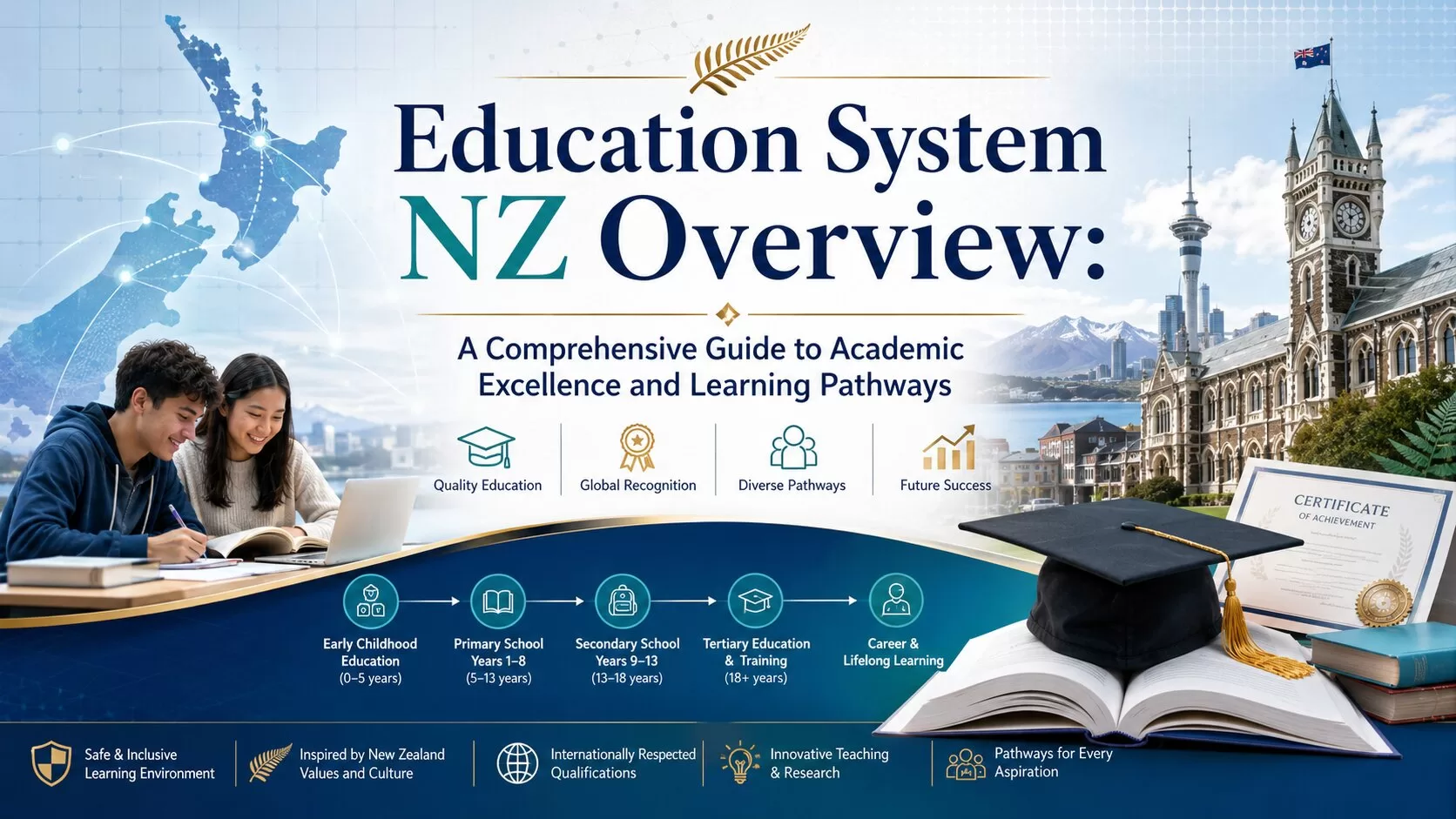
Education System NZ Overview: A Comprehensive Guide to Academic Excellence and Learning Pathways

Education System NZ Overview: A Comprehensive Guide to Academic Excellence and Learning Pathways

New Zealand has earned a stellar global reputation for fostering a world-class education environment that balances academic rigor with holistic student development. The Education System NZ is structured to provide seamless transitions from early childhood through to secondary schooling and advanced tertiary study. Whether domestic scholars or international students are navigating their educational journey, the country offers robust academic qualifications, flexible study options, and strong industry connections.

A key strength of the Education System NZ is its clear progression across different study levels, allowing learners to move from foundational education into vocational training, university study, and career-focused qualifications. This flexibility helps students choose pathways that align with their academic interests, practical skills, and long-term professional ambitions.

Understanding the architecture of the Education System NZ—including school types, qualification levels, and tertiary providers—is essential for mapping out effective career pathways and achieving long-term educational goals.

Overview of the Education System NZ : Education System NZ

The New Zealand education system is structured across three broad stages: early childhood education, schooling (encompassing primary, intermediate, and secondary levels), and tertiary education. The Education System NZ provides a clear progression between these stages, helping learners move smoothly from foundational study into higher education and career-focused pathways.

Governed by national standards and rigorous quality assurance mechanisms, the framework ensures that every learner experiences high-quality education regardless of their geographic location or provider choice. One of the strengths of the Education System NZ is its emphasis on maintaining consistent education standards while still allowing flexibility across different providers and study levels.

The system is designed to accommodate diverse study levels, promoting critical thinking, creativity, and practical problem-solving through modern teaching methods and student-centered learning environments. Through this balanced approach, the Education System NZ supports both academic development and the practical skills students need for further study and future careers.

The Schooling Journey: Primary to Secondary Education

Schooling in New Zealand spans 13 years, starting when children turn five years old. Throughout their school years, students benefit from a comprehensive national curriculum that emphasizes core competencies alongside vocational subjects and creative arts. Schools in New Zealand operate under three primary governance models: state schools funded by the government, state-integrated schools with a specific character or philosophy, and private schools that charge independent tuition fees.

Primary and Intermediate Schools: Building the Foundation

The formal schooling journey begins in primary schools, which typically cater to students from Year 0 or Year 1 through Year 6. In regions where dedicated middle-level education is implemented, intermediate schools cater specifically to students in Years 7 and 8 (ages 11 to 13). During these formative years, the focus is on establishing strong foundational literacy and numeracy skills while encouraging inquiry-based learning. Learning support services are readily available to assist students with diverse learning needs, ensuring an inclusive learning environment across all schools.

Secondary Schools and School Qualifications (NCEA)

Secondary schools accommodate students from Year 9 through Year 13, preparing them for higher education or direct entry into the workforce. The cornerstone of senior secondary assessment is the National Certificate of Educational Achievement (NCEA). Students generally begin NCEA Level 1 in Year 11 and progress through Level 3 by Year 13. This modular qualification structure allows for flexible course selection, enabling students to tailor their school qualifications to their specific interests and future career aspirations.

The New Zealand Qualifications and Credentials Framework (NZQCF)

At the heart of the nation’s training and academic structure is the New Zealand Qualifications and Credentials Framework (NZQCF). The NZQCF is a unified, 10-level hierarchy that classifies all approved academic qualifications, vocational certificates, and credentials. This framework provides absolute transparency for employers, education agents, academic institutions, and anyone seeking guidance from an Immigration advisor Auckland regarding the complexity, recognition, and depth of a given credential.

Understanding Study Levels and Quality Assurance

The NZQCF spans from Level 1 certificates to Level 10 doctoral degrees, ensuring clear education pathways for lifelong learning. Underpinning this framework is strict quality assurance managed by regulatory bodies such as the New Zealand Qualifications Authority (NZQA) and Universities New Zealand. These organizations maintain rigorous education standards across all education providers, guaranteeing that qualifications earned in New Zealand are trusted globally. Furthermore, navigating these administrative and settlement requirements often parallels the considerations families make when examining the Healthcare System NZ for Visa Holders.

Higher Education: Universities and Academic Excellence

New Zealand is home to eight state-funded universities, all of which consistently rank among the top tier globally . These institutions represent the pinnacle of higher education in the country, offering comprehensive degree programmes across a vast spectrum of academic disciplines and professional fields.

Research-Based Education and Degree Programmes

Universities in New Zealand are renowned for combining academic excellence with cutting-edge research. Students engage directly with leading academics, participating in research-based education that fosters critical inquiry and innovation. Undergraduate courses and programmes lead to bachelor’s degrees, while postgraduate options include honours, postgraduate diplomas, and master’s degrees tailored for advanced professional development and specialized areas of study.

PhD Study and Global Recognition

For those pursuing the highest level of academic achievement, PhD study in New Zealand offers exceptional opportunities. New Zealand universities welcome doctoral candidates from around the world, providing access to world-class research facilities and mentorship. A notable advantage for international doctoral candidates is that many universities charge domestic tuition rates for PhD study, making it a highly attractive destination for global researchers seeking globally recognised qualifications.

NZQCF Level Qualification Types Primary Focus & Target Audience
Levels 1 – 4 Certificates, Micro-credentials Foundational skills, trades, and introductory vocational training
Levels 5 – 6 Diplomas, Advanced Certificates Technical proficiency and specialized paraprofessional training
Levels 7 Bachelor’s Degrees, Graduate Diplomas Comprehensive undergraduate study and career entry
Levels 8 – 10 Postgraduate Degrees, Master’s, Doctorates Advanced research, specialized expertise, and academic leadership

Vocational Education: Polytechnics and Practical Skills

Beyond traditional universities, the tertiary sector features robust vocational pathways designed to meet the immediate demands of the labor market. This sector ensures that student learning translates directly into tangible, industry-focused education.

Institutes of Technology and Career-Focused Skills

Institutes of Technology and Polytechnics (ITPs) focus heavily on practical education, hands-on learning, and career-focused skills. These institutions offer a wide array of certificates, diplomas, and applied degrees that bridge the gap between classroom theory and workplace reality. Through close alignment with regional employers, these providers deliver practical training that equips graduates with the exact competencies required in fields like engineering, hospitality, and applied sciences.

Private Training Establishments and Specialised Programmes

Private training establishments (PTEs) complement the public tertiary network by offering specialised programmes tailored to niche industries. Operating in smaller class settings, PTEs provide focused study programmes ranging from foundation levels to advanced diplomas. Their agility allows them to respond rapidly to changing industry needs, ensuring that students receive targeted instruction and relevant professional connections.

Supporting International Students and Career Pathways

Welcoming learners from across the globe is a core pillar of New Zealand’s educational strategy. To ensure a safe and enriching experience, the government and institutions provide comprehensive support networks for all enrolled scholars.

The Code of Practice and Student Learning Support

All institutions enrolling international learners must adhere to the Education (Pastoral Care of Tertiary and International Learners) Code of Practice. This statutory framework ensures high standards of student welfare, safe accommodation, and dedicated learning support throughout their stay. Whether seeking study advice or personal counseling, international scholars have access to comprehensive on-campus resources that foster a secure and inclusive community.

Education Pathways and Career Development

Navigating the transition from academia to the professional world is facilitated by dedicated career centers embedded within institutions. These services assist students with CV writing, interview preparation, and networking events, directly supporting long-term career development. By combining rigorous academic study with practical internships and strong industry ties, New Zealand empowers graduates to succeed in an increasingly competitive global marketplace.

Conclusion

The Education System NZ offers a dynamic, inclusive, and world-class framework that empowers learners at every stage of their lives. From the foundational years in primary schools to advanced PhD study at globally ranked universities, New Zealand maintains uncompromising education quality and support. By integrating academic rigor with practical, vocational training, the nation ensures that all graduates are well-equipped for lifelong success. For those planning a move to Aotearoa, understanding this exemplary educational framework—alongside vital infrastructure like the Healthcare System NZ for Visa Holders—provides a solid foundation for a prosperous future.
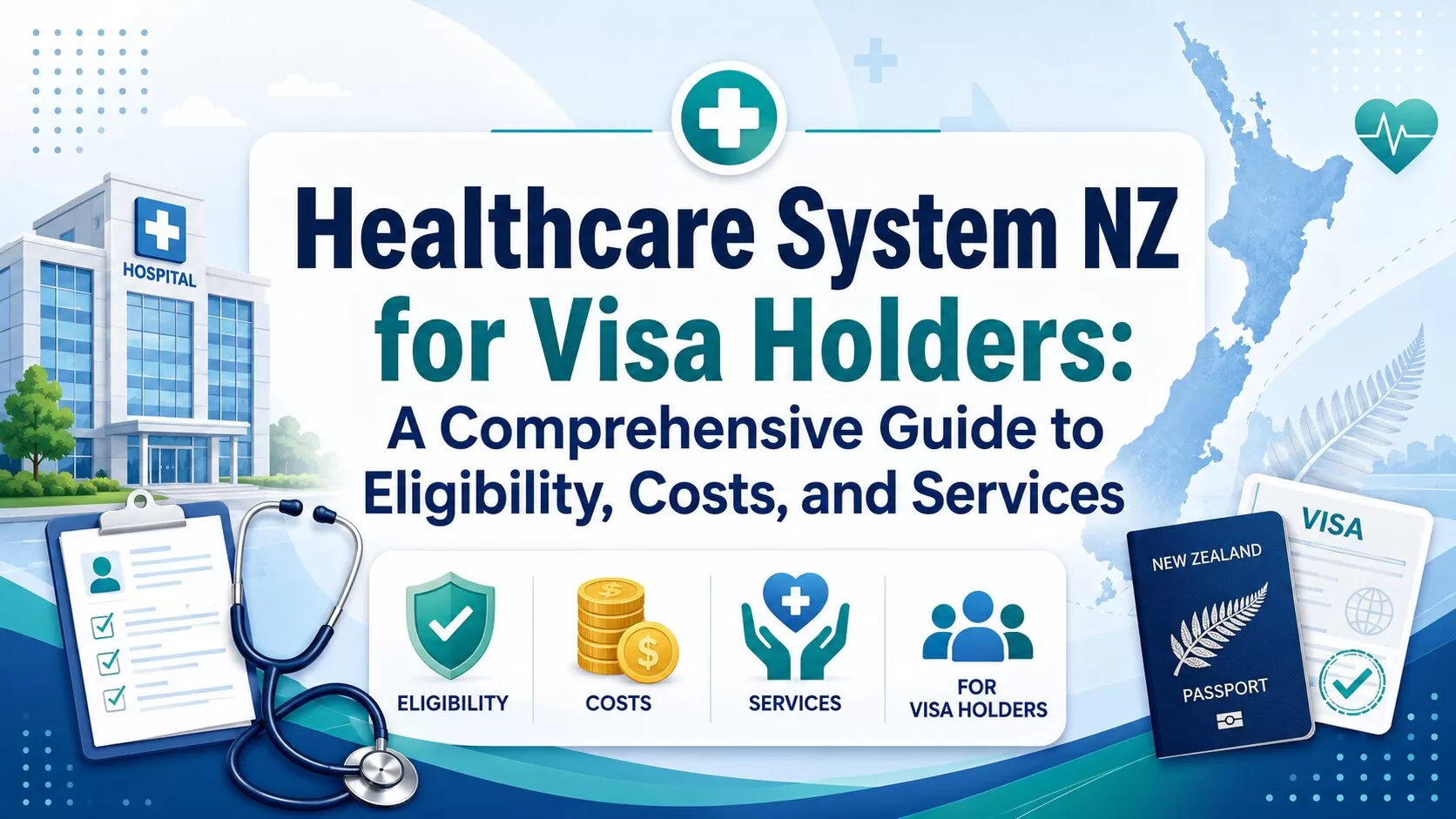

Healthcare System NZ for Visa Holders: A Comprehensive Guide to Eligibility, Costs, and Services

Navigating the healthcare system NZ is a critical priority for anyone planning to move to Aotearoa. Whether you are arriving for work opportunities NZ, embarking on a study-abroad journey, or joining family, understanding your rights to medical care is essential for both your physical well-being and financial security. New Zealand operates a high-quality, dual-track healthcare model where public health care and private health care coexist, but access to these services is strictly governed by your immigration status and specific visa conditions. This guide provides a detailed breakdown of how visa holders can access health and disability services, the associated costs, and the mandatory insurance requirements for temporary residents.

Understanding Health Care Eligibility in New Zealand

The cornerstone of the New Zealand health model is the provision of publicly funded health care to those who meet specific eligibility requirements. Unlike many other nations, eligibility is not based on tax contributions alone but on the duration and type of visa held by the applicant.

Eligibility for Residents and Long-Term Workers

New Zealand residents, including those holding resident visas and permanent resident visas, are generally entitled to the same public health services as New Zealand citizens. This entitlement extends to individuals holding temporary visas that allow them to stay in New Zealand for at least two consecutive years (e.g., a two-year work visa). To access these services, you must provide proof of eligibility to your health care provider, which typically includes your passport and an e-Visa letter or physical visa label. Once eligibility is confirmed, you can access funded services at little to no cost in public hospitals.

Healthcare for Temporary Visa Holders and Visitors

Most people holding short-term temporary visas, such as a visitor visa or a working holiday visa, are not eligible for subsidised health care. These individuals are considered “non-residents” for health purposes and must pay the full health care costs for any medical treatment received. This includes medical assistance for illnesses, routine check-ups, and non-emergency hospital admissions. Consequently, maintaining comprehensive travel insurance or private health insurance is not just a recommendation but often a mandatory visa condition for these groups to prevent high medical bills.

Primary Care: Enrolling with a General Practitioner

For most non-emergency health issues, the first point of contact in the healthcare system NZ is a general practitioner (GP). GP services are the backbone of subsidised primary health care for eligible residents, but the experience differs for those on temporary visas.

Finding and Enrolling with a Medical Practice

It is highly recommended that you enrol with a medical practice as soon as you settle in your new community. Enrollment allows you to access lower doctors’ fees if you are eligible for subsidies. For New Zealand residents, a standard GP visit may cost between $20 and $60, depending on the clinic and whether you are a Community Card holder. For non-eligible visa holders, doctor visits are significantly more expensive, with medical costs for a single consultation often ranging from $100 to $250.

Prescription and Medicine Costs

When a GP prescribes medication, the cost is often subsidised for eligible patients. As of 2026, many prescribed medicines are free or cost a nominal fee (around $5) at pharmacies for those with public health eligibility. However, for those on temporary visas without a qualifying work visa, the full medicine costs must be paid out of pocket. It is important to check if your insurance plans cover prescription costs, as some chronic medications can be expensive when not subsidised.

Service Type Eligible Resident Cost Non-Eligible Visitor Cost
GP Consultation $20 – $60 $100 – $250
Prescription Fee $0 – $5 Full Market Price
Public Hospital (Emergency) Free High Daily Rates
Specialist Visit Subsidised/Free (Referral) $300+

The Role of ACC: Accident and Injury Coverage

One of the most unique aspects of the healthcare system NZ is the Accident Compensation Scheme, managed by the Accident Compensation Corporation (ACC). Unlike standard health services, ACC coverage is not restricted by immigration status.

Accident Treatment and Rehabilitation

If you suffer a physical injury caused by an accident while in New Zealand, you are likely covered by ACC. This “no-fault” scheme provides for accident treatment, including emergency room visits, surgery, and treatment and rehabilitation services like physiotherapy. Whether you are a citizen or a visitor on a student visa, you can file an ACC claim through your health care provider. ACC helps cover medical treatment costs and can even provide partial income replacement if you are unable to work due to the injury.

What ACC Does Not Cover

It is a common misconception that ACC covers all medical needs. ACC does not cover medical bills related to illnesses, infections, or age-related conditions. For example, if you require hospital treatment for appendicitis or the flu, ACC will not pay for it. This gap in coverage is why travel insurance and private care insurance remain vital for all visa holders, ensuring that non-accidental health issues do not lead to financial ruin.

Specialized Services: Maternity, Dental, and Disability

Access to specialized health and disability services is often where visa holders face the most stringent eligibility requirements, particularly for those considering Nursing In Newzealand or seeking access to long-term healthcare support.

Maternity Care and Pregnancy Costs

Maternity care in New Zealand is free for those who are eligible for publicly funded health care. This includes prenatal check-ups, labour, and postnatal support. However, if a woman is on a temporary visa, such as a visitor visa, and does not meet the two-year residency criteria, she must cover all pregnancy costs herself. These costs can be substantial, often exceeding $9,000 for a standard delivery. A Certified Immigration Consultant New Zealand can help applicants understand the relevant visa requirements, while Immigration New Zealand requires non-eligible pregnant applicants to provide evidence of how they will pay for these services before a visa is granted.

Dental Care and Disability Support

In New Zealand, dental care is generally not part of the public health system for adults. Most New Zealand residents and visitors must pay for their own dental treatment through private dentists. Dental care costs can be high, and many residents opt for specific dental add-ons in their health insurance requirements. Similarly, disability support services are largely reserved for citizens and those with resident visas, with limited access for those on short-term visas unless the disability is the result of an accident covered by ACC.

Healthcare for International Students and Seasonal Workers

New Zealand places specific health insurance requirements on certain groups of migrants to ensure they are protected while contributing to work opportunities NZ.

Insurance for International Students

All international students in New Zealand, including those on a Fee-paying Student Visa, are required by the Education (Pastoral Care of Tertiary and International Learners) Code of Practice to have comprehensive travel insurance. This insurance must cover health care services, medical treatment, and emergency evacuation for the duration of their student visa. Universities often provide preferred insurance plans, but students can choose their own as long as it meets the government’s minimum standards.

Requirements for Seasonal Workers

Seasonal workers, such as those on a Recognised Seasonal Employer (RSE) visa, must also have medical insurance. Given the physical nature of their work, having access to medical assistance is crucial. While ACC covers workplace injuries, private insurance ensures that seasonal workers can afford GP services and treatment for non-work-related illnesses without facing prohibitive health care costs.

Conclusion

The healthcare system NZ is world-class, but its complexity regarding visa holders requires careful navigation. While the public health system provides a safety net for New Zealand residents and long-term workers, those on temporary visas must be proactive in securing comprehensive travel insurance. By understanding the eligibility requirements, enrolling with a GP early, and recognizing the unique role of ACC, migrants can ensure they are well-supported as they pursue their new lives in Aotearoa. Whether you are here for work opportunities NZ or study, your health is your most valuable asset—protecting it with the right information and insurance is the first step to a successful settlement.

Work Opportunities NZ: A Comprehensive Guide to Careers and Employment in Aotearoa

New Zealand continues to be a top destination for professionals seeking a high quality of life combined with robust career prospects. Work Opportunities NZ: span a diverse range of industries, from high-tech engineering and construction to healthcare, education, agriculture, and essential services. As the country navigates the economic landscape of 2026, demand for skilled workers remains an important priority across both government and private sectors.

For overseas applicants, understanding the nuances of the local labour market and available Certified immigration Consultant pathways is the first step toward a successful relocation. Whether you are looking for seasonal work experience or a long-term residence pathway, New Zealand offers opportunities for people with the right skills, qualifications, and professional experience.

Understanding the New Zealand Labour Market in 2026

The New Zealand employment market has shown resilience, even as global economic conditions shift. In 2026, the labour market statistics indicate a dynamic environment where certain sectors are experiencing rapid growth while others focus on stability. The employment outlook remains positive for those in skilled occupations, particularly as the government continues to invest in infrastructure and public services.

The 2026 Employment Outlook and Statistics

As of the June 2026 quarter, the unemployment rate in New Zealand stands at 5.6% . While this reflects a slight increase from previous years, it also highlights a competitive market where highly skilled workers are in greater demand than ever. Employment opportunities are particularly strong in regional areas where infrastructure projects and primary industries are expanding. For new arrivals, the local job market offers a variety of entry points, provided they can demonstrate professional experience and a commitment to the New Zealand workplace.

Job Market Demand and Vacancies

Current job vacancies are concentrated in sectors that support the country’s long-term growth. New Zealand employers are actively seeking professionals who can contribute to the nation’s economic contributions. The employment prospects for migrants are enhanced by the government’s focus on filling gaps in the workforce that cannot be met by local workers alone. Utilizing employment websites and job boards is essential for any job search, as these platforms provide real-time data on job market demand.

In-Demand Professions and the Green List

To streamline the recruitment of essential talent, Immigration New Zealand maintains the Green List. This list identifies green list jobs that are eligible for fast-track or work-to-residence pathways. If your profession is among the green list roles, your visa application process may be significantly simplified.

Skilled Occupations in Construction and Engineering

The infrastructure boom has created a wealth of construction jobs and engineering jobs across the country. From civil engineers to project managers, the demand for professional skills in the built environment is at an all-time high. These skilled occupations often require occupational registration with a professional body in New Zealand to ensure that international standards are met. Overseas qualifications must often undergo an International Qualification Assessment (IQA) by the New Zealand Qualifications Authority (NZQA) to be fully recognized .

Health Care Jobs and Medical Technology

The health sector remains a cornerstone of work opportunities NZ. Health care jobs, including nursing, general practice, and specialist roles, are consistently featured as in-demand professions. Furthermore, the rise of health technology has opened new doors for researchers and IT professionals within the medical field. Professional registration is mandatory for most clinical roles, and recruiters specializing in healthcare can provide invaluable assistance in navigating these requirements.

Main Industries and Sector-Specific Opportunities

New Zealand’s economy is built on a foundation of primary industries, supplemented by a growing services and technology sector. Each industry offers unique employment opportunities for both temporary visa holders and those seeking permanent residence.

Opportunities in Agriculture, Forestry, and Seasonal Work

Agriculture and forestry are the backbone of New Zealand’s export economy. These sectors offer a range of seasonal jobs and short-term work options, particularly for those on a working holiday visa. Seasonal work in orchards and vineyards is a popular choice for young travelers, while more permanent roles in agribusiness require specific industry experience. The energy sector is also evolving, with a shift toward renewable sources creating new science jobs and technical roles.

Education, Teaching, and the Business Sector

The education and training sector is another area with significant job opportunities. Teaching jobs at all levels, from early childhood to tertiary education, are in high demand. In the business and finance sector, the focus is on digital transformation and sustainable practices. Professionals with employment skills in data analysis, financial management, and strategic planning will find a welcoming employment market in cities like Auckland and Wellington.

Navigating Work Visa Options and Immigration Pathways

Securing a job offer is often the first hurdle in the visa application process. Understanding your work visa options is crucial for ensuring that you can live and work in New Zealand legally.

The Accredited Employer Work Visa (AEWV) and Job Offers

The Accredited Employer Work Visa (AEWV) is the primary route for most skilled migrants. Under this scheme, you must have a job offer from a prospective employer who is an accredited employer. The job offer requirements are strict, ensuring that the role pays at least the immigration median wage, which is currently set at NZD $35.00 per hour . This ensures that migrant workers are paid fairly and that the labour market remains balanced.

Skilled Migrant Category and Residence Pathways

For those looking for a permanent move, the Skilled Migrant Category (SMC) provides a points-based residence pathway. Points are awarded for skills and experience, qualifications, and a job offer in a skilled role. Other options include the work to residence pathway for those in specific green list roles. Navigating these immigration pathways often requires the expertise of recruitment agencies or licensed immigration advisers who can provide tailored visa options.

Employment Rights and Workplace Culture

New Zealand is known for its fair employment conditions and a strong emphasis on work-life balance. Worker rights are protected by law, ensuring that everyone in the New Zealand workplace is treated with respect.

Worker Rights and Minimum Wage Standards

All employees in New Zealand, including overseas workers, have the same employment rights. This includes the right to a written employment agreement, the minimum wage, and paid annual leave. As of April 2026, the adult minimum wage is NZD $23.95 per hour . Employer responsibilities include providing a safe working environment and adhering to workplace health and safety regulations. Employee rights also include protection from discrimination and the right to join a union.

Workplace Culture and Work-Life Balance

The workplace culture in New Zealand is generally informal and collaborative. There is a strong emphasis on work-life balance, with many employers offering flexible working arrangements. This culture extends to the Best Cities NZ for Students, where the balance between study and part-time work is highly valued. For new arrivals, adapting to this workplace culture is an important part of settling in New Zealand. Workplace support programs are often available to help migrants integrate into their new teams.

Practical Steps to Finding Work in New Zealand

Successfully finding work in New Zealand requires a proactive approach and a well-prepared strategy. For overseas applicants, the digital landscape is the best place to start.

Utilizing Recruitment Agencies and Job Websites

The most effective way to find a job in New Zealand is to utilize job websites like SEEK and Trade Me Jobs. Additionally, registering with recruitment companies and recruitment agencies that specialize in your industry can provide access to unadvertised roles. Recruiters can also offer advice on tailoring your CV to the New Zealand workplace and preparing for job applications.

Building Your Career and Skill Development

Once you have secured a role, the focus shifts to career development and skill development. New Zealand offers many opportunities for professional growth, with many employers investing in their staff’s employment skills. Building a strong network within your industry and gaining local job market experience will enhance your long-term employment prospects and pave the way for a successful career in New Zealand.

Conclusion

The work opportunities NZ landscape in 2026 is full of potential for those with the right mix of skills and experience. By understanding the labour market, identifying in-demand professions, and navigating the visa application process with care, you can turn your dream of living and working in New Zealand into a reality.

For younger applicants and those combining study with long-term career planning, exploring the Best Cities NZ for Students can also help identify locations with strong education options, employment prospects, and pathways into the local workforce. Whether you are a skilled migrant or a seasonal worker, Aotearoa offers a unique environment where professional success goes hand-in-hand with a high quality of life.

Cost of Living NZ for Immigrants: Navigating Expenses, Housing, and Settlement in Aotearoa

Moving to Aotearoa is an exciting milestone for individuals and families seeking new opportunities, a balanced lifestyle, and world-class scenery. However, successfully establishing yourself requires a realistic understanding of the financial commitments involved. Living NZ for Immigrants requires careful budgeting across several categories, including accommodation in major urban centres, groceries, transport, utilities, and healthcare.

Because New Zealand’s economic landscape includes regional price differences, global inflationary pressures, and specific eligibility rules for newcomers, researching Living NZ for Immigrants is an essential part of the relocation process. Prospective residents should compare housing costs, everyday expenses, employment opportunities, and access to public services before making their move.

With proper preparation, Living NZ for Immigrants can become more manageable, allowing newcomers to settle confidently and build a stable life in Aotearoa.

Understanding the Financial Landscape: Moving and Settling In

Relocating across international borders involves substantial upfront capital. Beyond obtaining the appropriate visa—whether through skilled employment, family sponsorship, or investment—newcomers must account for international shipping, temporary accommodation upon arrival, flight costs, and initial bond payments for permanent housing. Avoiding pitfalls such as a Rejected Visa NZ is paramount, as visa delays or denials can disrupt financial planning, forfeit application fees, and require unexpected emergency funds.

Initial Relocation and Settlement Expenses

When first arriving in New Zealand, migrants typically experience a transition period during which expenses may exceed their immediate income. Understanding the initial costs associated with Living NZ for Immigrants is therefore essential for effective financial planning.

Securing a rental property may require paying rent in advance, along with a rental bond of up to four weeks’ rent. For a family of four or even a single professional, these initial housing expenses can easily amount to several thousand New Zealand dollars (NZD). These upfront payments make accommodation one of the most significant financial considerations when planning for Living NZ for Immigrants.

Newcomers may also need to pay utility connection fees and purchase appliances, furniture, household essentials, and other basic items, particularly when renting an unfurnished property. Preparing for these settlement expenses can make Living NZ for Immigrants more manageable during the first few weeks in Aotearoa.

Budgeting for Basic Living Expenses

Once settled into permanent accommodation, monthly budgeting becomes the cornerstone of financial sustainability. On average, a single person living in New Zealand requires approximately $1,800 to $2,500 NZD per month to cover rent, utilities, food, and transport, while a family of four typically budgets between $5,500 and $7,000 NZD monthly depending on their location . Economic conditions, supply and demand dynamics, and the high proportion of imported goods mean that consumer prices in urban hubs can rival or exceed those in major European and North American cities.

Housing Costs and Regional Variations Across New Zealand

Housing represents the single largest expenditure for households in New Zealand. House prices and rental rates vary significantly depending on whether you choose to live in primary metropolitan centers or regional towns. Understanding how regional housing markets operate helps migrants choose a destination that aligns with their career trajectory and financial capacity.

Renting a House or Apartment

The New Zealand rental market is regulated by Tenancy Services under the guidance of the Ministry of Business, Innovation and Employment (MBIE), ensuring clear landlord responsibilities and tenant responsibilities. Weekly rent is the standard metric, with market rent fluctuating based on location, property size, and proximity to central business districts. In major metropolitan areas, rental demand remains robust, driving up weekly commitments for apartments and standalone houses alike.

Comparing Auckland, Wellington, and Invercargill Housing

Regional cost differences are starkly evident when comparing New Zealand’s major centers. Auckland housing costs command the highest median rents in the country, with three-bedroom homes and central apartments frequently ranging between $650 and $780 per week. Wellington housing costs follow closely behind, averaging around $600 to $650 per week for comparable dwellings. Conversely, regional centers like Invercargill offer substantially lower living expenses, where renting a home can be 30% to 40% cheaper than in Auckland, making it an attractive destination for budget-conscious migrants.

Region Average Weekly Rent (2-3 Bedroom) Typical Monthly Utilities (Power/Internet) Public Transport Monthly Pass
Auckland $650 – $780 $250 – $350 $150 – $220
Wellington $600 – $720 $230 – $330 $140 – $200
Invercargill $380 – $480 $200 – $280 $80 – $120

Grocery Prices, Dining Out, and Food Expenses

Food and grocery expenses form a recurring component of daily living costs. New Zealand supermarkets are dominated by major nationwide chains, alongside discount supermarkets and specialty international food stores that cater to migrant communities. Because New Zealand is an island nation with a robust agricultural export economy, locally produced dairy, meat, and seasonal fruits are widely available, whereas imported goods and specialty items carry a noticeable premium.

Supermarket Shopping and Grocery Budgets

A single person cooking mostly at home can expect a weekly grocery bill ranging from $100 to $180 NZD, while a family of four typically spends between $280 and $350 NZD per week. Prices include Goods and Services Tax (GST), which is levied at 15% across almost all retail purchases. Savvy shoppers often utilize discount supermarkets, buy in-season produce, and shop at local farmers’ markets to keep food expenses manageable.

Dining Out and Food Culture

New Zealand boasts a vibrant cafe and restaurant culture, particularly in Auckland, Wellington, and Christchurch. However, dining out regularly can strain a household budget. A casual meal at an inexpensive restaurant costs around $25 to $35 NZD per person, while a three-course meal for two at a mid-range establishment easily ranges from $120 to $160 NZD. Tipping in New Zealand is not customary or expected for standard service, as hospitality workers receive award wages, though exceptional service is occasionally acknowledged with a modest tip.

Transport, Vehicle Ownership, and Commuting Costs

Getting around New Zealand efficiently requires evaluating public transport networks versus personal vehicle ownership. While public transport systems serve major metropolitan areas effectively, regional mobility often necessitates a car.

Public Transport in Urban Centers

Auckland and Wellington operate integrated public transport networks utilizing smart transport cards, such as AT HOP in Auckland and the Snapper card in Wellington. Commuters benefit from fare caps, such as daily and weekly limits that cap spending for frequent users. Student transport discounts are widely available for enrolled tertiary students, reducing monthly commuting costs significantly. However, for those living outside major transit corridors, relying solely on public transit can be challenging.

Personal Transport and Vehicle Expenses

Owning and operating a car involves several mandatory and recurring expenses. Prospective vehicle owners must budget for buying a car, purchasing comprehensive or third-party vehicle insurance, paying for vehicle registration (licensing), and passing an annual or bi-annual Warrant of Fitness (WOF) safety inspection. Furthermore, retail fuel prices for regular petrol and diesel fluctuate, often hovering around $2.50 to $3.10 NZD per litre, making fuel efficiency an important consideration for daily commuters.

Healthcare Eligibility and Medical Costs in New Zealand

Access to healthcare is a primary concern for individuals and families relocating abroad. New Zealand operates a hybrid healthcare model supported by publicly funded healthcare through Health New Zealand (Te Whatu Ora) alongside a robust private medical sector.

Healthcare Eligibility for Visa Holders

Eligibility for publicly funded health and disability services depends heavily on your immigration status. New Zealand citizens, permanent residents, and holders of specific resident visas enjoy full access to subsidized or free hospital care, subsidized prescription medicines, and general practitioner visits. Conversely, temporary visa holders—including most work visa and visitor visa holders—are generally ineligible for publicly funded healthcare, making comprehensive private medical insurance a mandatory requirement or a vital safeguard against unexpected medical bills.

Private Healthcare and Finding a Doctor

For those who do not qualify for public subsidies, or for individuals seeking shorter wait times for elective procedures, private health insurance is highly recommended. Monthly premiums vary based on age, coverage level, and pre-existing conditions. Additionally, finding a doctor (general practitioner) in urban areas can involve joining patient waitlists, and standard GP consultation fees range from $50 to $90 NZD per visit for non-subsidized patients.

Utilities, Internet, and Essential Household Expenses

Keeping a household warm, connected, and functional incurs regular monthly utility charges that must be factored into every migrant’s financial plan.

Electricity and Power Bills

Electricity costs in New Zealand vary depending on seasonal heating demands, household size, and regional generation sources. During winter months, power bills spike due to home heating requirements. On average, New Zealand households pay between $200 and $300 NZD per month for electricity, though larger homes or households utilizing electric heating can see higher winter bills . Comparing power plans across competitive utility providers is an effective way to secure lower kilowatt-hour rates.

Water and Broadband Internet

Water charges are managed differently across local councils; some regions bill residents based on metered water consumption, while others incorporate water rates directly into local council property rates. For broadband internet, New Zealand boasts extensive fiber-optic infrastructure. Unlimited high-speed fiber internet plans typically cost between $85 and $120 NZD per month. Many households opt for power and internet bundles to secure combined discounts from telecommunications and energy providers, streamlining their monthly household administration.

Conclusion

Living in New Zealand offers an exceptional quality of life, characterized by stunning natural landscapes, career opportunities, and a safe, multicultural society. However, achieving long-term stability requires meticulous financial planning and a realistic appraisal of the cost of living. By understanding regional housing differences, grocery expenses, transport outlays, and healthcare eligibility rules, immigrants can build a resilient budget that cushions against economic fluctuations. With thorough preparation and informed decision-making, newcomers can successfully establish their roots and thrive in Aotearoa.

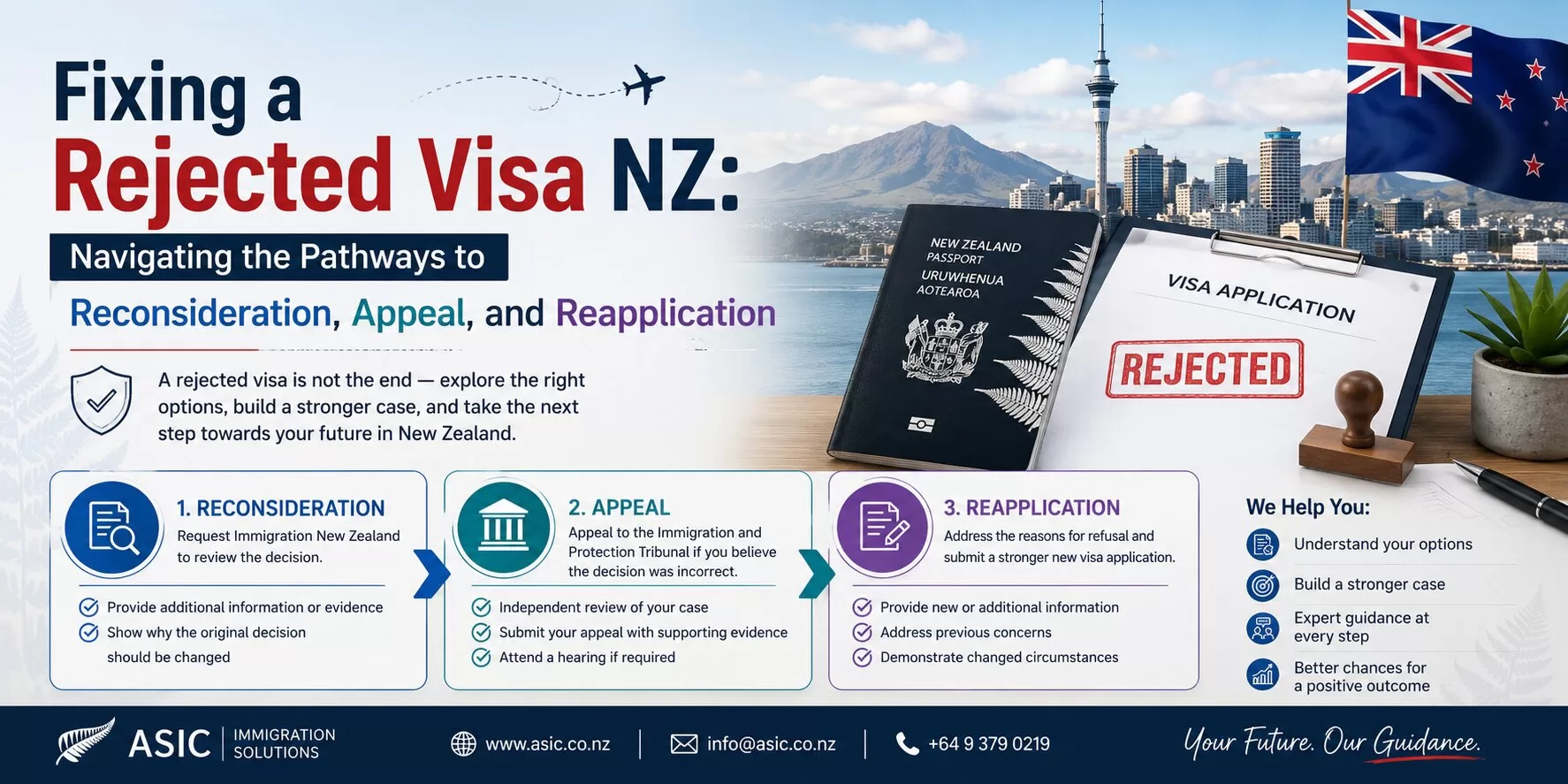
Fixing a Rejected Visa NZ: Navigating the Pathways to Reconsideration, Appeal, and Reapplication

Receiving a Rejected Visa NZ decision can be a disheartening experience for anyone aspiring to live, work, or study in New Zealand. However, a declined visa application is not always the final word. Immigration New Zealand (INZ) provides several pathways for applicants to challenge or address a negative decision, including reconsideration, appeal, and reapplication.

Understanding the reasons behind a Rejected Visa NZ decision, along with the relevant eligibility criteria and deadlines, is crucial when choosing the most suitable next step. With accurate information, stronger supporting evidence, and professional guidance, applicants may be able to overcome a Rejected Visa NZ outcome and continue working toward their New Zealand immigration goals.

Understanding Your Visa Rejection: Temporary vs. Residence Class Visas

The first critical step after receiving a Rejected Visa NZ decision is to thoroughly understand the reasons for the decline and the type of visa that was refused. New Zealand distinguishes between two broad categories: Temporary Visas, such as visitor, student, and work visas, and Residence Class Visas for applicants seeking permanent residency.

The appropriate response to a Rejected Visa NZ outcome differs significantly depending on which visa category the application falls under. Carefully reviewing the decision letter, eligibility requirements, supporting evidence, and available review options can help applicants determine whether reconsideration, appeal, or reapplication is the most suitable pathway following a Rejected Visa NZ decision.

Temporary Visa Refusals: The Reconsideration Process

For most temporary visa refusals, the primary mechanism for challenging the decision is through a visa reconsideration request. This process allows applicants to ask INZ to review their original application, often by a different immigration officer, to identify any errors in the initial assessment or to clarify information. It is not an opportunity to submit entirely new information that was available at the time of the original application, but rather to address specific points of contention or misinterpretations.

Eligibility and Timelines for Reconsideration

To be eligible for a reconsideration, applicants typically must submit their request within 14 calendar days of receiving the decline notification. The request must be in writing, in English, and accompanied by the correct reconsideration fee, which is usually around NZD $220. It is imperative that the applicant’s immigration status remains lawful during this period; ideally, they should hold a valid visa at the time of the request. If the original visa was nearing expiry, acting swiftly is paramount.

What to Include in a Reconsideration Request

A compelling reconsideration request should clearly articulate why the original decision was incorrect. This might involve pointing out factual errors made by the immigration officer, providing clearer explanations for previously submitted supporting evidence, or demonstrating that INZ failed to apply the correct immigration instructions. While new information is generally not accepted, clarification of existing information or evidence of minor administrative oversights can be crucial. An Immigration adviser or lawyer can be invaluable in crafting such a request, ensuring it is precise and addresses the specific grounds for refusal.

Residence Class Visa Refusals: The Appeal to the Immigration and Protection Tribunal

When a Residence Class Visa application is declined, the process for challenging the decision is more formal and involves an appeal to the Immigration and Protection Tribunal (IPT). The IPT is an independent body that hears appeals against decisions made by INZ related to residence visas, deportation liability, and refugee or protected person status.

Grounds and Deadlines for Residence Appeals

Appeals to the IPT must be lodged within 42 calendar days of the date INZ or the Minister of Immigration notified you of the decision. This 42-day appeal period is strict, and late applications are rarely accepted. A significant appeal fee of NZD $964 (as of current information) is also required. Appeals can be made on various grounds, including that INZ made an error in assessing the application against immigration policy, or on humanitarian grounds where exceptional circumstances exist. For categories like the Skilled Migrant Category Resident Visa or Straight to Residence Visa, appeals often focus on whether the applicant genuinely met the points or specific criteria.

The Appeal Process and Outcome

The IPT process is more akin to a court hearing, where both the applicant (or their representative) and INZ present their cases. The Tribunal will review all submitted evidence, including any new information relevant to the appeal grounds, and may conduct hearings. The IPT’s decision is binding, though in some limited circumstances, a further appeal on a point of law can be made to the High Court. Residence appeals can be a lengthy process, often taking between 7 to 12 months for a decision.

Reapplication: A Strategic Alternative

In some cases, particularly for temporary visas, it may be more pragmatic to address the reasons for refusal and submit a new visa application rather than pursuing a lengthy appeal. This is especially true if the refusal was due to missing documents, easily rectifiable issues, or if the applicant’s circumstances have significantly changed. For instance, if a work visa was rejected due to an issue with the Immigration Interview Process NZ, and the applicant has since gained additional experience or clarified previous ambiguities, a new application might be more effective. Your Immigration consultant can help you assess whether a new application is a more viable path.

When to Consider a New Application

Reapplication is often the preferred route if:

  • The original application had fundamental flaws that cannot be addressed through reconsideration (e.g., significant eligibility criteria were not met).
  • The applicant’s circumstances have genuinely changed circumstances since the initial rejection (e.g., obtained a new job offer, improved English language proficiency, or gained relevant qualifications).
  • The cost and time associated with reconsideration or appeal outweigh the benefits, especially for temporary visas.

Addressing Previous Rejection in a New Application

When reapplying, it is crucial to acknowledge the previous rejection and explicitly address the reasons for it. This might involve providing additional supporting documents, a detailed letter of explanation, or demonstrating how the issues that led to the previous decline have been resolved. Failing to disclose a previous rejection or to adequately address its grounds can be detrimental to the new application.

Common Reasons for Visa Rejection and How to Address Them

Understanding the typical reasons for visa rejection can help applicants proactively address potential issues or formulate a strong response to a decline.

Incomplete or Inaccurate Information

One of the most common reasons for a visa declined decision is an incomplete application or the provision of inaccurate information. This can range from missing documents to discrepancies in personal details. To address this, ensure all required supporting evidence is provided, and all information is consistent and verifiable. If the rejection was due to a minor oversight, a reconsideration or new application with the correct details can often resolve the issue.

Not Meeting Eligibility Requirements

Each visa category has specific visa eligibility requirements related to age, health, character, qualifications, work experience, and financial capacity. A rejection often stems from not clearly demonstrating that these requirements have been met. For example, if a Work Visa was declined because the job offer did not meet the median wage threshold, the applicant might need to secure a new job offer that complies with INZ’s wage requirements before reapplying.

Character and Health Concerns

Character requirements and health requirements are fundamental to all New Zealand visa applications. Applicants with criminal convictions or serious health conditions may face rejection. In such cases, a character waiver or medical waiver might be necessary. These waivers are granted in exceptional circumstances and require compelling arguments and evidence. The article on Immigration Ban NZ Rules further elaborates on how serious character issues can lead to long-term bans from New Zealand.

Genuine Intentions and Credibility

Immigration officers assess whether applicants have genuine intentions for their stay in New Zealand and whether their claims are credible. For visitor visas, this means demonstrating a genuine intention to visit and return to your home country. For student visas, it involves proving a genuine intent to study. Inconsistencies in information, weak ties to the home country, or a history of previous visa breaches can raise credibility concerns and lead to rejection. Experienced Immigration Advisers Auckland can help applicants present clear, consistent evidence and address potential concerns before submitting an application.

Seeking Professional Immigration Advice

Navigating the visa reconsideration, appeal, or reapplication process can be complex and daunting. Engaging a Licensed Immigration Adviser or an Immigration Lawyer is highly recommended, especially for residence visa appeals or cases involving complex issues like character or health waivers. These professionals can:

  • Provide expert Immigration advice on the best course of action.
  • Help identify the specific grounds for rejection and formulate a strong response.
  • Assist in preparing and submitting reconsideration requests or appeal applications.
  • Represent applicants before the Immigration and Protection Tribunal.
  • Ensure all documentation is accurate, complete, and meets INZ’s stringent requirements.

Conclusion

A rejected visa application for New Zealand is not necessarily the end of your immigration journey. By understanding the distinctions between temporary and residence visa refusals, the processes of reconsideration and appeal, and the strategic advantages of reapplication, applicants can effectively address negative decisions. Timely action, meticulous preparation, and professional guidance are key to successfully navigating the complexities of the New Zealand immigration system and ultimately achieving your aspirations to live, work, or study in Aotearoa.

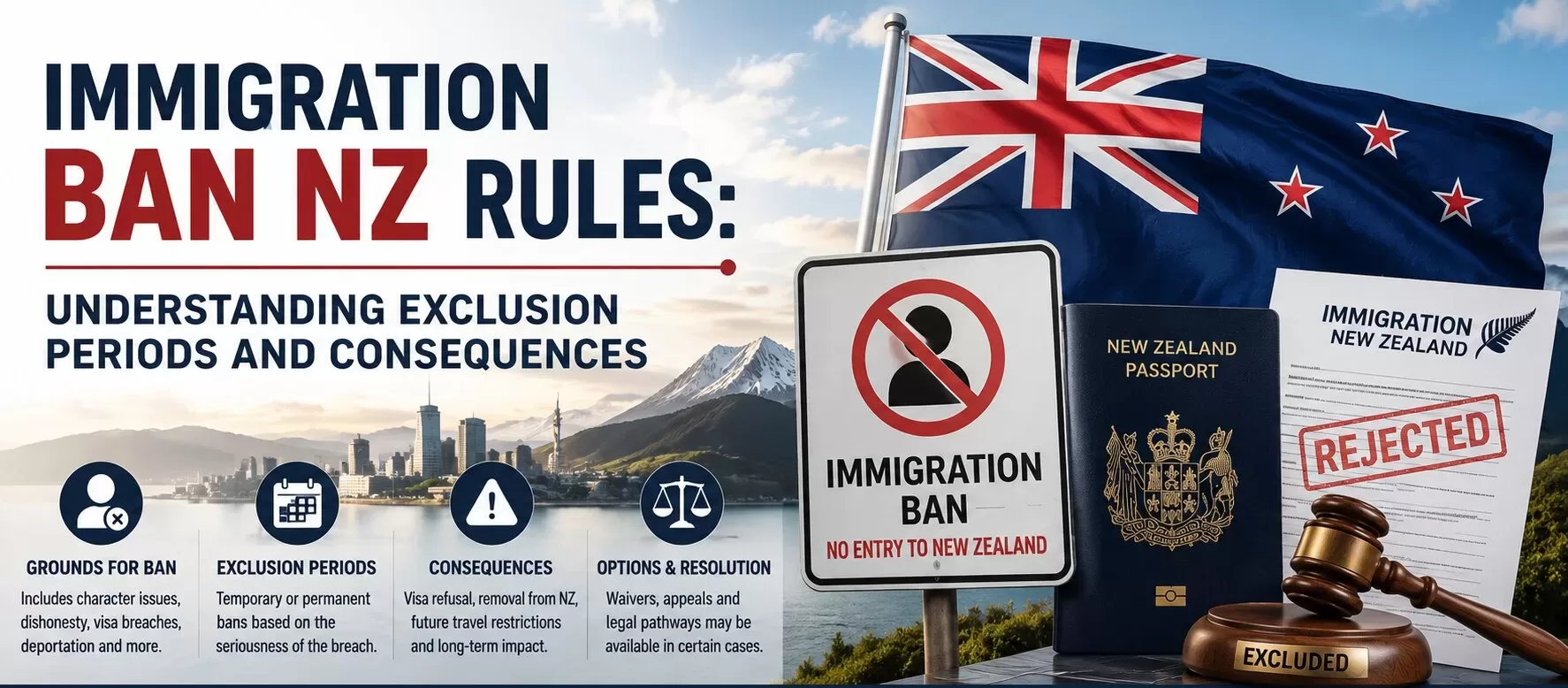
Immigration Ban NZ Rules: Understanding Exclusion Periods and Consequences

Immigration Ban NZ Rules are a critical aspect of New Zealand’s immigration policy, designed to protect the integrity of its borders and legal framework. These rules determine when an individual may be prevented from entering or residing in New Zealand, either temporarily or permanently. Understanding the grounds for an Immigration Ban NZ, the relevant exclusion periods, and the possible pathways for resolution is essential for anyone dealing with New Zealand Immigration.

The Immigration Ban NZ Rules may affect applications for a New Zealand Visitor Visa, New Zealand Work Visa, or New Zealand Student Visa, especially where there are concerns about character, visa breaches, false information, deportation history, or overstaying. This article explains the key Immigration Ban NZ Rules, including how bans are imposed, how long they may last, and what options may be available to address them, while also covering the serious Overstaying Visa NZ Consequences.

1. Grounds for Immigration Bans in New Zealand

New Zealand’s immigration legislation, primarily the Immigration Act 2009, outlines several circumstances under which an individual may face an Immigration Ban NZ. These grounds are broadly categorized into issues related to character, compliance with previous visa conditions, and the provision of accurate information. Consulting experienced Immigration Advisers Auckland can help applicants understand these restrictions, assess their eligibility, and prepare the appropriate documentation for their immigration case.

Character Requirements and Criminal History

One of the most significant factors leading to an Immigration Ban NZ is an individual’s character. Immigration New Zealand (INZ) has stringent Character Requirements that all visa applicants must meet. These requirements are designed to protect New Zealand’s security, public order, and public interest . An individual may be refused entry or a visa if they:

  • Have a criminal history, particularly if they have been sentenced to jail for 12 months or more within the last 10 years, or for 5 years or more at any time 
  • Are believed to be a risk to New Zealand’s security, public order, or public interest, for example, due to associations with gangs or registered sex offenders .
  • Are thought to be likely to commit an offense in New Zealand that would result in imprisonment .
  • These character concerns can lead to temporary or even permanent bans, depending on the severity and nature of the offense.

Breaches of Visa Conditions and Unlawful Status

Compliance with Visa Conditions is paramount. Any breach of these conditions can lead to severe penalties, including an Immigration Ban NZ. This includes:

  • Overstaying a Visa: As detailed in the discussion on Overstaying Visa NZ Consequences, remaining in New Zealand unlawfully for 42 days or more can result in a ban from returning, typically ranging from one to five years . This is a direct consequence of failing to Leave New Zealand before Visa expiry.
  • Deportation: If an individual is deported from New Zealand for being unlawfully present, for breaching visa conditions, or for other wrongdoing, they will face an exclusion period. This can range from two years (if unlawful for less than a year) to five years (if unlawful for a year or more, or if it’s a repeat offense)  Deportation for more serious reasons, such as fraud or security risks, can lead to a permanent ban 

Misrepresentation and Fraudulent Information

Providing false or misleading information in a Visa Application is a serious offense with significant repercussions. INZ emphasizes the importance of submitting Accurate Information and Complete Information. If an applicant:

  • Provides false or misleading information in their visa application or to an immigration officer .
  • Possesses a forged, fraudulent, or altered identity document or any other official document .
  • Uses immigration fraud to obtain a visa or refugee status 

Such actions can result in a 7-year ban from New Zealand and/or fines of up to NZD $100,000 . This underscores the critical need for honesty and integrity throughout the Visa Application Process.

2. Exclusion Periods: Temporary vs. Permanent Bans

The duration of an Immigration Ban NZ varies significantly depending on the specific grounds for the ban. It is crucial for individuals to understand whether their ban is temporary, with a defined Exclusion Period, or permanent.

Temporary Bans

Most bans related to overstaying or certain breaches of visa conditions are temporary. These bans typically range from two to five years, after which an individual may be eligible to apply for a New Zealand visa again  For example, if an individual is deported for being unlawfully in New Zealand for less than a year, they face a two-year ban. If they were unlawful for a year or more, or if it was a repeat offense, the ban extends to five years  Similarly, deportation for breaching Resident Visa Requirements or Temporary Visa conditions generally results in a five-year ban 

Permanent Bans

Certain serious offenses trigger a permanent Immigration Ban NZ, meaning the individual is barred from being granted any type of visa or entry permission to New Zealand indefinitely. These include:

Having been sentenced to a jail term of five years or more at any time 

  • Deportation from New Zealand due to fraud, forgery, false identity, committing a crime while on a Residence Class Visa, or posing a risk to New Zealand’s security 
  • Having been removed, excluded, or deported from another country due to wrongdoing or unlawful presence  This is a particularly stringent rule, as it means a ban from another country can lead to a permanent ban in New Zealand, regardless of how long ago it occurred .

The Definition of “Excluded”

The term “excluded” in the context of an Immigration Ban NZ can be complex. As highlighted by legal precedents, to be truly “excluded” from another country means a complete prohibition on re-entry, even if temporary . Mere restrictions on applying for certain types of visas during a period, such as Australia’s Public Interest Criteria (PIC 4014) ban, may not meet New Zealand’s legal definition of exclusion if other visa pathways remain available . This distinction is crucial, as a misinterpretation can lead to an incorrect assessment of an individual’s eligibility for a New Zealand visa.

 3. Impact on Various Visa Categories

An Immigration Ban NZ has far-reaching implications across all Visa Options, affecting individuals seeking to Visit New Zealand, Work in New Zealand, Study in New Zealand, or Live in New Zealand permanently.

Visitor Visas and NZeTA

For those planning to Visit New Zealand, a ban can prevent entry even for short stays. Individuals from Visa Waiver Country nations, who typically only require an NZeTA, will find their applications declined if they are subject to an Immigration Ban NZ. Similarly, those requiring a New Zealand Visitor Visa will face refusal. The system is designed to prevent individuals with a history of non-compliance or character concerns from even reaching the border .

Work and Student Visas

An Immigration Ban NZ significantly impacts the ability to obtain a New Zealand Work Visa or a New Zealand Student Visa. Whether an applicant is seeking an Accredited Employer Work Visa, a Working Holiday Visa, or a visa for Full-Time Study, any existing ban will likely lead to a Visa Application refusal. This is particularly challenging for individuals who have secured a Job Offer from a New Zealand Employer or an Offer of Place from a New Zealand Education Provider, as the ban overrides these opportunities .

Resident and Permanent Resident Visas

The most profound impact of an Immigration Ban NZ is on aspirations for Permanent Residence in New Zealand. Applications for a New Zealand Resident Visa or Permanent Resident Visa, including those based on skills as a Skilled Migrant, will be refused if an applicant is subject to a ban  The stringent Resident Visa Requirements include meeting character standards, which are directly compromised by any grounds for an immigration ban. This can shatter dreams of Living Permanently in New Zealand and bringing family members through Family Visa Options.

4. How to Check for an Immigration Ban and Seek Advice

Given the severe consequences, it is vital for individuals with any past immigration issues to proactively determine if they are subject to an Immigration Ban NZ before making travel plans or submitting a Visa Application.

Identifying a Potential Ban

While there isn’t a single public database to check for an Immigration Ban NZ, individuals can often infer their status based on past interactions with immigration authorities. In many cases, understanding the reason for a previous immigration issue is also the first step toward Visa Recovery and determining whether a new application may be possible.

Key indicators include:

  • Previous Visa Refusal or Visa Denial letters that explicitly state an exclusion period or grounds for a ban.
  • A history of Deportation from New Zealand or any other country.
  • Having provided false or misleading information in a previous Visa Application.
  • Having Overstayed a Visa in New Zealand for more than 42 days.

If any of these circumstances apply, the individual may be subject to an immigration restriction or ban. Professional assessment can help clarify the situation and identify possible Visa Recovery options before submitting a new application.

Seeking Professional Immigration Advice

Navigating the complexities of Immigration Ban NZ Rules requires expert guidance. Engaging a reputable Immigration Adviser or Immigration Lawyer is strongly recommended. These professionals can:

  • Assess an individual’s immigration history and determine the exact nature and duration of any ban.
  • Advise on the feasibility of applying for a Special Direction from the Minister of Immigration, which is the only pathway to overcome certain permanent bans 
  • Guide individuals through the process of making a new Visa Application if the ban is temporary and has expired.
  • Provide representation in cases involving appeals or complex immigration matters.
  • Early and accurate Immigration Advice can prevent further complications and potentially save significant time and resources.

5. Overcoming an Immigration Ban: Special Directions and Waivers

While an Immigration Ban NZ can seem insurmountable, there are limited pathways to overcome them, particularly through ministerial discretion.

Special Directions from the Minister of Immigration

For certain permanent bans, the only recourse is to seek a Special Direction from the Minister of Immigration  This is an exceptional measure, where the Minister exercises their discretionary power to grant a visa despite the applicant being otherwise ineligible. The Minister has absolute discretion in these matters and is not obligated to consider the request or provide reasons for a refusal  Successful Special Directions typically require compelling humanitarian grounds or significant public interest arguments.

Character and Medical Waivers

In cases where a ban is due to character or health issues that are not severe enough to warrant a permanent ban, it may be possible to apply for a Character Waiver or Medical Waiver. These waivers are discretionary and require a strong case demonstrating that the applicant does not pose a significant risk to New Zealand. The process involves providing extensive supporting documentation and often requires the assistance of an Immigration Adviser to present the case effectively.

6. Preventing Future Bans: Compliance and Diligence

The most effective strategy for dealing with Immigration Ban NZ Rules is to avoid them altogether. Proactive compliance and careful management of one’s immigration status are essential.

Adhering to Visa Conditions

Strict adherence to all Visa Conditions is fundamental. This includes respecting the Visa Validity period, not engaging in unauthorized work or study, and providing accurate information at all times. Regular checks of one’s Visa Application Status and expiry dates are crucial to prevent inadvertent overstays.

Seeking Timely Advice

If circumstances change or there is any uncertainty about Visa Requirements or conditions, seeking Immigration Advice promptly is vital. An Immigration Adviser can help interpret complex rules, assist with visa extensions or changes to conditions, and ensure that every action complies with New Zealand Immigration laws. Applicants may also benefit from resources such as sponsorship letter nz visa the ultimate guide when preparing supporting documentation for certain visa applications.

This proactive approach can help individuals maintain lawful immigration status and avoid the serious Overstaying Visa NZ Consequences and other penalties associated with an Immigration Ban NZ.

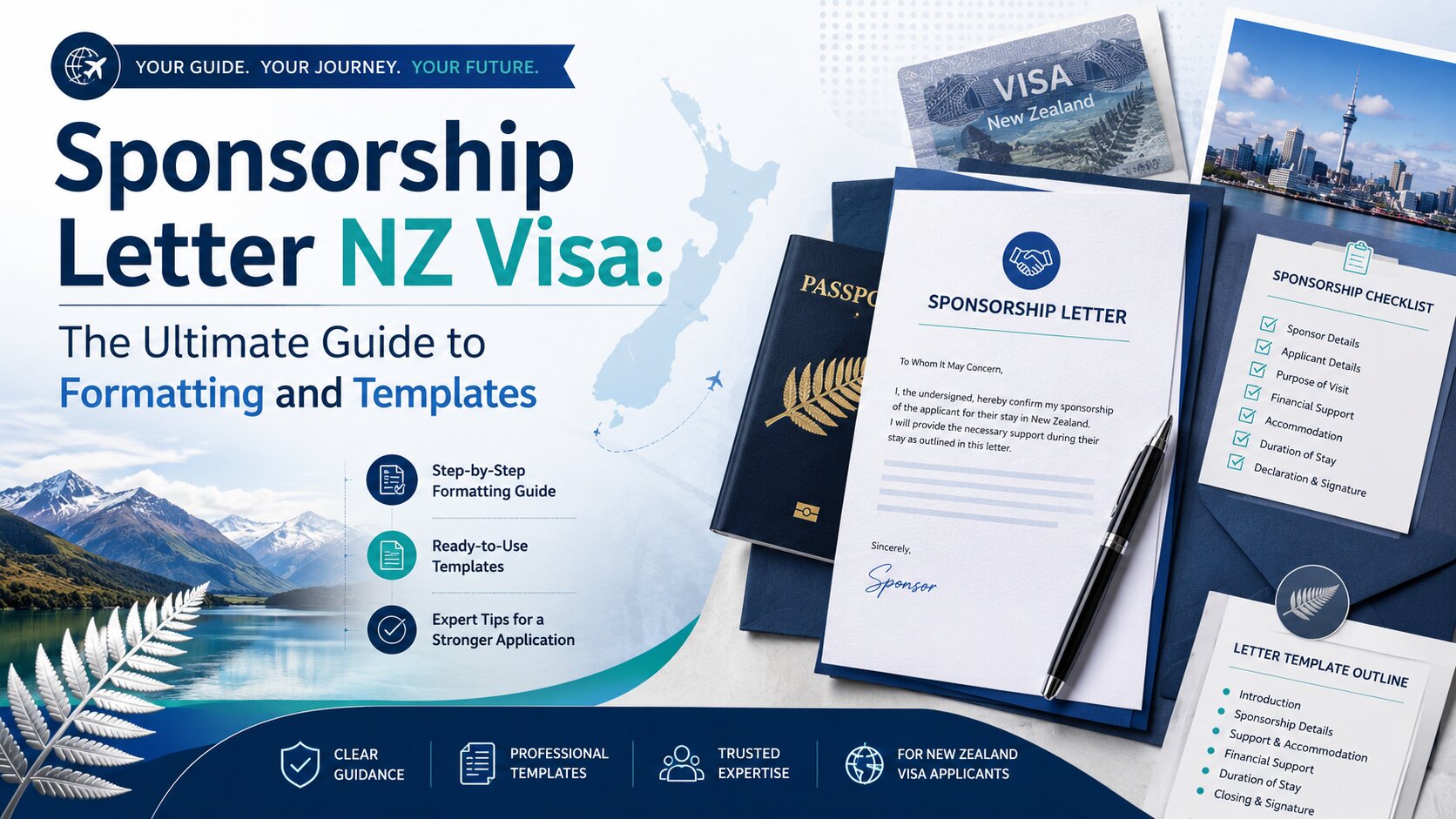
Sponsorship Letter NZ Visa: The Ultimate Guide to Formatting and Templates

When applying for a visa to New Zealand, demonstrating financial capacity is one of the most critical steps in securing visa approval. For many applicants, this requirement is met through a financial sponsor who agrees to cover their expenses during their stay. A well-written Sponsorship Letter NZ Visa helps present this financial support clearly by explaining the sponsor’s relationship with the applicant, their ability to cover expenses, and their commitment to supporting the applicant throughout their stay in New Zealand.

Whether you are planning to study abroad, travel abroad, or work abroad, a professionally drafted sponsorship letter for visa is essential to satisfy Immigration New Zealand (INZ). A well-prepared Sponsorship Letter NZ Visa helps clearly explain the sponsor’s financial responsibility, relationship with the applicant, and commitment to supporting the applicant during their stay in New Zealand.

This comprehensive guide provides sponsor-document guidance, details the exact sponsorship letter format, and offers a practical sponsorship letter template to ensure your visa application process is seamless and successful. By following the right Sponsorship Letter NZ Visa structure, applicants can present their financial support details more clearly and reduce the chances of missing important information.

A strong Sponsorship Letter NZ Visa also supports your overall application by showing that your accommodation, living expenses, travel costs, and other financial needs are properly covered.

1. Understanding New Zealand’s Sponsorship Framework

Not everyone can act as a visa sponsor for New Zealand, and understanding the legal framework is crucial before drafting a visa sponsorship letter  .

Who Can Sponsor a Visa Applicant?

INZ maintains strict criteria regarding who is eligible to sponsor a visa applicant . An acceptable sponsor must fall into one of the following categories:

  • Citizen Sponsor: A New Zealand citizen who resides in the country .
  • Permanent Resident Sponsor: A New Zealand resident whose visa has no travel restrictions and who lives in New Zealand .
  • Registered Organisation: A company registered in New Zealand, an incorporated society, or a charitable trust .
  • Government Agency: A tertiary education provider, a school’s board of trustees, or a community organisation .

Legal and Financial Responsibilities

When an individual or organisation agrees to sponsor you, they assume full financial responsibility for your stay  . They must guarantee that you will not rely on New Zealand public funds  . The sponsor is legally obligated to cover all your living expenses, accommodation expenses, travel expenses, medical insurance, and tuition fees if applicable  .

2. Essential Components of a Sponsorship Letter

A sponsorship letter for visa must be a typed letter written in a formal tone . It must be a clear and concise letter in English, containing specific details that visa officers at the embassy, consulate, or immigration officer can verify .

Key Details to Include

Every professional sponsorship letter format must incorporate the following essential elements:

Category Required Information
Sponsor’s Personal Details Full name, residential address, contact information, and New Zealand citizenship/residency status  .
Applicant’s Information Full name, passport number, date of birth, and relationship with sponsor .
Trip Details Purpose of visit, reason for visit, intended travel dates, and duration of stay .
Financial Details A clear declaration of financial support, specifying which expenses are covered (e.g., food expenses, rent expenses, transportation expenses, clothing expenses)  .

3. The Official INZ Sponsorship Forms

While a personal sponsorship letter sample is highly recommended to explain the context of your relationship, INZ also requires official sponsorship forms depending on your visa category .

INZ 1025: Sponsorship Form for Temporary Entry

For temporary visas such as a student visa, tourist visa, or family visit visa, the sponsor must complete the Sponsorship Form for Temporary Entry (INZ 1025) . This form acts as a formal sponsor declaration of financial capacity and commitment to support you during your stay .

  • Online Process: Modern online applications utilize a “Sharing ID” system . Your sponsor logs into Immigration Online using RealMe, finds their sharing ID, and sends it to you . You enter this ID in your application, and INZ emails the sponsor to complete the online form .
  • PDF Process: If applying on paper or via certain portals, the sponsor must physically or electronically sign the INZ 1025 PDF form, which you upload with your application .

4. Drafting the Sponsorship Letter: Format and Templates

A personal sponsorship letter template should accompany the official INZ forms to provide a narrative for your visa application . Below are standard templates for different sponsorship scenarios .

Student Sponsorship Letter Template

This format is ideal for a family member sponsor supporting an international student .

[Sponsor’s Name]

[Sponsor’s New Zealand Address]

[Sponsor’s Phone Number]

[Sponsor’s Email Address]

[Date of Letter]To Whom It May Concern / Respected Sir or Madam,Subject: Financial Sponsorship for [Applicant’s Full Name] – Passport No: [Applicant’s Passport Number]I am writing to confirm my financial sponsorship of my [Relationship, e.g., niece], [Applicant’s Full Name], who has been accepted to study at [Educational Institution] in New Zealand  .As a [New Zealand Citizen / Resident], I am fully aware of my financial responsibility . I guarantee that I have the financial capacity and proof of financial capability to cover all her expenses, including tuition fees, accommodation expenses, living expenses, and transportation expenses, ensuring she does not require access to public funds  .Enclosed with this letter are my bank statements for visa nz showing a consistent banking history, my employment agreement, and my completed INZ 1025 form  .Sincerely,[Sponsor’s Signature][Sponsor’s Typed Name]

General and Company Sponsorship Letter Templates

For business travel, an employer sponsor, event sponsor, conference sponsor, or educational exchange program coordinator should issue a company sponsorship letter . This letter must be printed on official company letterhead and signed by an authorized representative, detailing the business purpose of the trip and confirming that the company will cover all travel and accommodation costs .

5. Supporting Documents and Proof of Financial Capacity

A sponsorship letter for visa is only as strong as the supporting documents that accompany it  . You must provide robust proof of funds to satisfy visa requirements and visa conditions  .

Mandatory Financial Evidence

Your sponsor must supply concrete evidence of their financial capacity to support your stay .

  • Bank Statements: Provide official bank statements covering at least the last 3 to 6 months.
  • Income Verification: Submit recent pay slips, tax certificates, or business registration documents.
  • Employment Proof: Include an employment agreement or a letter from the sponsor’s employer confirming their salary and position .
  • Accommodation Proof: Provide property ownership deeds or rental agreements if the sponsor is providing housing .

6. Comparison of Sponsorship Requirements Across Visa Types

Sponsorship rules and forms vary depending on the destination country and the specific visa type you are applying for .

New Zealand vs. Other Major Visa Destinations

While New Zealand uses the INZ 1025 form and a RealMe sharing ID, other countries have distinct processes .

Destination Country Primary Sponsorship Document Key Financial Requirement
New Zealand  INZ 1025 Form + Personal Letter  Bank statements for visa nz (3-6 months)  
Schengen Area Official Declaration of Sponsorship Proof of daily living allowance per country
United Kingdom Letter of Invitation + Financial Support Letter Active bank statements (28-day rule)
Canada Statutory Declaration of Progress Proof of tuition + GIC (Guaranteed Investment Certificate)

By ensuring your sponsor provides accurate information, completes the required INZ forms, and drafts a professional sponsorship letter for visa backed by solid bank statements for visa nz, you can confidently submit your application and secure your visa to New Zealand   .

De Facto vs Marriage Visa NZ: What Couples Need to Know

Understanding De Facto vs Marriage Visa NZ issues is important because New Zealand immigration and family law use similar relationship words, but they do not always ask the same question. A couple may be legally married, in a civil union, or in a de facto relationship, yet still need to prove their partnership carefully when applying for a visa. In a visa context, Immigration New Zealand focuses on whether the couple live together in a genuine and stable relationship, while wider New Zealand relationship property law considers how property may be divided if a qualifying relationship ends.

This article explains how marriage, civil union and de facto relationship evidence can affect a New Zealand partner visa pathway. It also clarifies why the Property (Relationships) Act 1976, the equal sharing principle, relationship property division, the Family Court, a separation agreement, a contracting out agreement and a prenuptial agreement may matter for couples planning a life in New Zealand. The aim is not to provide legal advice, but to help applicants understand the vocabulary, risks and evidence themes that often appear when immigration and relationship law overlap.

What De Facto vs Marriage Visa NZ Really Means

The phrase De Facto vs Marriage Visa NZ can be misleading if it suggests that New Zealand has one special visa for married people and another completely separate visa for de facto couples. In practice, partnership-based immigration assessment is broader. Immigration New Zealand defines partnership as two people who live together in a genuine and stable relationship in one of three forms: a legal marriage, a civil union, or a de facto relationship.

That means the legal label matters, but it is not the whole application. A marriage certificate may prove that a ceremony occurred and that the relationship has legal status. A civil union certificate may do similar work. A de facto couple may not have a certificate at all, but can still be recognised if their evidence shows they are living together as a couple in a genuine and stable relationship. The visa question is therefore less about which relationship label sounds strongest and more about whether the evidence satisfies the exact category being applied for.

Marriage, civil union and de facto relationship in visa language

For visa purposes, marriage, civil union and de facto relationship are all possible forms of partnership. Immigration New Zealand’s partnership evidence page expressly includes a legal marriage, a civil union and a de facto relationship within its definition of partnership.

This is helpful for couples who worry that an unmarried relationship will be automatically weaker. A well-documented de facto relationship can be compelling when it shows real cohabitation, shared life decisions, practical interdependence and recognition by family, friends or the community.

However, applicants should not assume that the existence of marriage alone removes the need for evidence. Immigration New Zealand still requires proof that the couple are living together in a genuine and stable relationship before it can approve a visa application based on partnership.

This distinction is crucial. A couple may be legally married but have lived apart for long periods, may not have combined household arrangements, or may have thin evidence of shared day-to-day life. In those cases, the marriage certificate is useful, but it does not replace the wider evidence file.

Relationship property law is different from visa eligibility

New Zealand relationship property law asks a different question from immigration law. The Ministry of Justice explains that the Family Court can make orders dividing relationship property when people have been married, in a civil union, or in a de facto relationship.

It also states that marriage is legally recognised as the union of two people regardless of sex, sexual orientation or gender identity, and that a civil union has the same rights and obligations under law as marriage.

The key point is that relationship property status and visa eligibility should not be treated as the same thing. Under the Property (Relationships) Act 1976, property consequences can arise when a qualifying relationship ends, especially where the relationship has lasted long enough or other statutory factors apply.

In contrast, a partner visa application turns on immigration instructions, supporting partner eligibility and proof of a genuine, stable partnership. A couple can therefore face two separate assessments: one about whether their relationship supports a visa, and another about how property might be treated if they later separate.

Professional note: A marriage certificate, civil union certificate or de facto history may support a partner visa application, but Immigration New Zealand still assesses the substance of the relationship. Couples should prepare evidence of living together, shared responsibilities and long-term commitment rather than relying only on legal status.

How Immigration New Zealand Assesses Partnership Evidence

Immigration New Zealand’s assessment is evidence-based. It looks at how long the couple have been together, how committed they are to a life together, whether they have children and how they care for them, whether other people recognise the relationship, and how they organise living and financial arrangements.

These indicators help an immigration officer decide whether the relationship is genuine and stable rather than merely formal or convenient.

This is where many applicants become confused. They may ask whether marriage is “better” than de facto status, when the more practical question is whether their evidence tells a consistent story. A de facto couple with strong cohabitation proof, shared finances, family recognition and clear future plans may present a stronger file than a married couple with little evidence beyond the certificate. Conversely, a recently married couple may still succeed if they can explain their history, provide credible documentation and meet the exact visa criteria.

Living together and cohabitation evidence

Immigration New Zealand says that living together means sharing the same home as your partner. It does not include spending time in each other’s homes while each person maintains a separate home, sharing accommodation while on holiday, or living as flatmates in the same house.

This definition is especially important for de facto couples because cohabitation is often the central evidence issue. It is also important for married couples who have spent time living apart for work, study, family or immigration reasons.

Useful evidence may include a joint tenancy agreement, joint ownership documents, home loan records, rental receipts, joint utility accounts, or individual mail sent to the same shared address. Immigration New Zealand notes that for some partnership applications, including the Partner of a New Zealander Resident Visa, evidence of living together must cover a 12-month period before the application is submitted.

Applicants should therefore organise documents chronologically, showing that both partners were at the same address across the required period rather than relying on one recent document.

Shared finances and non-financial contributions

Shared finances often help show that a couple has combined parts of their lives in a real and practical way. Immigration New Zealand lists joint bank accounts used frequently, joint ownership of assets, joint credit cards or hire purchase agreements, and mutually agreed financial arrangements as examples of evidence that may support a genuine and stable relationship.

In practice, the strongest financial evidence is usually active and ordinary. A bank account that receives income, pays rent, covers groceries or supports household bills usually says more than an account opened shortly before lodging an application.

At the same time, couples should remember that not every genuine relationship is financially identical. One partner may pay rent while the other pays food costs, provides childcare, manages household tasks, supports extended family, or contributes in other practical ways. These non-financial contributions can still help explain the relationship when they are documented and consistent with the couple’s circumstances. For example, evidence may include messages about household decisions, records of shared travel, letters from people who know the couple, children’s documents, photographs across time, and explanations of why responsibilities are divided in a particular way.

A well-prepared evidence file might include:

  • documents showing both partners at the same address over time;
  • financial records showing shared expenses, support or agreed responsibilities;
  • evidence that family, friends, employers or community members recognise the relationship;
  • communication records that demonstrate continuity during temporary separation;
  • documents about children, household duties, travel, assets or future plans;
  • a clear written timeline that explains major dates, moves, separations and commitments.

These examples are not a checklist that guarantees approval. They are practical ways to show the underlying reality that Immigration New Zealand is assessing: whether the relationship is genuine, stable and lived as a shared partnership.

Marriage, Civil Union and De Facto Relationship: Practical Differences

The practical difference between marriage, civil union and de facto status is often about the type of evidence available. Marriage and civil union usually produce formal certificates. A de facto relationship usually relies more heavily on factual proof of living together, shared life and public recognition. Yet all three relationship types may need supporting evidence, and all three may raise property consequences under New Zealand law if the relationship breaks down.

For couples planning a move to New Zealand, the decision to marry should not be made solely because they believe it will make a visa automatic. Marriage can simplify some documentary points, but it can also create expectations about property, obligations and future separation arrangements. Likewise, remaining de facto may suit the couple personally, but it does not remove the need to understand New Zealand law or to prepare strong immigration evidence.

When a marriage certificate helps

A marriage certificate can help by proving that a legal marriage took place. It may also support evidence that family and community recognise the couple. For some applicants, particularly those from countries where unmarried cohabitation is difficult to document, a certificate may be one of the clearest formal records available. Immigration New Zealand lists marriage or civil union certificates as examples of evidence that can help show a genuine and stable relationship.

However, a certificate is only one part of the story. A couple may still need to explain how they met, how long they have been together, whether they live together, how they share responsibilities, and why any periods of living apart occurred. This becomes particularly important if the couple married recently, have limited shared address evidence, or have cultural or immigration circumstances that made earlier cohabitation difficult. A marriage certificate supports the application best when it sits within a wider, coherent evidence file.

When de facto couples can still qualify

A de facto relationship can still qualify for partnership assessment where the couple can prove that they live together in a genuine and stable relationship.

The Ministry of Justice explains, in the relationship property context, that the court may look at many factors when deciding whether two people are in a de facto relationship, including relationship duration, the extent to which they share a home, their financial and property arrangements, their commitment to a shared life, care and support of children, household duties, and whether others know them as a couple.

Those factors are not identical to every immigration instruction, but they show the common practical themes that New Zealand decision-makers often consider when assessing whether a relationship is real. For visa applicants, de facto status is usually strongest where cohabitation evidence is clear, financial and household arrangements make sense, and the couple can explain their history consistently. If the couple has been temporarily separated, they should explain the reasons, duration, contact during the separation and continuing commitment, because Immigration New Zealand considers whether there were genuine and compelling reasons for time apart.

Property (Relationships) Act 1976 and Separation Risks

Couples often search for De Facto vs Marriage Visa NZ because they are thinking about immigration, but the same relationship can also have financial consequences. The Property (Relationships) Act 1976 is New Zealand’s main relationship property statute. Its long title and provisions concern how property of married couples, civil union couples and couples who have lived in a de facto relationship is divided when relationships end.

This means a partner visa strategy should not be separated from broader planning about assets, debts, homes and contributions.

The Ministry of Justice states that different rules apply for dividing property depending on whether a marriage or civil union has lasted less than three years or more than three years, and that if the couple lived as de facto partners before marriage or civil union, that time may be treated as part of the marriage or civil union.

It also notes that, in most cases, people who have lived together in a de facto relationship for at least three years are covered, unless there is a child involved or one partner has made a significant contribution to the relationship.

Equal sharing principle and relationship property division

The equal sharing principle is a central idea in New Zealand relationship property discussions. In broad terms, once a qualifying relationship is covered, relationship property is often approached on the basis that both partners have contributed to the relationship, even if their contributions were different. This matters because contributions may include income, asset acquisition, household management, childcare, emotional support, and other non-financial contributions that allowed the relationship or family unit to function.

Relationship property division can include difficult questions about the family home, bank accounts, debts, vehicles, investments, businesses, inheritances that have become mixed with relationship property, and property acquired before or during the relationship. If a dispute cannot be resolved privately, the Family Court may become involved in making orders about relationship property.

Couples who are entering a marriage, civil union or de facto relationship in New Zealand should therefore avoid assuming that immigration sponsorship is the only legal consequence of their commitment.

Agreements before or during the relationship

A contracting out agreement is a formal agreement that can allow partners to make their own arrangements about how property will be owned or divided, rather than relying entirely on the default rules. People often use the term prenuptial agreement for an agreement made before marriage, although in New Zealand the broader concept is usually discussed as contracting out of the Property (Relationships) Act 1976. A separation agreement may be relevant when a couple has already separated and wants to record how property, debts or practical arrangements will be handled.

These agreements should be approached carefully. They may require independent legal advice and proper execution to be effective. From an immigration perspective, couples should also avoid creating documents that make the relationship appear artificial or purely transactional. A sensible agreement can protect both people and clarify expectations, but it should align with the couple’s real circumstances. For example, a couple may genuinely share a home and finances while still agreeing that a pre-relationship business, inheritance or family property will remain separate.

Planning Your Visa Strategy Without Confusing Categories

A good partner visa strategy begins with the correct category, not with assumptions about which relationship label sounds more persuasive. A partner of a New Zealander pathway is different from a general visitor pathway, and both are different from family residence categories for parents. This distinction matters because people sometimes try to use unrelated phrases or categories interchangeably, such as New Zealand visitor visa requirements, parents category resident visa NZ eligibility, and partner visa interview preparation, even though each topic belongs to a different assessment framework.

For example, the Visitor Visa page says applicants must have plans to leave New Zealand at the end of their stay, have enough money or an acceptable sponsor, not plan to work in New Zealand except in limited remote work circumstances, and meet the other requirements of that visa.

Those New Zealand visitor visa requirements are not the same as proving a genuine and stable partnership for a partner visa. A visitor application may allow a partner and dependent children to be included in some circumstances, but it still remains a temporary entry category with its own purpose and conditions.

Similarly, parents category resident visa NZ eligibility is a separate topic. Immigration New Zealand’s Parent Resident Visa allows a parent, grandparent or legal guardian of a New Zealand citizen or resident to live in New Zealand, but applicants must usually have a sponsoring child who meets residence, presence and income requirements, submit an expression of interest and be invited to apply, meet health and character requirements, and meet English requirements or pay for lessons.

This category should not be confused with a partner visa, even though both involve family relationships.

A partner visa interview may arise when an officer needs to clarify relationship facts, test consistency, or understand issues such as living apart, financial arrangements, family knowledge or future plans. In many De Facto vs Marriage Visa NZ cases, applicants should prepare by reviewing their own evidence rather than memorising artificial answers. The most credible preparation is usually practical: know your relationship timeline, understand what documents were submitted, be ready to explain periods of separation, and answer honestly about everyday life. If one partner pays most expenses while the other provides domestic or caregiving support, say so clearly and explain the arrangement with supporting evidence. Understanding the legal and immigration differences in De Facto vs Marriage Visa NZ applications can also help couples avoid unnecessary confusion during interviews.

Couples can reduce risk by taking a structured approach before lodging the application. They should first identify the exact visa category, then check the latest Immigration New Zealand instructions, then organise partnership evidence in chronological order. They should also consider whether relationship property advice is needed, especially if one partner owns a home, business or significant pre-relationship assets. In many De Facto vs Marriage Visa NZ situations, strong documentation and consistent evidence often carry more weight than the relationship label itself. If the relationship later ends, immigration consequences and property consequences may both need attention, but they are not resolved through the same process.

Ultimately, the strongest answer to De Facto vs Marriage Visa NZ is that neither label is automatically enough. A marriage may provide formal proof, a civil union may provide equivalent legal recognition, and a de facto relationship may be fully valid where the evidence is strong. What matters most in any De Facto vs Marriage Visa NZ application is whether the couple can show a real shared life, meet the correct visa requirements and understand the wider legal consequences of committing to each other in New Zealand.

Immigration NZ Requirements Checklist

Moving to New Zealand is not only a visa decision; it is a practical transition into a new workplace, community, and daily routine. A strong Immigration NZ Requirements Checklist helps applicants, employers, and families prepare before travel, organise documents, understand expectations, and reduce avoidable delays. Whether someone is entering under a work pathway, planning study, or comparing family settlement needs, the checklist should connect the NZ Visa process with real-world preparation.

For Overseas workers, the most successful arrival plans usually begin before a flight is booked. The person needs to understand visa conditions, employment terms, living costs, accommodation choices, healthcare access, and community support. Employers also need a clear process for Worker onboarding, especially where the role is linked to accredited employment. Immigration New Zealand confirms that AEWV accredited employers must provide settlement information to workers within their first month of employment, and evidence may include copies of settlement material, communication with workers, and induction plans.

This article explains the core requirements, preparation steps, and workplace expectations that should sit behind a professional NZ Visa checklist. It is written for applicants, employers, education advisers, and families who want a clear, practical structure for Moving to New Zealand.

Immigration New Zealand requires AEWV accredited employers to give migrant workers information that helps them settle in New Zealand, including accommodation, transport, healthcare, community groups, IRD numbers, training, and job or industry hazards.

Understanding the Immigration NZ Requirements Checklist

An Immigration NZ Requirements Checklist should do more than list passport scans and application forms. It should help a person understand the relationship between their visa, their employment, and their settlement needs. A complete checklist covers eligibility, evidence, timing, arrival planning, employer duties, and ongoing responsibilities after arrival.

For an NZ Visa applicant, the first question is whether the visa category matches the person’s purpose. A worker may need an Accredited Employer Work Visa or another work pathway. A student may need to check New Zealand student visa requirements. A family may need to understand whether dependants can apply for related visas. An employer may need to understand the employer accreditation NZ process before offering support to migrant workers. Each situation is different, but all require careful preparation.

Why an NZ Visa checklist matters

A checklist matters because immigration applications are evidence-based. Immigration officers do not assess intention alone; they assess documents, eligibility, consistency, and whether the applicant meets the rules of the selected NZ Visa category. Missing documents, unclear employment evidence, weak financial information, or inconsistent personal details can create delays.

A checklist also protects applicants from making assumptions. For example, a person may think that getting a job offer is enough, but the role, employer, pay, documentation, and visa conditions may all matter. A student may think an admission letter is enough, but the Fee Paying Student Visa page states that applicants must have an offer of place from an approved education provider, enough money for tuition and living expenses, acceptable insurance, good health, good character, and a genuine reason for coming to New Zealand.

Who should use this checklist

This checklist is useful for Overseas workers, employers, students, partners, and families. It is especially useful where several people are involved in the transition, such as a hiring manager, HR adviser, immigration adviser, education provider, spouse, and children. A shared checklist improves coordination and reduces confusion.

Employers should use Immigration NZ guidance to support new worker arrival, induction, workplace communication, and settlement. Applicants can follow Immigration NZ to plan documents, travel timing, housing, healthcare, banking, and schooling. Families can rely on Immigration NZ to map practical needs such as education, transport, local services, and settlement support.

Pre-Arrival Preparation for Overseas Workers

Pre-arrival preparation is the foundation of a smooth immigration and settlement experience. Before travelling, applicants should confirm that the selected NZ Visa matches their purpose, that their documents are current, and that they understand the conditions attached to their visa. Employers should confirm that the role, employment agreement, and onboarding information are ready before the worker leaves their home country.

A practical preparation plan should cover immigration documents, employment documents, travel arrangements, housing options, family needs, and timing. It should also include a review of visa processing time NZ, as advised by Immigration NZ, because travel plans should not rely on assumptions. Immigration NZ provides tools and data to estimate timelines, but Immigration NZ processing times are guidance, not a personal guarantee.

Visa and document readiness

Document readiness begins with identity, passport validity, translations, relationship evidence where relevant, employment evidence, and financial documents. Applicants should keep copies of the visa approval, passport, employment agreement, qualifications, police certificates, medical documents, and insurance details. If children are travelling, birth certificates, school records, immunisation records, and custody documents may also be relevant.

For workers, the employment evidence should align with the role being offered. For students, New Zealand student visa requirements may include an offer of place, tuition fee evidence, living cost evidence, insurance, health, character, and genuine study intentions.

For employers, the employer accreditation NZ process may be relevant where the organisation is hiring migrants under accredited employer settings.

Settlement planning before travel

Settlement planning should start before departure because early decisions affect the first month in New Zealand. Applicants should research temporary accommodation, rental requirements, transport routes, mobile phone options, bank account processes, tax numbers, local schools, and medical enrolment. This preparation supports New environment adaptation and helps reduce stress during the first few weeks.

A professional checklist should include Housing information, Healthcare information, and Education and schooling. Housing information should explain short-term and long-term accommodation choices. Healthcare information should explain how to access general practitioners, pharmacies, urgent care, and emergency services. Education information should cover local schools, enrolment documents, term dates, and the needs of children who may be adapting to a new curriculum.

Employer Responsibilities and Worker Onboarding

Employers play a major role in helping migrant workers settle. Good Worker onboarding should explain the job, the workplace, safety expectations, reporting lines, employment rights, Employment expectations, and the practical realities of living locally. This support is not only administrative; it contributes to Employee productivity, retention, and wellbeing.

For accredited employers, Immigration New Zealand expects workers to receive settlement information within their first month of employment. Required topics include accommodation, transport, cost of living, healthcare, Citizens Advice Bureau services, community groups, IRD numbers, industry training, qualifications, and job or industry hazards.

This makes the checklist an important compliance and support tool.

Written job description and workplace structure

A Written job description should clearly describe the role title, duties, location, reporting line, required skills, and expected outcomes. It should match the employment agreement and the work that the employee will actually perform. If the worker is sponsored or supported for an NZ Visa, consistency between the role description and visa-related information is essential.

The checklist should also explain the Workplace structure. New workers should know who their manager is, who approves leave, who handles payroll, and who to contact for workplace concerns. A simple organisation chart can help, but the explanation should also be discussed during induction so the worker understands how decisions are made.

Communication channels and workplace policies

Clear Communication channels reduce mistakes and anxiety. The employer should explain whether employees use email, messaging platforms, rosters, HR systems, team meetings, or direct supervisor check-ins. This is especially important where Language barriers may affect confidence or where workplace instructions involve safety, compliance, or customer service.

The checklist should also include Workplace policies, including the Work hours policy, leave procedures, payroll timing, health and safety reporting, privacy expectations, harassment and bullying policies, and the Internet and email usage policy. These policies should be explained in plain language. New workers should understand both their rights and their Employee responsibilities, including punctuality, safe work practices, accurate time recording, confidentiality, and respectful behaviour.

First Days Support After New Workers Arrival

The first days after arrival are often the most stressful. A person may be dealing with jet lag, unfamiliar roads, banking, mobile phone setup, housing viewings, school enrolment, and a new workplace at the same time. Thoughtful First days support can make the difference between confusion and confidence.

Employers should plan the first week carefully. The worker should know where to go, what time to arrive, what to bring, who will meet them, and what will happen during induction. A structured approach to New workers arrival improves Workplace communication and helps the employee feel welcome.

Welcome kit and living and working information

A Welcome kit does not need to be complicated, but it should be practical. It may include local contact details, emergency numbers, transport information, payroll instructions, workplace policies, a first-week schedule, and contacts for support. It should also include Living and working information so the worker can understand how everyday systems work in New Zealand.

A useful welcome kit may include the following items:

  • A first-week induction schedule with manager and HR contact details.
  • Local Housing information, transport options, and basic cost-of-living guidance.
  • Healthcare information, including how to find a doctor, pharmacy, or urgent medical help.
  • Education and schooling notes for workers arriving with children.
  • Workplace health and safety instructions, including how to report hazards or incidents.
  • A plain-language summary of work hours, leave, communication channels, and employee responsibilities.

Workplace safety, wellbeing, and productivity

Workplace safety must be explained clearly from the beginning. Workers should understand job or industry hazards, emergency procedures, personal protective equipment, reporting systems, and who to contact if something feels unsafe. Immigration New Zealand specifically lists job or industry hazards as part of the settlement information accredited employers must provide.

Worker wellbeing is also important. New employees may experience culture shock, homesickness, financial pressure, or uncertainty about local systems. Employers can support wellbeing through regular check-ins, respectful communication, buddy systems, and referrals to appropriate community or support services. When wellbeing is supported, Employee productivity usually improves because the worker can focus on learning the role rather than struggling alone with settlement problems.

Family Settlement Support and Community Adaptation

For many migrants, success depends on the whole family, not only the main applicant. Family settlement support should include housing, schooling, healthcare, transport, language support, and community connection. If a partner or children feel isolated, the worker may also struggle to remain settled and productive.

Relocation guidance should therefore explain practical steps for families. Parents need to understand school zones, enrolment processes, childcare options, and transport to school. Partners may need information about study, work rights, English language classes, volunteering, or community groups. Children may need time and support for Cultural adaptation, friendship-building, and confidence in a new classroom.

Community support can reduce isolation. Local libraries, Citizens Advice Bureau services, cultural associations, faith communities, sports clubs, migrant support organisations, and neighbourhood groups can all help newcomers build connections. Employers should not try to solve every personal issue, but they can provide direction and encourage workers to access reliable support.

Language is another important part of settlement. Language barriers can affect safety, training, customer service, and confidence. Employers should avoid assuming that a person understands every instruction simply because they nod politely. Good practice includes checking understanding, using plain English, providing written summaries, encouraging questions, and allowing time for the worker to adapt to accents, workplace vocabulary, and local expressions.

Final Checklist for a Smooth NZ Visa and Settlement Process

A strong NZ Visa and settlement checklist should bring immigration, employment, and practical living requirements into one plan. It should begin before the application, continue through the visa decision, and remain active during the first month after arrival. This approach supports compliance, reduces uncertainty, and helps migrants become confident members of their workplace and community.

Before submitting an application, applicants should confirm the visa category, eligibility, required documents, evidence quality, application timing, and visa processing time NZ. Students should review New Zealand student visa requirements carefully, including offer of place, funds, insurance, health, character, and genuine intentions.

Workers should confirm employment terms, role details, and employer obligations. Employers using accredited pathways should understand the employer accreditation NZ process and the settlement information expected for migrant workers.

Before travel, the checklist should include passport validity, visa approval, travel bookings, temporary accommodation, money access, insurance, transport, school records, medical information, and emergency contacts. After arrival, it should include workplace induction, IRD number guidance, payroll setup, health and safety training, local orientation, housing support, healthcare access, schooling, and community links.

The best checklist is not a one-off document. It is a living plan that changes as the person moves from application to approval, from travel to arrival, and from induction to long-term settlement. For Overseas workers, families, and employers, this wider approach turns the immigration process into a practical settlement pathway. It helps the applicant meet NZ Visa requirements, helps the employer build a stronger workplace, and helps the newcomer adapt with confidence to life in Aotearoa New Zealand.

Visa Processing Time NZ: How Long Does an NZ Visa Take?

Understanding Visa Processing Time NZ is essential for anyone planning to visit, study, work, join family, or settle in Aotearoa New Zealand. While many applicants focus mainly on eligibility, the application decision timeframe can be just as important. Your travel date, job start date, study intake, family plans, or residence strategy may all depend on how quickly Immigration New Zealand can assess your application.

The phrase NZ Visa processing time does not refer to one fixed period. Instead, it changes by visa type, application quality, document readiness, seasonal demand, and whether further information is required. Immigration New Zealand provides a processing time tool that helps applicants estimate how long a visa application may take to be processed, based on the visa selected and the relevant application date.

“Both the 50% and the 80% figures are calculated using working days. ‘Working days’ excludes Saturdays, Sundays and public holidays.” — Immigration New Zealand.

This article explains visa processing times, median processing time (50%), 80% processing time, 90% processing time, working days processing, monthly processing data, and practical ways to plan around New Zealand visa wait times.

1. Understanding Visa Processing Time NZ

The term visa processing time NZ describes the period between submitting an application and receiving a decision, although the real experience can involve several stages. An applicant may first create an online account, complete forms, upload documents, pay fees, and then wait while Immigration New Zealand reviews the file. If the application is complete and straightforward, the visa decision time may be close to the published estimate. If evidence is missing or further checks are needed, the application processing duration may be longer.

A processing estimate is not a guarantee. It is a guide based on current or recent processing performance. Immigration New Zealand explains that its processing-time tool is based on current application processing timeframes and may change when processing times are updated.

This means applicants should avoid treating a published timeframe as a promise of visa approval time.

What Processing Time Actually Measures

Processing time generally measures how long Immigration New Zealand takes to decide applications in a particular category. It does not always include the time applicants spend gathering documents before submission, arranging medical checks, obtaining police certificates, translating documents, or waiting for third parties to provide evidence. For practical planning, applicants should therefore separate preparation time from the official processing timeline.

For example, a person applying for a work visa may need an employment agreement, employer information, identity evidence, health evidence, and character documents. A residence applicant may need far more detailed evidence, especially for skilled, family, or investment pathways. The official visa processing statistics help applicants estimate wait times, but they do not replace careful preparation.

Why an Estimate Is Not a Guarantee

Immigration decisions involve individual assessment. Two applicants applying for the same NZ Visa may receive decisions at different times because their circumstances differ. One application may be simple, complete, and supported by clear evidence. Another may require verification, medical follow-up, character assessment, relationship evidence, employment checks, or additional documents.

This is why the phrase application decision timeframe should be understood as a planning estimate rather than a fixed deadline. Applicants should avoid booking non-refundable travel, resigning from employment, or making irreversible commitments until they understand the risks around their own visa category and evidence.

2. How Immigration New Zealand Reports Processing Times

Immigration New Zealand reports processing information in several ways. Its online processing time tool shows a timeline based on the selected visa and application date. The result can show the date when 50% of applications are expected to be processed and the date when 80% of applications are expected to be processed.

The research and statistics section also publishes processing time by month for different student, work, visitor, and residence visas.

These figures are useful because they show distribution rather than a single average. A single average can be misleading because some applications are decided quickly while others take much longer. Percentile-style figures help applicants understand where their case may sit within the wider group of recent decisions.

Median Processing Time (50%) Explained

The median processing time (50%) means that half of applications in that category were processed within that timeframe. It is often more useful than a simple average because it shows the midpoint of recent processing outcomes. If the median is 20 working days, that does not mean every application will be decided in 20 working days. It means 50% were processed within that time, while the other 50% took longer.

Applicants should use the median as an early planning indicator. If your application is very straightforward and complete, it may be processed near or before the median. If your application is complex, incomplete, or requires extra checks, it may move beyond the median and closer to the 80% or 90% figure.

80% Processing Time and 90% Processing Time

The 80% processing time shows when most applications in a category are processed. Immigration New Zealand’s tool specifically shows the date when 80% of applications will be processed, using working days.

This figure is often more realistic for planning than the median because it allows more room for ordinary variation.

The 90% processing time is commonly shown in the monthly processing data. Immigration New Zealand’s monthly page uses columns for “Median (50% of applications)”, “80% of applications”, and “90% of applications”.

The 90% figure helps applicants understand the longer end of typical processing for recent applications. If your case goes beyond the 90% figure, it does not automatically mean something is wrong, but it may be sensible to check your application status and ensure no request for information has been missed.

Working Days Processing

Working days processing is important because immigration timeframes are not usually counted the same way as calendar days. Immigration New Zealand states that both 50% and 80% figures in its processing time tool are calculated using working days, excluding Saturdays, Sundays, and public holidays.

This can make a visible difference. Ten working days is usually about two calendar weeks, but public holidays can extend that period. Applicants should be especially careful around Christmas, New Year, Easter, and other New Zealand public holidays. If an employer, education provider, or family member asks about timing, explain that published figures may be in working days rather than calendar days.

3. Why NZ Visa Processing Times Change

Visa processing times can change from month to month because Immigration New Zealand receives different volumes of applications across categories. Seasonal travel, study intakes, labour market demand, policy changes, residence pathway updates, and global events can all affect workloads. The same visa type may be processed quickly during one period and more slowly during another.

The official monthly statistics are useful because they show recent patterns rather than old assumptions. Immigration New Zealand states that detailed data is available for processing times for the past six months for various student, work, visitor, and residence visas.

Applicants should therefore check current data rather than relying on stories from friends, online forums, or old migration blogs.

Monthly Processing Data and Processing Time by Month

Monthly processing data helps applicants understand how timing changes over recent months. The processing time by month page includes different visa categories and reports median, 80%, and 90% figures.

This is particularly helpful for applicants who need to choose when to apply or who want to understand whether their category has recently slowed down.

For example, the extracted official page showed visitor visa figures using the median, 80%, and 90% format. Rather than assuming those figures apply forever, applicants should treat them as a snapshot and check the live page before applying. The practical lesson is clear: processing time is dynamic, and the best planning is based on the most recent official statistics.

Factors That Can Extend Visa Decision Time

Several factors can extend visa decision time. Missing documents are one of the most common problems. Inconsistent evidence, unclear employment documents, relationship concerns, health issues, character matters, translation problems, or unpaid fees can also slow assessment. Immigration New Zealand notes that an application may take longer than the estimated time, for example if it needs to contact the applicant for more information.

Applicants can reduce delays by submitting a complete application, checking every document before upload, using certified translations where required, and responding quickly to any request for further information. A well-prepared application cannot guarantee a faster decision, but it can reduce avoidable delays.

4. Processing Times by Visa Category

Every NZ Visa category has its own timing pattern. A visitor visa may have a different application processing duration from a student visa, work visa, resident visa, or Permanent Resident Visa. A temporary visa may be assessed differently from a residence application because the evidence, risk checks, and legal requirements may differ.

This is why applicants should never use a single generic estimate for all visas. If someone says their visitor visa was approved quickly, that does not mean a work, partnership, child, or residence application will follow the same timeframe. A serious visa comparison should consider both eligibility and processing time.

Visitor, Student, and Work Visa Wait Times

Visitor, student, and work visas are often linked to specific dates. A visitor may have travel bookings, a student may have a course start date, and a worker may have an employment start date. For these categories, visa wait times can create real practical pressure. Applicants should apply early, provide evidence of genuine intentions, and avoid leaving supporting documents until the last moment.

Student and work applicants should also consider whether a delay could affect enrolment, employment, accommodation, or family arrangements. A student who misses an intake may need to defer study. A worker whose job start date passes may need updated employment evidence. The safest approach is to build extra time into the processing timeline.

Residence Visa and New Zealand Residence Visa Pathways

Residence applications often involve deeper assessment because they can lead to long-term settlement. New Zealand residence visa pathways may include skilled employment, work to residence, family categories, partnership, dependent child routes, business or investor options, and other categories. Each pathway has its own eligibility rules and evidence requirements.

For applicants comparing Temporary vs Resident Visa NZ, timing is only one part of the decision. A temporary visa may sometimes be processed faster, but it may not provide the same stability as residence. A resident visa may take longer to assess, but it can create a stronger long-term immigration status. The best strategy depends on the applicant’s purpose, eligibility, and long-term plan.

Child Resident Visa NZ Eligibility and Family Timing

The phrase child resident visa NZ eligibility is important for families planning settlement. A child’s eligibility may depend on the parent’s immigration status, relationship evidence, dependency, age, custody arrangements, health, character where applicable, and the specific visa instructions for the category. Because family applications often involve personal documents, timing can be affected by the quality and completeness of evidence.

Families should prepare early by collecting birth certificates, passports, adoption or custody documents where relevant, relationship evidence, translations, and any required medical information. A family-based application is not just an administrative form; it is an evidence-based request for immigration status. Strong preparation can make the assessment process clearer.

5. How to Plan Around Your Application Decision Timeframe

Planning around an application decision timeframe requires more than checking a number online. Applicants should consider the visa category, the date they intend to apply, the latest official statistics, the complexity of their evidence, and the consequences of delay. A person travelling for a holiday may have more flexibility than someone starting a job, beginning study, or joining family.

A practical approach is to build a personal timeline. First, list the date you need the visa by. Second, check current visa processing statistics for your category. Third, add preparation time for documents, health checks, police certificates, translations, and employer or education provider evidence. Fourth, include a buffer for requests for further information.

Building a Realistic Processing Timeline

A realistic processing timeline should begin before the application is submitted. If an applicant needs police certificates from another country, those documents may take weeks or months. If a medical issue requires follow-up, the file may take longer. If an employer or school must provide documents, delays can occur before Immigration New Zealand even begins its assessment.

Applicants should also understand that submitting close to a travel date increases stress. Even if the published visa approval time appears short, the application may still take longer than expected. A better approach is to apply as early as the rules allow and avoid relying on the shortest published estimate.

Reducing Avoidable Application Processing Duration

The best way to reduce avoidable application processing duration is to submit a complete and consistent application. Names should match passports and supporting documents. Employment evidence should align with the role being claimed. Financial documents should be clear. Relationship evidence should be genuine, relevant, and organised. Translations should meet official expectations.

Applicants should also monitor their online account and email after submission. If Immigration New Zealand requests more information, respond within the required timeframe. Delayed responses can extend the visa decision time, and missed communication may create unnecessary complications.

6. Final Checklist for a Smoother NZ Visa Decision

A smoother NZ Visa decision begins with accurate expectations. Processing times are helpful, but they are not guarantees. The median processing time (50%) shows the midpoint, the 80% processing time shows when most applications are processed, and the 90% processing time helps applicants understand longer recent outcomes. Working days processing excludes weekends and public holidays, so applicants should translate official figures into realistic calendar planning.

Before applying, check the official processing tool, review the latest monthly processing data, and confirm your category-specific requirements. If your application involves employment, study, family, residence, or investment, prepare evidence early. If your goal is long-term settlement, consider how your current application fits into New Zealand residence visa pathways and whether a temporary route can support residence later.

A final checklist can be helpful. Make sure your passport is valid, your documents are complete, your translations are suitable, your evidence is consistent, your fees are paid, and your contact details are current. If your case involves children, relationship evidence, skilled work, or residence, check the exact requirements before submitting. If you are comparing Temporary vs Resident Visa NZ, remember that processing speed should never be the only factor; immigration status, conditions, and long-term eligibility matter as well.

In the end, the strongest applications are usually those that combine eligibility, preparation, and patience. By understanding visa processing times, using official processing time by month data, and planning around realistic visa wait times, applicants can make better decisions and reduce avoidable stress. The right NZ Visa is not only about approval; it is about choosing the correct pathway and giving the application the best possible foundation.